It’s Not Free

2 Samuel 19:4
“But the king covered his face, and the king cried out with a loud voice, ‘O my son Absalom! O Absalom, my son, my son!’”

I recently watched a news segment which focused on two teenagers who decided to rob a local business. One of the boys was reluctant to get involved, while the other boasted confidently that “no one would get hurt.” Sadly, as the story unfolded, one man lay dead and two young men were sent to prison for life. Sin is just like that. It promises to bring us happiness, and ensuring us that no one will get hurt. Regrettably, David found this out the hard way. One night, while allowing his passion to be distracted from the Lord, David made the choice to pursue his lust and begin a relationship with another woman. What he thought would bring him pleasure, continued to cost him over and over again. This chapter reveals some of those costs.

After what must have been the worst battle of David’s life, his son Absalom lay dead in the street. Because of David’s inability to deal with the pain, the nation was confused and susceptible. It did not take long for someone to seize the opportunity and take advantage of Israel’s vulnerability; the nation was divided, turning the cities into a battle field.

We must be clear, even though sin is confessed, repented of, and will always be forgiven, it never comes without cost. No man is an island, and we never sin only unto ourselves. When a man walks away from his family, his children and unborn grandchildren will be impacted. This will become a great mountain they will struggle to clim, for the rest of their lives.

If you are toying with sin because you have such a difficult life, believing you deserve the pleasure you think it will bring, remember the consequences of sin are far greater than you want to pay. You don’t want to observe all that you have built being ripped apart, as you weep at the loss of that which matters most to you.

Pastor Jim
 

It Happened One Evening

2 Samuel 11:2
“Then it happened one evening that David arose from his bed and walked on the roof of the king’s house. And from the roof he saw a woman bathing, and the woman was very beautiful to behold.”

David is one of the most famous men in history. He was a gifted singer, song writer and musician. By today’s standards, he would be considered a superstar. He was also a war hero, who led armies to great victory. No doubt, in that era, David would experience the same treatment as our most famous athletes. His popularity spread throughout the nation, so much so, that songs were being written about him. After reading of a lifetime of successes, we come to a striking passage where we read,

“. . . it happened one evening. . .”

One evening forever changed the life of David. What a different testimony he would have had if only the events of that evening had gone differently. Had he closed the blinds, stayed off the balcony, heeded the warning signs, or even admitted his mistakes, the rest of his life would have been drastically different. It seems to me, David made certain compromises along the way, making it next to impossible for him to resist the temptation of the bathing Bathsheba.

First, although David was a married man, he allowed the culture to define his married life, rather than the Word of God. In our world, when a person succeeds, it is common to get a new car, house, or some bling. In David’s day, when the oriental kings succeeded, they would add wives. The more wives, the greater your success. However, multiplying wives violated the Word of God.

Second, it seems David had learned to compartmentalize his life. As wives and concubines increased, he still worshipped, offered sacrifices, planned for a Temple, and ruled the nation. He truly loved God, but he struggled with his flesh. It was not until he came in contact with Bathsheba, that his subtly sown seeds of disobedience caught up with him, and he fell into adultery. David ultimately faced a temptation so great that he could not resist.

The same is true for each of us. Those careless glances and long stares will build a fire that will one day burn us. The battle for our holiness, purity, and even our marriages, is won long before the temptation is faced. It is daily living that will give the victory. A marathon is won at the alarm clock, the breakfast table, the donut shop, as much as it is won on the track and field. If we hope to win the battle for holiness, we must win the battle at the computer terminal, the magazine rack ,and the TV screen.

Third, once David fell, he spent his time with a cover up. He learned the art of private browsing and how to delete his search history. This cover up had a devastating effect upon his life. The man who was once filled with such mercy that he spared the life of Saul, is the same man who is ready to kill a man for stealing a lamb. Sin had so hardened David, he began to change. He was no longer recognizable as the “man after God’s own heart” (Acts 13:22). Guilt is like that. It has the ability to harden, the heart like tempered steel, so we are changed into someone we never wanted to become.

Fortunately, this is not the end of the story. David repented. A marriage that began in a bad way, was redeemed by God. A woman who once seduced the king, found her way in the genealogy of Christ. it is important to remember, no matter how badly we have fallen, His grace is greater than all our sin. It has been said that He is a bigger Savior than I am a sinner.

No matter how you have fallen, Jesus wants to restore you, and redeem what has been destroyed. He can redeem a broken life, a shattered marriage, and a destroyed witness, if you will let Him. It is time to make David’s prayer the cry of your heart.

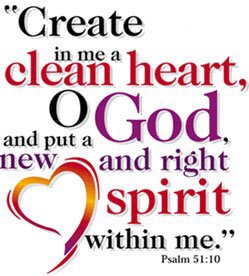
Psalms 51:10
“Create in me a clean heart, O God,
And renew a steadfast spirit within me.”

Pastor Jim


A Line In The Sand

2 Samuel 8:2

“Then he defeated Moab. Forcing them down to the ground, he measured them off with a line. With two lines he measured off those to be put to death, and with one full line those to be kept alive. So the Moabites became David’s servants, and brought tribute.”


During the reign of Saul, Israel faced constant attack from within and without. From within, they faced uprisings from the Philistines; while beyond their borders, they were threatened by Moab, Ammon, and Syria. Saul’s foreign policy was to react to attacks as they came; once an enemy showed signs of attacking the armies of Israel, they would respond. David had a different approach. He decided to go on the offensive and remove the threats once and for all, even drawing a line in the sand to make his stance very clear. 


David’s model serves as a good example for how the Christian should approach sin. Instead of allowing compromise to exist, and only dealing with personal sin when it begins to overtake us, we should take an offensive approach, seeking to remove all areas of compromise from our lives. Taking inventory of our private life and our homes is a great way to get this started. If you have allowed things in your life that may lead to sin, then it is time for a good old fashion spring cleaning. Maybe it is time to go through the fridge, CD collection, and computer, and toss some things out. 


In this case, the best defense is a good offense. 


Pastor Jim 


No Fear Of God

Psalms 36:1
An oracle within my heart concerning the transgression of the wicked: There is no fear of God before his eyes.”

This Psalm is written as a result of David’s meditation upon what motivates people to sin. It seems to me, if we can understand what leads to sinning, we can avoid a lot of pitfalls. According to David, the number one reason for sinning, is “there is no fear of God.” To fear God means to be more concerned with pleasing God, than pleasing self or others. When a person puts God first in their life, and seeks to do what pleases Him, he will avoid much of what leads to sin.

Failing to fear God resulted in some of the worst decisions recorded in the Bible. King Saul trespassed on the role of the priest and offered unholy sacrifice; this sin cost him the kingdom. When asked why he did it, his response was he feared the people. Wanting to please others, instead of wanting to please the Lord, proved very costly to Saul. Pilate is guilty of perhaps histories greatest crime. He bears the weight of being the one man responsible for issuing the decree that sent Christ to the cross. By his own admission, he stated he had the power to crucify Jesus or to set Him free. Although Pilate knew Christ to be innocent, he delivered Him up to be crucified. The reason: he feared the people rather, than the Lord.

Solomon wrote: “The fear of man brings a snare, but whoever trusts in the Lord shall be safe.” Proverbs 29:25

If we want to avoid the snares of sin, we must desire to please the Lord above all things. When it comes to making decisions, start your calculations by first considering what God would have you do. As a parent, I have instructed my children over and over, that there is one decision they can make that will determine most other decisions for them; decide that you want to please the Lord above all else. Once you have made the fear of the Lord your aim, you will find that His Word makes very clear to you how to avoid the sins you struggle with daily.

Pastor Jim

Questions for Psalm 36

  1. How are “the wicked” described in verses 1-4?
  2. Does that describe you at all?
  3. Look at verses 7-9, what is promised for those who choose to follow the Lord?


Easy As 1,2,3

2 Samuel 5:7
“Nevertheless David took the stronghold of Zion (that is, the City of David).”

After taking the throne and ruling over all of Israel, David focused his attention on three crucial areas that would help to guarantee a long and successful reign.

First, he established Jerusalem as the capital of the nation. Jerusalem was centrally located and easily defendable. Although Shiloh housed the Tabernacle, Israel had lacked a central political capital. Choosing Jerusalem as the capital made a statement of a new beginning for the nation. They would not be continuing on as they had been for so many years, but would be starting fresh. This is one of the greatest benefits of becoming a child of God. Paul wrote, “. . .behold, all things become new” (2 Corinthians 5:17). We do not have to carry around the baggage of the past when we come to Christ. We can lay it at His feet and have a fresh start at life.

Second, David addressed the Philistine problem. Saul’s approach seemed to be to respond whenever the Philistines attacked. David chose to address them head on. After carefully seeking the Lord, he began a campaign to rid Israel of the Philistines, once and for all. Often, we deal with sin only when it becomes a problem, instead of planning ahead to ensure we have built up safeguards that will make it difficult to stumble. We all have “easily besetting sins” we must guard ourselves against if we are not going to be defeated by them. Perhaps it is time to drive some things out of your life, before you find yourself defeated by them once again.

Finally, David chose to bring the Ark to the center of the nation. Later we will read of his desire to build a Temple, to both house the Ark, and provide a place of worship for the people. Although David will struggle with the “how to” and move the Ark in an inappropriate way, he is showing his desire for God to have center stage in his life, and in the nation. Too often, we give God the back seat, or perhaps even “shotgun,” when we should be giving Him the driver’s seat. The rightful place for Jesus in your life, is sitting on the throne as Lord. Instead of letting Him be a part of your life, you should let Him be Lord of your life. If you make a mistake like David did, look into the Word and see how He wants you to live and “Just do it!”

Pastor Jim


Don’t Blame Me!

2 Samuel 4:8

“And they brought the head of Ishbosheth to David at Hebron, and said to the king, ‘Here is the head of Ishbosheth, the son of Saul your enemy, who sought your life; and the Lord has avenged my lord the king this day of Saul and his descendants.’”

King Ishbosheth’s officers could see that the kingdom was collapsing; Abner, the head of the military had joined forces with  David and Ishbosheth was so depressed he spent his days lying in bed. Baanah and Rechab saw this as an opportunity to make a name for themselves. Thinking they would be richly rewarded, they decided to kill the king and bring his remains to David. Their thoughts and behaviors were a clear violation of the Word of God, and of the heart of king David, yet they convinced themselves they were serving God.

“. . . the Lord has avenged my lord the king. . . “


While it is not everyday a Christian will lop the head off of a king, it is fairly common to blame God for our own desires. I don’t think a week goes by without my hearing someone explain,  the Lord told them to do something that seems highly questionable. Just recently, a man stood emphatically on a doctrinal position, and rather than use scripture to support his position, he kept expressing how God had revealed it to him. The same is often true as it relates to actions. I have heard believers who use this same rational to justify all kinds of ungodly practices, including harboring bitterness, being divisive, or even living with a boyfriend or girlfriend. 


It is important that we learn to make a distinction between the will of God and our own emotions. The clarifying agent in every case will be the Word of God. 


Pastor Jim 


Forsaken

Psalm 22:1
“My God, My God, why have You forsaken Me?
Why are You so far from helping Me,
And from the words of My groaning?”

Although David wrote this Psalm as an expression of the experiences he was facing, it has a much bigger application than he ever could have conceived. It was on the cross that Jesus uttered the opening words to this great Psalm.

“And at the ninth hour Jesus cried out with a loud voice, saying, ‘Eloi, Eloi, lama sabachthani?’ which is translated, ‘My God, My God, why have You forsaken Me?’” Mark 15:34

In order to speak from the cross, Jesus would have to endure unimaginable pain. He would have to straighten Himself up by pressing against the nail driven through His feet, and breathe in deeply to force any words out. When His silence was broken by these words, His followers would have been immediately drawn to the words of Psalm 22. After watching the crucifixion, there could be no other conclusion; David was speaking prophetically of Christ.

This Psalm, written almost one thousand years before Christ, gives a vivid picture of the events of that dark Friday. David speaks in advance of the ridicule that Jesus would endure. We know that the religious leaders, the crowd, the soldiers and even the thieves all mocked Jesus; calling for Him to prove that He was God and break free from the cross. David also describes the way Christ died with amazing detail. He speaks of His tongue clinging to His mouth in thirst, His hands and feet being pierced, His bones being unbroken, yet out of joint, and his heart melting like water within Him. This Psalm gives undeniable proof of the inspiration of the Word of God, and of the claims of Christ.

That being true, the cry of Christ from the cross does more than draw our attention to the prophetic words of David. It also reveals something of the suffering Jesus endured on the cross. While on the cross, Jesus was giving His life as a substitute for ours. He was bearing the penalty of our sin, so we would not have to. Paul put it like this;

“For He made Him who knew no sin to be sin for us, that we might become the righteousness of God in Him.” 2 Corinthians 5:21

The penalty for sin is separation from God. While on the cross, bearing our sin, Jesus experienced sin’s penalty. His cry was not mere poetry, but the expression of what He must endure to save us. Our experiences allow us to understand the weight of sin to a small degree. We have all felt the heavy burden of committing sin, and knowing what it has done to our relationship with God, and with others. We can never imagine the weight of all the sin of humanity. Every vile thought, word, and action ever committed by every man,woman, and child who ever lived, bore down upon our Savior as He hung upon the cross, paying for our sin. And we read that the Father forsook His Son.

All this was done, Christ was forsaken, so that we would never be forsaken. Because of His substitutionary death, the writer of Hebrews was able to declare,

“For He Himself has said, ‘I will never leave you nor forsake you.’” Hebrews 13:5

What love…

Pastor Jim

Questions for Psalm 22

This is what is referred to as a Messianic Psalm. It has a meaning in the life of the psalmist but also points prophetically to Christ.

  1. Verse 1 is spoken by Jesus from the cross. What is significant about Jesus speaking of being forsaken?
  2. What do you learn about the value of trusting the Lord from verses 4-5?
  3. How were verses 6-8 fulfilled in the crucifixion?
  4. How were verse 14-18 fulfilled in the crucifixion?
  5. How does the cross make verses 27-31 possible?


Guilty

1 Samuel 19:9
“Now the distressing spirit from the Lord came upon Saul as he sat in his house with his spear in his hand. And David was playing music with his hand.”

Like all of us, King Saul struggled with his emotions. When he looked at David, he did not see Israel’s rising star, or a man after God’s heart, but only a man who was a threat to his throne. Saul found himself filled with jealousy, fear, pride, and anger. As the story unfolds, we find these sins ultimately became his downfall. His failure was partly due to the way he dealt with his sin.

We read time and time again of a “distressing spirit from the Lord” that came upon Saul. This spirit was no doubt a strong conviction for the things he was doing wrong. Instead of allowing his conviction to bring him to repentance, Saul tried to drown out the voice of God with music. Lacking a “Walk-Man,” a CD player, or an iTunes playlist, he did the next best thing whenever conviction arose, he brought musicians in to play his favorite songs. While the music may have removed the guilty feelings and calmed the king, it failed to deal with the real issue. What Saul needed was not to feel better, instead he needed to change his behavior.

It is very common today for people to attempt to remove guilty feelings, instead of removing the actions that make them guilty. We might even run from friend to friend, or counselor to counselor, until we find someone who will tell us what we are doing is OK. While their counsel may make us feel better, it will not make us less guilty.

If you are tormented by conviction because you are involved in a lifestyle that God forbids, the answer is not to seek things that will make you feel better, but to seek to change your lifestyle. The Bible gives a clear cut way of dealing with sinful behavior,

1 John 1:9
“If we confess our sins, He is faithful and just to forgive us our sins and to cleanse us from all unrighteousness.”

If you are misbehaving, take time right now to confess your sins and allow God to forgive you and to set you free.

Pastor Jim


Good Or Bad

1 Samuel 15:9

“But Saul and the people spared Agag and the best of the sheep, the oxen, the fatlings, the lambs, and all that was good, and were unwilling to utterly destroy them. But everything despised and worthless, that they utterly destroyed.”

In many ways, the Old Testament serves as a picture book to illustrate New Testament principles. That is not to say  the events recorded are not factual, but that they were designed to bring out Biblical principles in living color. The story of Saul and his battle to defeat the Amalekites unfolds like a motion picture, illustrating the battle we face with our own flesh. It does not take long for every Christian to realize, we struggle to resist some of the things that God has forbidden. Overcoming the ungodly desires within us is the daily struggle of the believer, and the story before us helps to unveil one of the secrets to success.

Saul was instructed to destroy all that was plundered when the armies defeated Amalek. Instead, we read that Saul kept “the best” and “that which was good”, even though God had rejected all of it. Saul is doing what we often do, he is using his own standard of good and bad, rather than allowing the word of God to set the standard for him. When we begin to redefine sin, it will not be long before we are making compromises and justifying our ungodly behavior. The secret to success in the struggle with the flesh is to recognize what God forbids, and to stay away from it. 


Sadly, the end of Saul’s story is a tragic one. His compromises will ultimately lead to his death and that of his son Jonathan. In the end, it will be an Amalekite who will take Saul’s life. What he refused to remove ultimately cost him greatly. 


Take a quick inventory and see if there is anything in your life that needs to be removed. If so, don’t wait another day, lay it before the Lord and ask for His power to help you never pick it up again. 


Pastor Jim 

Compelled 

1 Samuel 13:12

“Therefore I felt compelled, and offered a burnt offering.”


As the second year of king Saul’s reign began to unfold, the nation of Israel was in trouble. The Philistines who occupied the southwest portion of the land were seeking to expand their territories by defeating Israel. When Saul’s army saw the Philistines approaching, they began to hide in caves, and many deserted. It did not take long before his three thousand soldiers were reduced to six hundred men. Understandably, Saul was overcome by emotion.
Unfortunately, he let his emotions make his decisions for him, and these decisions would prove to be very costly.

Saul decided that what he and the people needed to do was to offer a sacrifice to God. While this might sound like a good and even noble idea, it was actually a form of disobedience, since sacrifices could only be offered by the priesthood. Saul was showing his impatience, lack of trust, and his unwillingness to submit to the word of God. The driving force behind this decision was his own emotions.


“Therefore I felt compelled, and offered a burnt offering.”


I wonder how many times our emotions have compelled us to do something the Bible forbids? Emotions cannot be the driving force behind our decision making process. Feelings must always be governed by a higher law. When we feel unloved, we must allow the Bible to remind us of the great love God has for us. When we feel tempted, we must allow the word of God to guard us against falling into forbidden actions. When we feel upset at another person, we must let the Scriptures guide our actions and show us the proper way to behave, and to resolve conflict. 


Whatever you might be feeling, keep in mind that feelings come and go, but the principles found in God’s word are unchanging, and will prove to be a reliable roadmap through the journeys of life. 


Pastor Jim