Psalms 17:15
“As for me, I will see Your face in righteousness; I shall be satisfied when I awake in Your likeness.”
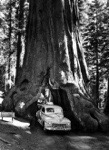 I remember years ago listening to Pastor Chuck Smith teaching from John 15 on the Vine and the branches. To illustrate our need to bear fruit, he asked, “What does a full grown tree look like?” Immediately, my mind was filled with visions of the massive Redwoods of Northern California. I remember, as a child, driving our car through a tunnel cut out of a tree in Humboldt County. After pausing to let the question sink in, he responded, “A full grown tree looks like firewood.” You see, a tree grows as long as it is alive. The moment it stops growing, is the moment it has died.
We are like that. Once we begin a relationship with God, a process known as “Sanctification” begins. Sanctification is the work that God does in our lives to make us more like Jesus. The process starts with God removing the things from our lives that are harmful to us. Drugs, alcohol, pornography, unhealthy relationships, and the like, are all laid down at the cross, when we first receive Christ. But that does not complete our growth. Christianity is not just about what we don’t do. It is much more about who we become. As daily, we invest in the Word of God, prayer, fellowship and service, we find that the characteristics of Christ are being birthed in us. Paul called those attributes the fruit of the Spirit. The more we grow in Christ, the more we become like Him, until one day, we like David, will see His face in righteousness and be satisfied.
Until that day, lets determine to grow in Christ, by abiding in Him daily.
Pastor Jim
Old Testament:
1 Samuel 16- Distressing Spirit
1 Samuel 17- Oh My!
 We have all heard the phrase, “Actions speak louder than words.” The sentiment behind that is simple; our behaviors speak more to our belief system, than our words ever could. Psalm 15 addresses the subject of true righteousness, and in a poetic fashion addresses our walk, works, and words. All three of these speak volumes regarding what we truly believe. Like balancing a check book to determine where all the money has gone, we can examine where we go, what we do, and what we say to determine the real driving forces in our lives.
 As this psalm begins to unfold, we find David facing some pretty difficult times. He describes himself as feeling forgotten and being overcome by sorrow. Without giving details, he describes his enemy as threatening to prevail against him. Yet, in all this, he wrote of singing to the Lord. It is the song of triumph that will often lead to release from despondency. Instead of waiting for circumstances to change, David determined to worship in the midst of trial. As he took his eyes off his suffering and fixed them on the grace of God, he soon found himself rejoicing rather than complaining.
 Life hurls a vast array of difficulties at the child of God. We are struck with the common problems of every man, as well as those that are peculiar to attempting to follow Jesus, in the midst of ever increasing ungodliness. The question we are faced with is, where will we flee for safety, guidance and solace when struck by the trials of life? David thought it utterly preposterous to think of fleeing to the mountains for aid. To him, it was the Lord, and the Lord alone, who would be his defense.
 A few years back I was teaching in a Bible school in Ghana on the subject of trust. I invited one of the students to come forward and asked him to put his arms at his side, close his eyes, and face the class. He had no difficulty doing what I asked until I added, “now remain stiff as a board and fall backwards.” He immediately opened his eyes, turned around, and looked at me as if to say, “No way!” I assured him that I would catch him, and asked him to face the class again. I counted to three and told him to fall back. To his credit, he tried, but once he began to lean, he stepped back to catch himself. The remaining students erupted in laughter as their friend was afraid to fall back.
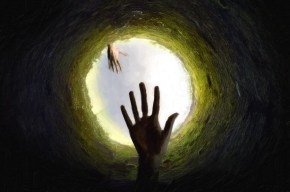 If we were writing a comedic screenplay, we might want to include a character who designs an elaborate trap, only to unwittingly catch himself. While it might be quite humorous on the big screen, it is tragic in the real world. The psalmist reminds us, one of the consequences of wicked living is, in the long run, we are actually setting a trap for ourselves. The day is coming when the cage will swing shut, and we will find ourselves enslaved by the very thing we were toying with. This happened to Samson who fooled around with Delilah, telling her to braid his hair or tie him up with new ropes. As time went on, he found himself enslaved to the Philistines. It happened to David, who fooled around with Bathsheba, first watching her bath then flirting with her. He soon found himself enslaved by his lust and caught in an ungodly relationship that had devastating effects upon his family. And it will happen to us, if we toy around with sin. Each time we dabble in unrighteous behavior, it is like putting the shovel in the ground. Day after day, the hole gets bigger until one day we find ourselves caught in a trap we dug for ourselves.
 On a regular basis, how would you describe your mornings? Do you wake up grumpy, dreading another day? Or late, rushing to get your responsibilities done? Or perhaps you arise and rush to get the morning paper, check the news, or peruse Facebook, or the web.
 We go through seasons in life. Some are calm and pleasant, while others seem to be like violent storms, with waves crashing upon us from almost every direction. While we may feel as though we are under assault, this is not a new phenomenon. King David, Israel’s most godly king, was no stranger to difficulty. He faced the same struggles we face, and perhaps a few more. At this point in his life, he was blindsided when he learned that his own son had turned against him, organized an army, and was attempting to overthrow the kingdom. His response to this hardship is filled will practical examples for us to cling to, in the midst of our own trying times.
 When establishing the government of the United States, the founding fathers saw that man was created with certain inalienable rights. They believed it is the right of every person to be able to pursue personal happiness. They were not alone in this thinking. Many philosophers spoke of happiness as the chief goal of life.
 After the ship ran aground and all the passengers and crew arrived safely on shore, it would not take long for the onlookers to see who was who. Even after saving the lives of the entire crew, Paul is still treated as a criminal, and is sent to gather sticks for the fire. While reaching for a stick, Paul encounters what many people fear the most… a snake.
