2 Samuel 20:1
“And there happened to be there a rebel, whose name was Sheba the son of Bichri, a Benjamite. And he blew a trumpet, and said: ‘We have no share in David, Nor do we have inheritance in the son of Jesse; Every man to his tents, O Israel!'”
 There is a great difference between a leader and a dissenter. A leader has vision and has the best intentions for those who follow him. A dissenter is only capable of pointing out everything wrong with someone else’s leadership and is seeking a position for himself. Sadly the church seems to be filled with dissenters. Certain Christians with strong personalities who struggle with authority are very good at pointing out every flaw in the leadership style of others. These folks, like Sheba do not have the best interest of the church in mind but are often looking for a leadership position for themselves. Sadly, church splits happen all the time because a dissenter with a strong voice gathers a group of people to his side and breaks away from the fellowship of believers. Over the years I have witnessed several such cases which almost always result in a sea of hurt Christians who in some cases never fully recover.
Clearly, there are reasons to question the authority of those in leadership. If a pastor is teaching false doctrine, is involved in immoral living or is taking the church away from rock solid biblical ministry principles we should reconsider where we and our families are fellowshipping. The problem is that more often than not people will endure those things because they like the music or have a lot invested in the church, but will fight over peripheral matters and split churches.
Jesus spoke of the importance of unity among His followers. A church is unified when all its members rally behind Jesus and are committed to the furtherance of His kingdom. Sheba proved that he had no interest in the things of God because he stood against the kingdom of David.
Pastor Jim
 Have you ever heard the phrase “You can’t take it with you”? It seems like this sentiment might be as old as time itself. Thousands of years ago the sons of Korah used it as a lyric in one of their most famous songs. The basic thought is that when this life comes to an end all that we have accomplished will be left behind. In recent years I heard a similar phrase that carries the same thought, “You never see a hearse pulling a U-Haul trailer.”
 It is remarkable how many Biblical phrases have become part of our everyday lives. When a person is diagnosed with a disease that advanced medicine has no hope of curing, it is common for this passage to be quoted. They are told to “put their house in order.” Sadly, Ahithophel made preparations to die, without giving the proper consideration to what he would face after death. Too many still approach life that way. It might be, you have…
 Sometimes knowing the setting in which a psalm was written is beneficial to understanding its content. Other times, like in this psalm, the setting is not given because the truth is universal. Whatever our condition, whether we would classify it as good or bad, blessing or trial, God remains the same and is always worthy of the highest praise. The truths tucked away in this psalm transcend every experience the child of God endures. Whatever state you are currently facing, it is a good idea…
  We learn two very important things about following Jesus from this one verse.
 Perhaps you have heard someone speak of having their whole life pass before their eyes. In a moment’s time, while facing imminent danger, all they had done, whether good or bad, seems to flash into their mind. David is having a similar experience. His son Absalom has stolen the hearts of the people, mounted a large army to overthrow the king, and steal the kingdom. Instead of remaining in Jerusalem and turning the holy city into a battle…
 This is a Messianic Psalm, meaning that it is speaking prophetically of Israel’s coming Messiah. In it, the Psalmist is describing the glory of Jesus, our King, and the beauty of His Bride, the church. After describing Jesus as the King of Glory, girded with a sword, overthrowing wickedness, ruling in righteousness and reigning in glory, he speaks of the proper…
  A refuge is a shelter or protection from danger or trouble. It is not uncommon in places that are threatened with severe weather to build rooms designed for refuge. The idea is that when danger arises the family can flee to a room that is designed to withstand the storm. A few years ago I was traveling in Israel and stayed…
  “I love you” is one of the most common phrases in any language. It is the heartbeat behind many popular songs, movies or works of literature. It seems a love story is an underlining theme in every movie whether it is designed as an historical piece, a comedy, or even a horror film. The story of Amnon and Tamar reveal that the love…
  By killing his brother, Absalom had committed a capital crime. The law required, upon his return to Jerusalem, he be sentenced to death. In addition, he was living as a captive to a foreign king, without the hope of ever…
  Arguments take place when we have differences of opinion. Both parties think they are right and the other is wrong. When these differences of opinion escalate they often lead to serious divisions. Marriages, families and churches have often been the unwary victims of intense argumentation. When arguments take place we have probably learned what to do when we are in…
  Even a casual reading of the Old Testament will lead to the conclusion that Israel did not win their battles on their own. When armies are overthrown by the rushing waters of the Red Sea, walls toppled with rams horns, and a shepherd defeats a warrior with a sling and stone, it is clear that the hand of God is behind the victories. There are times when Israel went to battle in their…
  David is one of the most famous men in history. He was a gifted singer, song writer and musician. By today’s standards, he would be considered a superstar. He was also a war hero, who led armies to great victory. No doubt, in that era, David would experience the same treatment as our most famous athletes. His popularity spread throughout the nation, so much so, that songs were being written about him. After reading of a lifetime of…
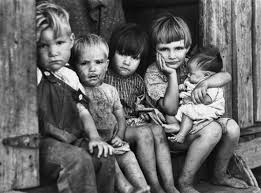 The Bible has much to say about the poor. The word poor is used almost 200 times in the NKJV of the Bible, Israel as a nation was required to set up a system where the poor was able to glean the edges of the fields to provide food for themselves and their families (This is part of the story line of the book of Ruth). Jesus spoke of blessing the poor, and encouraged…
  This Psalm begins with the Psalmist describing his hunger for more of God. In a beautifully poetic fashion, he compares his desire for God to a deer panting for water. Thirst is one of our most basic drives, second only to the body’s need for oxygen. He is not only stating that he desires more of God in his life, but that he cannot live without Him. Psychologists have made lists of basic human needs for mental and emotional health. These lists often include things like companionship, communication, a good diet, human touch, self acceptance and proper rest. Unfortunately, they often neglect man’s greatest…
 The Bible has much to say about the poor. The word poor is used almost 200 times in the NKJV of the Bible, Israel as a nation was required to set up a system where the poor was able to glean the edges of the fields to provide food for themselves and their families (This is part of the story line of the book of Ruth). Jesus spoke of blessing the poor, and encouraged His disciples to minister to them. In the book of Acts we see the churches sending aid to believers who were undergoing severe trials caused by famine and persecution and James writes warning the church not to neglect the poor or to treat them any less than we would the wealthy. It is clear that those who are neglected by men are highly esteemed by the Lord. That being said the Bible also places certain responsibilities upon the poor. The welfare system in Israel required the poor to work for the food they received and Solomon wrote that “much food is in the fallow ground of the poor.” When Paul wrote to Timothy regarding the widows he explained that the church had a responsibility to assist the widows who were godly but charity would not help those who were living a wasteful life.
