Psalm 101:3
“I will set nothing wicked before my eyes; I hate the work of those who fall away; It shall not cling to me.”
 One of the saddest experiences in life is to see a close friend fall away from the Lord. From the outside, the process often looks the same. A person, who once walked closely with the Lord and was involved in Christian service, begins to drift ever so slightly. First, their conversation changes. Instead of talking about the Lord, sharing from their times of Bible reading or service, they begin to talk only of the waves and the weather. Next, we begin to see them a little less frequently around the church. In some cases, only the responsibility of a service commitment keeps them coming; until finally they step down from their responsibility, and seem to vanish. Sometimes, it will take weeks or even months before we realize what has happened, and by that time, they have cut ties from most of their Christian friends, and are back involved in the things of the world.
This experience is not limited to modern times. The Psalmist saw it happen in his day, and as a result declares, “I hate the work of those who fall away.” He also gives a little insight into what those works are when he states, “I will set nothing wicked before my eyes.”
It has been said, the eye is the window into the soul. That phrase has always seemed a bit eerie to me, perhaps because I have misunderstood the truth about the eyes of man. It is not as though a person can look into your eyes and see the inner man, but information enters our mind through the eye gate, which in turn, feeds the soul. Paul spoke about the flesh and the spirit being in a daily battle with one another (Galatians 5:17). We all know there are times when we have lost the battle to the flesh, and times when we have been victorious and remained faithful to the Lord, in the midst of temptation.
The secret to success in the battle against the flesh is training. As in any fight, the one who is stronger and more prepared, is the one who will be victorious. If we want to live well-pleasing to the Lord, we must use our eyes to look away from the things that will lead us to stumble, and onto the things that will help us to grow. Jesus put it like this, “The lamp of the body is the eye. Therefore, when your eye is good, your whole body also is full of light. But when your eye is bad, your body also is full of darkness” (Luke 11:34).
My wife and I were walking the streets of Paris when I saw a chocolate croissant in the window of a bakery. It looked amazing! However, we were on our way to dinner, so stopping was out of the question, but I could not get it out of my head. You know, first thing the next morning, I was in a bakery ordering a croissant. If you are struggling with a particular sin, the solution may be as simple as removing the things that you are looking at, that are feeding that sinful desire. Magazines, movies, internet searches, should all be removed, as you seek the Lord for victory in your life. Let’s take the example of the Psalmist to heart, who decreed, “It shall not cling to me.”
Pastor Jim
 Reading through all these names can be somewhat tedious. We know very little about many of the characters, and some of the names are quite difficult to pronounce. That being said, I am encouraged by many of those whose names are listed. The records include the likes of Adam, Noah, Abraham, Isaac, Jacob, Caleb, David and many others. These names should flood our minds with memories of great, even heroic acts of faith and faithfulness. These men were used by God to turn the world upside down. Their simple lives, lived out in faith and obedience, have forever changed to history of humanity.
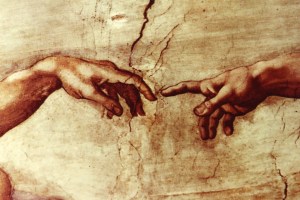 Have you ever heard the phrase, “you should have known better?” We use it when we view evidence so compelling that a particular conclusion is obvious. “I didn’t know that would happen!” This statement, a response to throwing a firecracker into the barbecue pit, or bringing a handgun through airport security, is an unreasonable response, “You should know better.” It seems equally as surprising to me, that the Psalmist would need to remind us that man is a creative work of God and did not spring into being as a result of his own innate ability. As surprising, and even preposterous as it may be, we hear all of the time, how highly intelligent and well-educated people will choose to believe that man is not a byproduct of an intelligent and loving Creator, but the consequence of random chance.
 The final chapters of 2 Kings tell the story of the death of a nation. After having a glorious beginning, and being miraculously sustained for a thousand years, the nation of Judah is defeated, the Temple destroyed, and the people taken as prisoners of war. These chapters record their collapse from heaven’s perspective. It was not caused by economic failure, a weak foreign policy, or because Babylon was a superior foe. Judah’s demise was simply a consequence of national sin, “…because of the sins of Manasseh…”
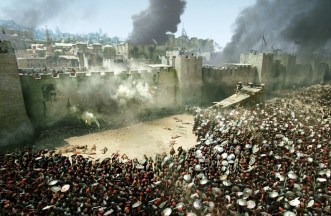 Imagine sitting on Mount Scopus, just a little northeast of Jerusalem, as the Babylonian forces surrounded the city. Before long, the walls were penetrated, and the city taken. First the leaders were gathered and executed, then the city was plundered and burned. What had once been a glorious testimony to the goodness of God, now told an entirely different message. All who watched the city fall should have learned the devastating effects of sin. Even after a contingency returned to rebuild the temple, Jerusalem would still bear scars from its fall.
 I find it striking that the Psalmist declares that hate is a necessary expression of true love. He explains that part of being in a healthy love relationship with Jesus is having a hatred for evil. Why is it necessary to hate evil? Why should we hate evil? I can think of at least three pretty strong reasons.
 Josiah was the youngest king to reign over the nation of Israel. At eight years old, his father died and he ascended the throne. We read very little of the early years of his reign, but at eighteen, he began a campaign to reform the nation, and turn the people back to the Lord. Josiah would go on to become one of the greatest kings in the nation’s long history. His success is summed up in three simple statements: he did what was right, he walked in the ways of the Lord, and he did not allow himself to become sidetracked by other things. As his story unfolds, we see the application of each of these points.
 Paul declared, all Scripture is inspired by God and is profitable. Every page of God’s Word has a purpose in the life of the believer. However, there are certain passages that have greater meaning to each of us, because of the impact they have had upon our lives. This is a particularly important text to me.
 Manasseh, king of Judah, will go down in history as the king who caused the fall of the nation. It was not his foreign policy, his economic plan, or his tax code, that killed the nation. Instead, it was his view of God and his stance regarding sin that would weaken the nation, and lead to its collapse. Later we read,
 Imagine what this promise meant for Hezekiah. First, he was ill, so it meant he would be healed. Second, it meant he would have more time. Third, it meant a clock started that night, giving him an expiration date. Fifteen years from this promise, Hezekiah would breath his last. This promise has often made me wonder, “What I would do with fifteen more years?” How would you react, if suddenly you were given an expiration date? Let’s take a look at what Hezekiah did.
 Jim Gallagher