1 Kings 15:12-13
“And he banished the perverted persons from the land, and removed all the idols that his fathers had made. Also he removed Maachah his grandmother from being queen mother, because she had made an obscene image of Asherah. And Asa cut down her obscene image and burned it by the Brook Kidron.”
 We recently had a friend visiting who we had not seen in a number of years. One of his first comments was how much our children had grown. When he last saw them, they were pre-teens, now they are young men. He was shocked at how they had changed, in what seemed to be such a brief period of time. For us, the changes do not seem quite as drastic, because we are watching what happens from day to day. It is only when we bring up a photo or video that we see how much things have really changed.
This same thing was true of the moral condition of Israel and Judah. Gradually, over the reigns of Solomon and Rehoboam, the nation drifted from the precepts of God’s Word, and became more and more like the surrounding nations. Morality slipped, and what was once considered obscene, was now commonplace. While these changes may have come gradually, they needed to be addressed quickly and decisively. As Asa came to the throne, he began to immediately address the sins of the nation. We read that idolatry, perversion and obscenity were removed from the landscape of the nation.
It is high time that we, the church of Jesus Christ, pray fervently that those who rise to power would have the courage to stand against the rising tide of immorality. We are living in the times that Isaiah described, where people are calling evil good and good evil. We need to see God raise up men and women who will stand for what is holy, godly and right. That being said, I suggest, of equal and perhaps even greater importance, is that each of us would take the Word of God seriously in our personal lives. Instead of always looking outward at what is wrong with the world today, we would take a look inward, and allow the Word of God to operate on our personal lives.
A move of God, that stirs revival, is always the greatest deterrent to the flood of immorality that spreads across a nation. Revivals have always begun when individuals are moved by the Spirit and the Word of God, to commit themselves completely to Christ. The question that remains is, “Will you be an Asa. Will you be willing to commit yourself and your home to live devoted to Christ?” It is high time we remove the perversion and obscenity from our own lives.
Pastor Jim
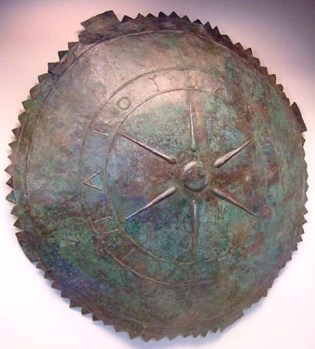 Rehoboam is known for being the king that split the nation of Israel. His greed drove him to make decisions that ultimately divided the kingdom. Sadly however, this was not the worst policy he implemented. During his seventeen year reign, he continued to ignore the Word of God and to introduce idolatry to the nation. As a result, this once powerful nation fell prey to their enemies. Like a shark smelling blood in the water, Egypt saw the weakness of Israel and sent troops to Jerusalem. Their armies easily overcame any and all resistance and began to loot the city. Just a few short decades after the Temple was completed, it was ransacked by foreigners and its prize articles were stolen. Among the items Shishak took, were the golden shields that hung as a symbol of Israel’s strength. Rather than turning to God, Rehoboam decided to hang bronze shields in their place. After all, from a distance, who would really be able to tell the difference. What a different story this would have been if Rehoboam would have fallen on his knees and turned back to the Lord.
 Jeroboam had been called and anointed as king of Israel. He was given the same opportunities and promises that David was given. His problem was, instead of drawing near to the Lord, he followed the gods of the surrounding nations, and turned Israel away from the Lord. God, in His unparalleled mercy, sent an unnamed prophet to win Jeroboam back to the ways of the Lord. The man of God declared a powerful message of rebuke to the king; and with a stunning show of the power of God, the altar split in two. Jeroboam’s heart had become so hardened, his response was to demand this young man be imprisoned. As the king’s hand stretched forth condemning the prophet, his hand suddenly withered. With a withered hand, and a broken altar, the king pleaded with the prophet to pray for him. Sadly, his prayer was not one of repentance, he simply wanted things restored to the way they were.
 King David committed a sin by taking a census of the people, rather than trusting in the arm of God as Israel’s defense. His sin was forgiven, but the consequences were grave.
 Like all of us, King Saul struggled with his emotions. When he looked at David, he did not see Israel’s rising star, or a man after God’s heart, but only a man who was a threat to his throne. Saul found himself filled with jealousy, fear, pride, and anger. As the story unfolds, we find these sins ultimately became his downfall. His failure was partly due to the way he dealt with his sin.
 Have you ever been in a situation where you were forced to cry for help? A good friend of mine told me a story of a time when he was cutting tree branches to make some extra cash. He leaned his extension ladder against the tree, climbed to the top, reached up and cut a large branch. As soon as the branch was cut, the tree shifted and the ladder fell. Reacting quickly, he was able to grab another limb to keep himself from falling. However, he found himself hanging twenty five feet above the earth’s surface. Knowing he would not be able to remain there for long, he began to cry out for help. Sadly, no one could hear him and after his arm strength gave out, he was forced to let go and fall to the ground. Fortunately, he was not seriously hurt.
  Israel faced a constant threat from the Philistines. They had come into the territory promised to Israel, taken land, and threatened the people. Earlier in 1 Samuel, the nation mustered all its strength to drive the Philistines out of their territories, only to suffer a devastating loss. In that earlier battle, the people gathered around a religious artifact, went forth in all the strength they had, and were defeated. Now, some years later, we find them once again facing the same threat. This time, however, their efforts resulted in a great victory. What was the difference? How were they able to defeat an enemy which had plagued them for so many years?
 It is common for people to show no interest in God until calamities arises. As long as life is going their way, they are not concerned with God, but as soon as things get difficult, suddenly, they cry to God for help. Those who have shown no interest in the ways of God, suddenly blame God for the calamity they are facing, and cry out to Him to fix everything.
 As I read through the book of Judges, I am confronted with mixed emotions. On the one hand, it is a sad and tragic story of repeated failure. Over and over, we are told of the compromise of the people of God, and the suffering they experienced as a result. We are told, much of the reason for their repeated failure, was that they did not know how to fight. Instead of realizing they were facing spiritual battles, and engaging in conflict against compromise, they simply gave in. Judges records the story of failure which is often repeated today.
 The story of Ai is tragic. Thirty-six men lost their lives that day. Thirty six sons, brothers, fathers, husbands and friends, fell in battle. Their deaths had a devastating effect upon the people. Not only were they filled with the normal grief of losing loved ones, but this grief was compounded by the fact they had been sent by the Lord into Canaan, and now they had lost the battle and thirty-six lives. The ripples of this were so great, even Joshua, their heroic leader, wished they had never crossed the Jordan. This passage is filled with applications for us today. Not the least of which is, their failure in battle was due to failure in their private lives. That failure is twofold.
 Jim Gallagher