Psalm 59:13
“And let them know that God rules in Jacob to the ends of the earth.”
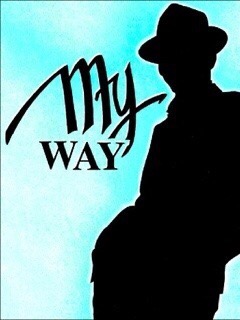 In the early eighties, a well-known Christian band wrote a song called “God Rules.” In some ways, it became the anthem of many young Christians. I remember having a “God Rules” bumper sticker on my car, and proudly writing it on my school notebook. To me, that phrase was a slang term meaning little more than the fact God was best. I believe the Psalmist is saying much more than that, he is speaking of the sovereignty of God. The word sovereign means ‘to possess supreme power.’ David is declaring that God has supreme power over His people.
Throughout Scripture, we see evidence of God’s supreme power. We see nature bow to His authority when seas part, storms cease, and the sun stands still. Sickness, demons, and death are also at His beckoning, and obey His commands. It is clear, there is no power in heaven or on earth that is not subject to the sovereign rule of God. No power, that is, except the will of man.
In His sovereignty, God will not force you (at least not now) to bow to Him. He gives each of us a choice. We can choose to bow our will to Him in obedient surrender, or we can choose to resist His love and live our own way.
A modern song writer penned these words in contrast; “For what is a man, what has he got, If not himself, then he has not. To say the things he truly feels, And not the words of one who kneels. The record shows, I took the blows, and did it my way. Yes, it was my way”
David is boasting in the rule of God, while others boast in the fact that they have refused to submit to God’s ways. Again, Scripture makes it clear, one day all will bow to God. Paul declared, “. . . that at the name of Jesus every knee should bow, of those in heaven, and of those on earth, and of those under the earth, . . . ” (Philippians 2:10). Even those who declare “I did it my way,” will bow before the One who sovereignly rules, and recognize that He truly is King and Lord. The problem is, only bowing then, is too late to reap the benefits of His rule. I would hope that as we age and come toward the end of our life’s journey, we would be singing, not that we ignored God, fought against Him and lived in rebellion, but that we had bowed to His supreme authority, and did it His way. The benefits are far-reaching. Paul said that godliness is profitable for all things having promise for this life and the one to come (1 Timothy 4:8).
Then and now, God still rules.
Pastor Jim
Questions for Psalm 59
- Sometimes we are upset or in distress bringing our problems to the Lord. Notice the pattern that David has as he starts to pray about his challenges. He starts to change and focus on the Lord and his prayer turns to praise. Have your prayers turned to praise?
- As your read David bringing his problems to God, can you relate to him in any way?
- Verse 13 David is asking for God to consume them in wrath. There is another request like this in the New Testament to Jesus. Read Luke 9:52-56
- Does this now put verses 16-17 in perspective? The next chapter is great!
Old Testament:
Psalm 60- Help From Trouble
1 Kings 5- Expanding Your Portfolio
1 Kings 6- The Temple
 No matter where we live, we are faced with the storms of life. Growing up in California, I was constantly reminded of the great earthquake that was looming on the horizon. We were told that because of the fault lines, one day California would fall into the sea. Upon moving to Florida, the new fear was the hurricane. A few years back, a particularly large hurricane had developed in the warm waters of the South Atlantic. The atmospheric conditions were such to allow this storm to grow larger and larger as it traveled north. All of the models had it making landfall just outside of my home town. Having never experienced a hurricane before, I was glued to the Weather Channel for information. A hurricane this large had never been tracked before; it was larger than the state of Texas, and had wind speeds over 140 mph. People up and down the coast of Florida, Georgia, and South Carolina were heading west for safety. One news station reported that hotels, as far as Kentucky were filling up, as people searched for a safe place in the storm. I felt stuck. I did not know where to go. In a last-minute decision, we drove across the state and stayed with friends, figuring though we might not be avoiding the storm, at least we would have the comfort of going through it together. Fortunately, the storm moved north, missing Florida all together, and reducing in size drastically as it met cooler waters. I came to the realization, no matter where we live, we are faced with the storms of life, and must determine where we will run for safety.
 David was facing an extremely difficult season in life. The more things began to unfold the more he desired to run away and hide. He writes of his desire to flee to the wilderness far away from the problems and the people that surrounded him. He writes of desiring to have wings that could carry him far from his problems. I don’t think the psalmist is alone in this. I know I have felt this way and have met many believers who long for a way to escape the difficulties of life. I wonder how many of us have wished for our own private get away far from the problems and issues of life? While there is no island or mountain hideaway where we can be saved from the issues of life, there is a place the child of God can run for refuge.
 Biblically speaking atheism is considered folly because God has gone to great lengths to reveal himself to mankind. Paul, when writing to the Roman church divided God’s revelation of himself into two categories; he spoke of things being manifested “to us and in us.”
 David makes reference to the fact that he was born into sin. He realizes that his sin is not just a mistake that he made but a consequence of his very nature. The bible teaches that sin was passed down to us from Adam and has affected all of us making all of us sinners. Reforms are good and necessary both individually and nationally but these reforms cannot change our nature. We can become better husbands, fathers, neighbors and citizens but until we are born again we still have a nature that is unredeemed and we will be forbidden access to heaven.
 Have you ever heard the phrase “You can’t take it with you”? It seems like this sentiment might be as old as time itself. Thousands of years ago the sons of Korah used it as a lyric in one of their most famous songs. The basic thought is that when this life comes to an end all that we have accomplished will be left behind. In recent years I heard a similar phrase that carries the same thought, “You never see a hearse pulling a U-Haul trailer.”

 Being a mom is among the greatest of all callings, but it is easy to forget our calling in the middle of the mundane day-to-day responsibilities that go hand in hand with parenting.
 Arguments take place when we have differences of opinion. Both parties think they are right and the other is wrong. When these differences of opinion escalate they often lead to serious divisions. Marriages, families and churches have often been the unwary victims of intense argumentation. When arguments take place we have probably learned what to do when we are in the wrong; we humbly apologize and seek to make whatever restitution is necessary. But what about when we are right. Have you ever considered the proper action to take when you are in the midst of a misunderstanding between yourself and someone you care about? Perhaps it would do us good to reconsider what we do when we think we are right. David wrote;
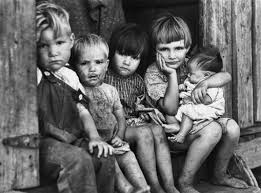 The Bible has much to say about the poor. The word poor is used almost 200 times in the NKJV of the Bible, Israel as a nation was required to set up a system where the poor was able to glean the edges of the fields to provide food for themselves and their families (This is part of the story line of the book of Ruth). Jesus spoke of blessing the poor, and encouraged His disciples to minister to them. In the book of Acts we see the churches sending aid to believers who were undergoing severe trials caused by famine and persecution and James writes warning the church not to neglect the poor or to treat them any less than we would the wealthy. It is clear that those who are neglected by men are highly esteemed by the Lord. That being said the Bible also places certain responsibilities upon the poor. The welfare system in Israel required the poor to work for the food they received and Solomon wrote that “much food is in the fallow ground of the poor.” When Paul wrote to Timothy regarding the widows he explained that the church had a responsibility to assist the widows who were godly but charity would not help those who were living a wasteful life.

