Numbers 29:13
“You shall present a burnt offering, an offering made by fire as a sweet aroma to the Lord…”
 Moses goes into great detail to explain the sacrifices that were to be offered to the Lord. Every morning, and again, every evening, a spotless lamb was offered, with a grain and drink offering. On the Sabbath, new moon, and for each of the seven feast, additional sacrifices were added. As long as the Tabernacle or Temple stood, these offerings were to be continually presented to the Lord. An entire staff of priests was required to officiate at these offerings. Some were responsible to examine the offering for defect, others to perform the sacrifices, and still others to attend to the daily maintenance, and care for the Temple, itself. When the days work was completed, they understood the next day bore the same responsibilities. There was no end to the process. Yet people were still conscious of their sin and alienation from God.
Hebrews 10:4
“For it is not possible that the blood of bulls and goats could take away sins.”
Praise the Lord! Our High Priest, Jesus, Himself, has been offered, once for all, to take away sin. John declared, the very reason He came was to remove our sin, and make us right with God (1 John 1:9). Instead of a painstaking process of daily sacrifice, Jesus went to the cross; forever eradicating our sin problem. All who trust in Christ will have their sins forgiven, removed, and be brought into a relationship with God, where we are able to experience His love, joy, and perfect peace.
Pastor Jim
 There seems to be a simple pattern to the work of God: He chooses a man, fills him with His Spirit, and surrounds him with others. While the work is done through a man, it is always accomplished by the Spirit of the Lord. When Moses’ time on earth had run its course, the mantle was passed to another man. Out of the entire congregation of Israel, we read God chose Joshua, the son of Nun. I think it is worth considering why Joshua was selected.
 Israel’s inheritance in the Promised Land was determined by two factors. First, where they would live was chosen by the Lord. Second, how much land they had was determined by the size of the tribe. One of the main factors affecting the size of the tribe was how much they grew during the wilderness years. These same factors will determine what our experience of the Lord will be as well.
  Once we get past the fact that God allowed a man as carnal as Balaam to speak some of the Old Testament’s most poetic and amazing prophecies, we can begin to appreciate what was being said. In addition to looking forward to the coming of the Messiah, Balaam also looked back at the Lord’s accomplishments in the nation of Israel. His commentary on all of it was that God worked in such a way, when it was all concluded, people would have no other choice than to declare “Oh what God has done.”
  John tells us, the miracle of turning the water into wine was the first of Jesus’ miracles, and its purpose was to make His glory known. The word “glory” is used synonymously in the Bible with the word “name” and speaks of a person’s character. When Moses longed to know God more, he asked God to “Please, show me Your glory.” (Exodus 33:18) God responded, saying, “I will cause My goodness to pass before you and declare My name.” It is in that passage we learn much of the merciful and gracious character of God. Here, at this wedding feast, John tells us that we are to learn something about the character of Christ.
 Balaam is an enigma. While he is clearly a false prophet who does great harm to the people of God, he is also responsible for some of the greatest Old Testament sermonettes. Here, he is taking a second look at the camp of Israel, attempting to find a way for Balak, king of Moab, to overthrow Israel. Instead, he learns how God sees His people.
 Jesus was magnetic! People from all walks of life were drawn to Him. Lepers, paralytics, rich men, beggars, fishermen, and even Pharisees were drawn to Jesus; to meet Him, hear Him speak, and be touched by Him. At times, we read of massive crowds that gave up all other pursuits, to listen for hours as He spoke about the Kingdom of God. What was it that drew people to Him? John tells us that His life was like a light in the darkness.
 The sins of the people put them under the curse. One by one, they watched as their loved ones fell ill and died. At some point, they realized there is no cure for the plague and they beseech Moses to seek God for the solution. As Moses cries out to the Lord, he is instructed to forge a brass serpent on a pole. Any who look upon the serpent will be healed. One only need use a little imagination to understand the joy which filled the hearts of all who would look upon the pole. Instantly, the effects of the curse were removed and they were safe. At the same time, imagine the folly of one who is plagued and yet refuses to look. Imagine his friends and loved ones, who had been on the verge of death themselves, but they looked upon the pole and were redeemed. They plead with him to simply look. They might declare, “I was once as your are, sickly and dying, but I looked upon the pole and I have been healed and my life restored.” Imagine the heartache of mothers, brothers, sisters, fathers and friends, as some, with obstinate hearts refuse to look, and as a result, suffer death under the curse.
 Crucifixion was a violent and public form of execution. The display was designed not only to punish the condemned, but to dissuade others from violating the law of Rome. It is difficult for me to comprehend the emotions that would flood those who watched, as Jesus was beaten and crucified.
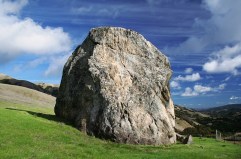 ‘The end justifies the means’ is the governing principle in the life of many. The implication is very clear, it does not matter how something is done, as long as positive results are reached. However, Moses would learn, though this is a common principle among men, it is not a principle for ministry.
 Jim Gallagher