Psalm 44:3
“For they did not gain possession of the land by their own sword, nor did their own arm save them; but it was Your right hand, Your arm, and the light of Your countenance, because You favored them.”
 Even a casual reading of the Old Testament will lead to the conclusion that Israel did not win their battles on their own. When armies are overthrown by the rushing waters of the Red Sea, walls toppled with rams horns, and a shepherd defeats a warrior with a sling and stone, it is clear that the hand of God is behind the victories. There are times when Israel went to battle in their strength, but those are the times of failure, not of triumph. It is hard to forget the Battle of Ai. Joshua sent the troops into battle without first seeking guidance from the Lord, only to see his army retreat and many soldiers lose their lives (Joshua 7:2-6). Clearly, the strength behind the success of the nation of Israel was the leading and empowering hand of God.
There are many differences between our relationship with God through Christ, and Israel’s relationship under the first covenant. We are not a nation that has been given a land, and promised victory in physical battles. That does not mean the battles we face are any less difficult. Every Christian knows what it is to face spiritual battles with an enemy as real as Goliath.
Paul described this battle to the Christians in Galatia, “For the flesh lusts against the Spirit, and the Spirit against the flesh; and these are contrary to one another, so that you do not do the things that you wish” (Galatians 5:17).
The battle we face is a battle within. It is between our desire to do what is right and pleasing to God, and our desire for what is unholy, sinful and destructive. Just as Israel’s success was not found in bigger armies, more advanced weaponry, or treatise with other nations, so our victories will not be won with determination or increased will power. To win the battle against the flesh, we need to apply God’s battle tactics.
Again the words of Paul instruct us: “For he who sows to his flesh will of the flesh reap corruption, but he who sows to the Spirit will of the Spirit reap everlasting life” (Galatians 6:8).
In other words, if we spend our time feeding the flesh, the flesh will become stronger; and in battle, the flesh will win. We will find ourselves defeated again and again. On the other hand, if we spend our time feeding the spirit with a healthy diet of God’s Word, prayer, fellowship and service, we will find greater and greater victory in the times of spiritual battle. I believe what we do in times of peace, determines who will win in the times of heated conflict. Too many Christians spend little time making daily spiritual investments in their lives, and wonder why they find themselves defeated over and over every time temptation rises.
The ways of God will never change. His victories are always accomplished in His strength. When we take the time to sow to the Spirit, we will have victory over the lusts of the flesh. If we don’t, we will continue to struggle, fail, fall, and be constantly riddled with guilt and weakness. You don’t have to live like that any longer. His arm will be your strength.
Pastor Jim
Questions for Psalm 44
- How are the truths of God delivered from one generation to the next?
- How are you involved in passing on the truth of God to others?
- In verse 3 – 8, what does the Psalmist attribute Israel’s victories to?
- Despite the victories, the Psalmist is describing the times of defeat. What does he do to remedy the situation?
 By killing his brother, Absalom had committed a capital crime. The law required, upon his return to Jerusalem, he be sentenced to death. In addition, he was living as a captive to a foreign king, without the hope of ever being restored. In an attempt to convince David to forgive and restore his wayward son, Absalom, this wise woman from Tekoa speaks of the ways of God. Her words are some of the most beautiful Old Testament expressions of the heart of God for humanity.
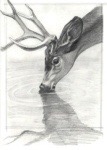 This Psalm begins with the Psalmist describing his hunger for more of God. In a beautifully poetic fashion, he compares his desire for God to a deer panting for water. Thirst is one of our most basic drives, second only to the body’s need for oxygen. He is not only stating that he desires more of God in his life, but that he cannot live without Him. Psychologists have made lists of basic human needs for mental and emotional health. These lists often include things like companionship, communication, a good diet, human touch, self acceptance and proper rest. Unfortunately, they often neglect man’s greatest need; our need for God. Paul wrote:
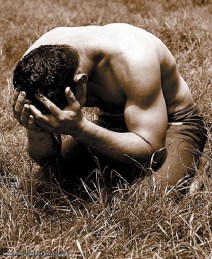 David and Bathsheba found themselves face to face with a parent’s worse nightmare. Their child was diagnosed with a terminal illness for which modern medicine had no answer. Like any of us, David was devastated, he would not eat or sleep, and those closest to him began to worry about what he might do to himself. When the sickness reached the end, and the child passed, David’s behaviors changed dramatically; he showered, ate, and worshipped. When questioned about the sudden change, he declared,
  David is one of the most famous men in history. He was a gifted singer, song writer and musician. By today’s standards, he would be considered a superstar. He was also a war hero, who led armies to great victory. No doubt, in that era, David would experience the same treatment as our most famous athletes. His popularity spread throughout the nation, so much so, that songs were being written about him. After reading of a lifetime of successes, we come to a striking passage where we read,
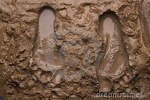 Without giving us the details, David describes the condition of his life as being in a horrible pit of miry clay. A mire is an area of wet spongy earth, like a bog or marsh. David was saying he was stuck in a very difficult place, and it seemed as though there was no escape. Unfortunately, life can be like that. Even when we are walking with the Lord, we come to times of great difficulties that seem to carry on and on, without hope of ever ending. Sometimes, these miry bogs are the result of what appears to be unrelenting waves of trials. Before we get our head up from one strike, we are hit with another. John Bunyan referred to these times as “The Slough of Despond.” if you are currently facing one of these times in your Christian walk, be encouraged with two things.
 It is easy to become weary in the service of the Lord. This is especially true when it seems we have failed. David sent a group of men as ambassadors of Israel to King Hanun of Ammon. He desired to show kindness to the king after the loss of his father, Nahash. What seemed to be a relatively easy mission, turned out to be an embarrassing failure. Instead of being met with kindness, these men were treated with contempt. King Hanun’s men shaved off half their beards, and cut their robes so that their buttocks hung out, then sent them home in shame. Ammon’s actions were such as to incite war and Joab led the charge. As the battle was about to begin, Joab encouraged the men, by reminding them what they were fighting for.
 I am a sports fan. I enjoy watching a variety of athletics, and am always fascinated when an athlete achieves victory, almost effortlessly. No matter what the opponents do, they are unable to stop him. Over the years, I have come to understand that those who seem to win with the least effort, are really the ones who have put in the most effort. They are the ones who are first in the gym and last out. Their diets, workouts, sleep patterns, even off days, are regimented so as to keep them in the best possible condition for victory.
 During the reign of Saul, Israel faced constant attack from within and without. From within, they faced uprisings from the Philistines; while beyond their borders, they were threatened by Moab, Ammon, and Syria. Saul’s foreign policy was to react to attacks as they came; once an enemy showed signs of attacking the armies of Israel, they would respond. David had a different approach. He decided to go on the offensive and remove the threats once and for all, even drawing a line in the sand to make his stance very clear.
