2 Chronicles 18:31
“So it was, when the captains of the chariots saw Jehoshaphat, that they said, ‘It is the king of Israel!’ Therefore they surrounded him to attack; but Jehoshaphat cried out, and the Lord helped him, and God diverted them from him.”
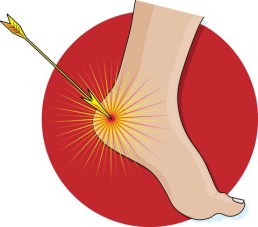 Greek mythology tells the story of the great warrior, Achilles, who survived many battles. As a baby, the legend foretold he would die young. To prevent his death, his mother took him to the River Styx, and dipped his body into the water. She held Achilles by the heel, so his heel was not washed over by the magical waters. Later in battle a poisonous arrow struck him in his heel killing him.
It seems that Jehoshaphat had an Achilles’ Heel of his own. We know him to have been a very godly man, who walked in the footsteps of the godly kings who reigned before him. We also know he was responsible for bringing spiritual reforms to Judah, and for sending teachers throughout the land to instruct the people in the ways of God. With all that, Jehoshaphat thought it was a good idea to befriend wicked king Ahab of Israel. A relationship that almost cost him his life. It wasn’t until he was surrounded by an enemy army, and face-to-face with his own death, that he realized the folly of this union and cried out to the Lord.
We need to be very careful. An ungodly relationship, or a compromise with sin, can undo years of walking with the Lord. It is not enough to wear some of the armor of God, we must wear all of it. If you have made steps toward walking with the Lord, but you are leaving one or two doors open to your old life, they will ultimately be your demise. Paul exhorted us to leave no provision for the flesh.
Perhaps it is time to reconsider some of your relationship choices. Are you being led away from the Lord by the company you are keeping? If so, make a break before you find yourself under a barrage of attacks too great to overcome.
Pastor Jim
 Sometimes, when reading our way through the Bible, we come across phrases that don’t seem to make sense. This is one of those times. In this text we find the king of Judah, a man reigning over the nation God chose to be a light to the whole world, strengthening himself against Israel. He is building defenses, not against the nations around him, but against the northern tribes who had the same call as he did. Instead of reading that the twelve tribes developed a unified front to reach the world with the message of God, we find Judah had to build defenses against the attacks from Israel.
 There are some truths that are so powerful it seems almost frightening to open them up. That is certainly true of this particular verse. The truth tucked away here is so powerful it has the ability to transform the life of every individual who will apply it, and to bring about real and lasting changes in the world in which we live. It is a truth that might even need a warning label. “If you apply this verse to your life, God will do great things in and through you.”
 Sometimes we come across passages of Scripture that are difficult to interpret. The imagery is something we do not quite understand, or we feel as though not enough information is given to really explain what the text means. THIS IS NOT one of those times. This passage could not be more clear. There is no doubt left in the mind of the reader as to what we are being told. Two contrasting truths are presented.
 Without giving the details of the particular trial he is facing, David writes a recipe for success when overcome with opposition. The recipe includes three key ingredients.
 In this portion of the Psalm, David prays three things: search me, try me and lead me. These are very interesting requests in light of what he has previously declared concerning God.
 “Thus says The Lord” is a very common phrase in scripture. All in all, it is used over four hundred times. We find God speaking to priests, prophets, kings and commoners. It becomes very clear that the problem is rarely with God being silent, and is more often with man refusing to listen and obey.
 David paints a picture that is familiar to all of us. He is surrounded by those who are not following Jehovah, and are feverishly pursuing other things. The false gods of the heathen nations represented the pursuits of the flesh. They had gods of sexual passion, pride, possessions, power, intellect and more. David found himself surrounded by those who rejected God, pursued the flesh, and looked down upon him as he looked up to the Lord.
 Jim Gallagher