2 Kings 10:31
“But Jehu took no heed to walk in the law of the Lord God of Israel with all his heart; for he did not depart from the sins of Jeroboam, who had made Israel sin.”
 When Jehu became king of Israel, he went on a rampage against those who had been loyal to Ahab, and his ungodly ways. At first glance, he seemed to be purging the nation to get the people ready to follow and serve the Lord. However, as time went on, it became clear that Jehu was only willing to go part way with the Lord. He removed some things, but failed to replace them with good. Today, it is not difficult to find people who approach their relationship with God just like Jehu did. They are those who are willing to go part way with the Lord, making a few changes, but are not willing to surrender all.
Jesus spoke of those whose life is like seed planted in a field filled with weeds. The seed germinates, the plant grows, and fruit even begins to appear, but because of the weeds, the plant is ultimately choked out, and the fruit dies (Matthew 13:22). The simple application is, when we allow things to remain in our life that should be removed, those things will choke out our ability to grow in Christ and bear the fruit of the Spirit.
The Psalmist wrote, the Bible is like a light and a lamp. When we open it and begin to read, it will shine a light on our life and reveal things that need to be removed, and changes that need to be made. The question we want to ask ourselves is, “What is the light revealing in my life?” If we are willing to let it shine, and make the proper applications, we will find ourselves growing in Christ, and bearing the kind of fruit that leads to pleasing God, and living a blessed life.
Pastor Jim
 Many men have been called and anointed by God for service. Unfortunately, too many follow the example of Jehu. He spent the beginning of his calling ridding Israel of those who had turned the nation against the Lord. One by one, his sword was a vehicle of judgment against the wicked leaders who went before him. Joram the king of Israel, Jezebel the queen mother, and Ahaziah king of Judah, were all slain for their wickedness, and crimes against the nation. After showing great zeal for righteousness in others, Jehu failed to show the same zeal for his own commitment to the Lord. After successfully using the sword against others, he allowed sin to run rampant in his own life. We read of him,
 Since we have been created by God, and in the image of God, it is natural for the heart to cry out for God. Every heart makes this cry. All over the world, and throughout time, people have been observing and realizing, there is more to life than what the eye can see. This has caused man to look up to the heavens and cry out for God.
 Sometimes, the reason a person fails to walk with the Lord is quite simple. In the case of Jehoram, king of Judah, it was anything but complicated; he got involved with an ungodly woman, who turned his heart from the Lord.
 The city of Samaria was under siege. The Syrian army with all it’s forces, had surrounded the city, and was starving out the people. The difficult times had caused the people to behave in deplorable ways. Sins so repulsive they are difficult to mention, ran rampant throughout the city. Within this scene, we read of four men living on the outskirts of the city. These men were lepers who were no longer living, as much as they were waiting to die. In this condition, they looked at one another and determined, starving to death was a worse way to die than being a Syrian POW. As a result, they decide to leave Samaria and surrender to the Syrian army.
 After choosing His people, God established laws to govern their behavior. There were moral laws and social laws, as well as ceremonial laws. All of which, when followed, would serve to benefit the individual, as well as the nation.
 Namaan was a Syrian general and a man of prominence within that nation. He was a courageous, well-spoken individual, who seemed to be both well liked and morally sound, by the standard of the day. With all Namaan had going for him, he was struck with a blow that would undo the strongest of men. A quick visit to his local doctor had revealed he had contracted the deadly and painful disease of leprosy. No doubt, he gathered with his family and closest friends to share the news. That meeting would have been filled with weeping and despair. No amount of money, power, or position could undo the deadly effects of this disease. He was destined for a long, painful struggle that would definitely end badly.
 Memory is a funny thing. There are certain things that no matter how hard I try, I cannot seem to remember, and other things I can never forget. Names are particularly hard for me. It is not that I don’t care, or don’t want to remember; I just have a mental block. I have tried all the tricks: concentrating when the person introduces themselves, repeating the name back to them, using it in the conversation, and even relating their name to something else. Still, if some time has passed, and I encounter them again, the file that holds their name has been corrupted, and my memory refuses to access it.
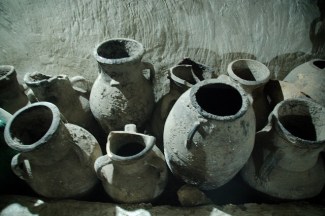 Living conditions in Israel had become very difficult; the nation was constantly at war with its enemies, years of drought had created wide spread famine, and morality was in decline. These things affected the living condition of everyone, regardless of their social status. In the story before us, we are introduced to a poor widow who is facing starvation. Without giving details, we learn that her husband, a godly man, had died and she and her sons were on their last leg. All her resources were gone and the creditors were at the door. In her distress, she sought counsel from Elisha who asked a simple question, “what do you have?” To which she replied, the only thing left in the house was a jar of oil. Elisha went on to instruct her to borrow vessels from her neighbors and fill them with oil from the jar. When she did, they found that the oil poured as long as their was an empty vessel to put it in. I think there are at least two valuable applications from this passage.
 Jehoshaphat made the same mistake we all make, he made a decision without first consulting the will of God. His decision seemed, on the surface, to be a wise one. The king of Moab was threatening Israel, and if not stopped, it would not be long before he was a threat to Judah. It seemed, joining forces with Israel to attack Moab was the right thing to do. Soon it became apparent, the Lord was not behind their endeavor. After seven days of travel through the desert, the armies arrived, only to find the waters had dried up. In the heat of the desert, they found themselves seven days away from water. Without a miracle, the armies would perish before ever stepping onto the battlefield.
 Jim Gallagher