1 Thessalonians 2:13
“For this reason we also thank God without ceasing, because when you received the word of God which you heard from us, you welcomed it not as the word of men, but as it is in truth, the word of God, which also effectively works in you who believe.”
 A few days ago I was working at my computer using a program that had been updated with new features. While I had used the program before, these new features added elements with which I was unfamiliar. I was having trouble with what should have been a pretty simple task. Each time I tried to make it do what I wanted, the program would override my action, doing something else to the document. In frustration, I called out for help from one of the other pastors, who is quite computer savvy. When he came to my aid I said, “This stupid thing is not working.” To which he replied. “That’s because you are doing it wrong.” After a moment of being offended, I realized he was right and I humbled myself allowing him to show me the correct way to work the program. I was delighted to find it was not the program that was being stupid, and the upgrades were actually quite helpful. But what does that have to do with our text?
“The word of God, which also effectively works in you who believe.”
I have heard people say something to the effect of, “I tried reading the Bible, but it did not work for me.” Others, might even goes so far as to say, “I tried Jesus, it did not work.” To which I think the proper response would be, “you are doing it wrong.” Notice that Paul speaks of the effectiveness of the Word of God to work in the life of the believer. He actually lists three necessities if we want the Word of God to work effectively in us.
“You received the word of God which you heard from us”
First, they took the time to hear the Word of God. We read in Romans that “faith comes by hearing the Word of God” (Romans 10:17). The first step to being transformed by God’s Word is to receive the Word. We must put ourselves in a place where we are ingesting the Word of God on a regular basis. This includes the need for daily Bible reading, as well as church attendance, where we are being taught through the Word of God. Sadly, not all churches teach the Word. Find one that emphasizes the Bible and teaches through it.
“. . .you welcomed it not as the word of men, but as it is in truth, the word of God, . . .”
Second, as they read through the Word, or heard Paul teach, they recognized these were not the opinions of man to be argued with, updated or discarded. Instead, they realized the Bible is in fact, the Word of God given to man. Writing to Timothy, Paul declared the Word of God is inspired and profitable. We all like that word profit, it means we gain from it. When we understand the Bible is of great value, take the time to listen to it, not to argue with God, or try to conform its teaching to fit our lifestyles, we will find that it effectively works in us.
“. . . the word of God, which also effectively works in you who believe.”
Finally, Paul declares when they heard the Word, it was coupled with faith. They believed God wanted to do exactly what He said and they expected to see those things worked out in their lives. I recently read a tweet that said, “If you are not praying for a miracle you probably won’t get one.” The same idea is true when reading the Word. If you do not believe what God is saying, you are not going to be willing to put it into practice, and you will find yourselves accusing the Word of God of being impotent, instead of effectual.
Allow me to encourage you to approach your Bible as the Word of God, receiving it daily, trusting in its warnings and promises, so you, like the Thessalonians, may find that it has effectively worked in you.
Pastor Jim
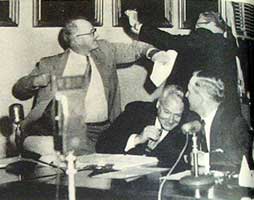 Galatia was located northwest of Syria. It was a region consisting of such places as Tarsus, Iconium, Lystra and Derbe. It was the location of Paul’s first missionary journey. As Paul and Barnabas traveled throughout Galatia preaching the Gospel, many trusted in Christ and churches were birthed. While nothing matches the thrill of seeing someone come to Christ, the preaching in Galatia came at a very high price. It was there, Paul was beaten and left for dead. Some suggest, the vision problems that plagued him, were a result of the severe beating he endured at the hands of those who rejected Christ. This persecution was initiated by the Jewish people who refused to accept that Jesus was the Christ. After Paul and Barnabas departed, these young Galatian converts were left to endure this hostility. They would be ridiculed, bullied, harassed, threatened and more, all because they were living in a way that was not deemed culturally acceptable.
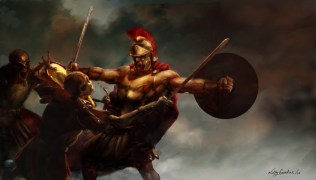 The word ‘walk’ is a common idiom in the New Testament used to illustrate the way we live. Paul is reminding us that whether we are believers or not, we live in the natural world. Believer and unbeliever alike, breathe the same air, eat the same food, and need the same rest. Having said that, Paul goes on to remind us that, although we live in the natural world, we fight a spiritual battle. He does not use the word WAR, as a hook for his sermon, instead he is describing the everyday life of the Christian. From the moment we rise each and every day, we are in the midst of spiritual battle. One of the factors making this battle so difficult, is that it takes place on two fronts. We all battle against our own flesh. We must fight to resist temptation, overcome sin, and live as godly ambassadors of Christ. At the same time, we are battling to see our friends, family, neighbors co-workers, and acquaintances come to Christ. These battles are not won by natural means, but with spiritual weapons.
 Years ago some good friends of mine were involved in a business transaction that drew a lot of press. It was not long before the papers decided to go public with the story. As we cracked open the paper, it was almost comical to read their account because it was filled with so much error and had even misquoted certain individuals. They had not really paid attention to the facts, or those they chose to interview, and instead wove a story that they thought sounded good.
 A person, standing at a distance and looking in at Solomon’s kingdom, would be struck by the enormous wealth and prosperity. We read of merchants traveling the world and returning with treasures of gold and precious stones, as well as exotic spices and animals. We are told, the landscape was marked with elaborate building projects, fine arts, and gourmet foods. Beyond question, the nation looked to be at its apex, and was envied by the world around them. In fact, we are told that delegations, including kings and queens, would make their way to Israel just to see its highly developed society and vast wealth. All the world wanted to be like Israel. Sadly, things were not really as they appeared. Underneath the surface was a cancer that was eating away at the fabric of the nation, and in a few short years would cause its collapse.
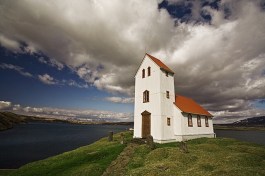 The primary purpose of the Temple was to serve as a place where God and man could meet, however, it also serves as an illustration of the our salvation. Each of the furnishing depicts an aspect of our relationship with God. We can walk through the courts of the Temple and be reminded of the main elements of our salvation.
 One of the strangest phenomenon that I have experienced, over the years, is to hear the unbeliever quote the Bible. It fascinates me how those who have read so little of it seem, at times, to consider themselves the authority on what it says. Those who are living a lifestyle which the Bible does not condone, and quite frankly, they know to be wrong, are so quick to pull words from the Bible to justify their behavior.
 I am a sports fan. I enjoy watching a variety of athletics, and am always fascinated when an athlete achieves victory, almost effortlessly. No matter what the opponents do, they are unable to stop him. Over the years, I have come to understand that those who seem to win with the least effort, are really the ones who have put in the most effort. They are the ones who are first in the gym and last out. Their diets, workouts, sleep patterns, even off days, are regimented so as to keep them in the best possible condition for victory.
 King Ishbosheth’s officers could see that the kingdom was collapsing; Abner, the head of the military had joined forces with David and Ishbosheth was so depressed he spent his days lying in bed. Baanah and Rechab saw this as an opportunity to make a name for themselves. Thinking they would be richly rewarded, they decided to kill the king and bring his remains to David. Their thoughts and behaviors were a clear violation of the Word of God, and of the heart of king David, yet they convinced themselves they were serving God.
 Jim Gallagher