2 Samuel 11:2
“Then it happened one evening that David arose from his bed and walked on the roof of the king’s house. And from the roof he saw a woman bathing, and the woman was very beautiful to behold.”
 David is one of the most famous men in history. He was a gifted singer, song writer and musician. By today’s standards, he would be considered a superstar. He was also a war hero, who led armies to great victory. No doubt, in that era, David would experience the same treatment as our most famous athletes. His popularity spread throughout the nation, so much so, that songs were being written about him. After reading of a lifetime of successes, we come to a striking passage where we read,
“. . . it happened one evening. . .”
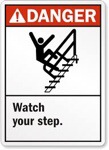
One evening forever changed the life of David. What a different testimony he would have had if only the events of that evening had gone differently. Had he closed the blinds, stayed off the balcony, heeded the warning signs, or even admitted his mistakes, the rest of his life would have been drastically different. It seems to me, David made certain compromises along the way, making it next to impossible for him to resist the temptation of the bathing Bathsheba.
First, although David was a married man, he allowed the culture to define his married life, rather than the Word of God. In our world, when a person succeeds, it is common to get a new car, house, or some bling. In David’s day, when the oriental kings succeeded, they would add wives. The more wives, the greater your success. However, multiplying wives violated the Word of God.
Second, it seems David had learned to compartmentalize his life. As wives and concubines increased, he still worshipped, offered sacrifices, planned for a Temple, and ruled the nation. He truly loved God, but he struggled with his flesh. It was not until he came in contact with Bathsheba, that his subtly sown seeds of disobedience caught up with him, and he fell into adultery. David ultimately faced a temptation so great that he could not resist.
The same is true for each of us. Those careless glances and long stares will build a fire that will one day burn us. The battle for our holiness, purity, and even our marriages, is won long before the temptation is faced. It is daily living that will give the victory. A marathon is won at the alarm clock, the breakfast table, the donut shop, as much as it is won on the track and field. If we hope to win the battle for holiness, we must win the battle at the computer terminal, the magazine rack ,and the TV screen.
Third, once David fell, he spent his time with a cover up. He learned the art of private browsing and how to delete his search history. This cover up had a devastating effect upon his life. The man who was once filled with such mercy that he spared the life of Saul, is the same man who is ready to kill a man for stealing a lamb. Sin had so hardened David, he began to change. He was no longer recognizable as the “man after God’s own heart” (Acts 13:22). Guilt is like that. It has the ability to harden, the heart like tempered steel, so we are changed into someone we never wanted to become.
Fortunately, this is not the end of the story. David repented. A marriage that began in a bad way, was redeemed by God. A woman who once seduced the king, found her way in the genealogy of Christ. it is important to remember, no matter how badly we have fallen, His grace is greater than all our sin. It has been said that He is a bigger Savior than I am a sinner.
No matter how you have fallen, Jesus wants to restore you, and redeem what has been destroyed. He can redeem a broken life, a shattered marriage, and a destroyed witness, if you will let Him. It is time to make David’s prayer the cry of your heart.
Psalms 51:10
“Create in me a clean heart, O God,
And renew a steadfast spirit within me.”
Pastor Jim
 Over the years I have discovered something about myself, I am better at projects than I am at maintenance. My yard is a classic example. We worked hard to irrigate, lay sod, and plant trees, and our yard looked good for a little while. As time went on however, we discovered that neglect undid much of our labors, and before long, things looked rather unkept. It seems like Azariah had a similar problem; while he desired to live pleasing to the Lord and made great strides, he still neglected certain areas that needed his attention. One area in particular, was the “high places”, where altars were built to false gods. These shrines were destructive to the nation because they served as an open door to lead the people away from the true and living God. The only way to properly deal with the high places was to aggressively attack the problem. Azariah needed to mount an offensive and destroy the altars.
 A great controversy arose in the early church as a result of the Gentiles coming to faith in Christ. Some of the church leaders in Jerusalem were suggesting that after coming to Christ, these new converts must be circumcised and keep the ceremonial laws. I think their motives were probably sincere. They wanted to see these new believers behaving correctly, and determined the best way for them to do so, was to make rules. We see the same thing happening in the church today. A young woman may come to Christ, and still dress the way she did before she believed, so the church is pressured to have a dress code. Or a young man comes to Christ and still listens to the music he did before coming to Christ; the church wants to establish a ban on secular music. Now it is true, there are people who dress inappropriately, and listen and watch things that they shouldn’t, but the question is, what is the best way to help them grow? The legalists, from Jerusalem, thought it was through the establishing of a system of rules to keep them in check. The apostles came up with a different plan, they wrote a letter exhorting the Gentiles to abstain from three things.
 Mingled into the fabric of the betrayal, arrest, conviction and crucifixion of Christ, is the story of Peter’s denial. What happened to him? He went from confidently stating he would never deny Christ, to hiding his faith, denying his Lord, and bitterly weeping. While we never start out to fall, the path we walk will always determine our final destination. Peter’s path inevitably led to Peter’s fall. Let’s take a few minutes to notice the steps leading to his failure, that we might avoid these same pitfalls.
 As we read the story of Abraham, we find erecting altars was a regular part of his walk with God. On five separate occasions, he took time to build an altar and call on the name of the Lord. These altars were tangible ways for Abraham to express his commitment and devotion to the Lord for all God had done for him. The story behind this altar is of particular importance, as we seek to walk with God.
 Prudent means to be wise or even shrewd. The prudent man is the one who looks carefully down the road he is walking, in order to avoid falling into sin and away from the Lord. The simple, or foolish man, keeps walking, never aware of the danger he is in until after it has overtaken him. Obviously, Solomon is exhorting us of the need to be watchful. The Greeks were expert story tellers. They had established a vast system of gods, heroes, and villains, to help explain the unexplainable, and instruct the generations to come, regarding morality. One of my favorite stories is of a man whose name means forethought, who was given guardianship of a box that contained all the evil of the world. On one occasion, he left the box in the care of of his brother, whose name meant afterthought, and instructed him to not allow his wife, Pandora, to look inside. After his brother departed, Afterthought was influenced by Pandora to open the box, allowing evil to spread throughout the world. It was not until after he had allowed her to open the box, he realized the danger of his decision. There is a modern proverb that declares much the same truth,”fools rush in…”
 Jim Gallagher