Habakkuk 1:13
“You are of purer eyes than to behold evil, and cannot look on wickedness. Why do You look on those who deal treacherously, and hold Your tongue when the wicked devours a person more righteous than he?”
 Habakkuk struggled to understand what was happening in his life, because his theology did not allow for the wicked to prosper and the righteous to suffer. His definition of holiness meant that those he considered to be wicked, could never prosper above the righteous. The prophet is not alone in the struggle to reconcile life experiences with what we think to be true of God.
A few years ago, I had a conversation with a young lady who had developed the idea that it is the desire of God to heal everyone, and if a person is not healed, it must be because they either have sin in their life or they do not have enough faith. Her theology of healing was not developed from Scripture, but from her understanding of love. When I confronted her with passages where godly people like Paul and Timothy both encountered illness without healing, she ignored them and expressed that, if she as a parent had he ability to heal her child she would, and that God loves His children more than we do ours. It was her misguided theology of healing that made it difficult to reconcile the love of God with personal suffering. The fact is, God does allow His children to endure hardships that will draw us nearer to Him, perfect holiness within us, and develop a longing in our hearts for heaven.
If you are facing difficulties that are unsettling to your faith, it may be that it is time to look into the Scriptures and make sure your faith is resting on the sure foundation of the promises of God, rather than a doctrine that has been developed out of personal experience or desire.
Pastor Jim
 This verse contains an exhortation followed by a promise. The exhortation is to search the book of the Lord. Webster defines search this way, “to look into or over carefully or thoroughly, in an effort to find or discover something” My wife and I look at some things quite differently. When an item is misplaced I become frustrated, thinking that if it is not where it belongs, there remains an unlimited number places to look. She on the other hand begins to search. I think she sometimes enjoys the challenge. Inevitably, in a matter of minutes, she has located that which is lost. We should approach the Word of God the way an explorer or a excavator approaches life. We must understand, there are precious treasures tucked away in the Bible, and if we are diligent, we will find the ones that are designed for our present condition. I once heard of a man in search of gold. He spent years working his claim only to come up empty. Finally, in a moment of discouragement he sold the rights to his land and moved on. The new owner, within a few days, struck it rich. The first man had given up only inches away from the mother lode.
 Tucked away in the story of the Philistines return of the Ark to Israel, is this powerful exhortation regarding the danger of hardening our hearts to God. We are reminded of the difficulties Pharaoh endured because of his refusal to humble himself and obey the Word of God. The lessons from this exhortation are twofold.
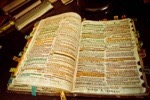 Paul and his companions were traveling throughout Greece. They had been in Philippi, Thessalonica, and would soon be in Athens. These were all very prominent cities. Philippi was the foremost city in the region of Macedonia, and Athens remained the scholastic capital of the Empire. Berea, on the other hand, was a small town, which in the large scale of things, was pretty insignificant. No one would be impressed with someone from Berea. They were not known for their universities, trade, or monuments.
 Jim Gallagher