Numbers 33:52
“. . . then you shall drive out all the inhabitants of the land from before you, destroy all their engraved stones, destroy all their molded images, and demolish all their high places; . . .”
 God described the land He was giving Israel as a land that flowed with milk and honey. He was of course speaking figuratively of the blessed life that the children of Israel would experience within the land. This blessed life was conditional upon their obedience to Him, and their obedience included some driving out, and some demolition. They were instructed to tear down all of the images and the places where the false gods were worshipped. They were to leave nothing that would serve as a source of temptation. Moses went on to explain,
“. . . those whom you let remain shall be irritants in your eyes and thorns in your sides, and they shall harass you in the land where you dwell.”
Sadly, as the story unfolds, we will learn that Israel failed to drive out and demolish, and for centuries struggled with the temptation of the sins they allowed to remain in the land.
It is not difficult to draw a parallel between their experience and our lives. In order for us to experience the abundant life that Jesus offers, we also must do some driving out and some demolition. There are things that cannot remain in our lives if we are going to successfully walk with Christ. Those things include anyone or anything that will be an irritant, tempting us to sin and leading us away from the ways of God. Israe failed to obey this command partly due to the fact that they liked having some of those things around. They placed value on what God had banned and it was not long before they were caught in sin.
Stand back for a moment and examine the things in your life. Is there anything that needs to be removed? The way to do it is to go to the cross and lay it at the feet of Jesus, asking for His pardon, and strength to never pick it up again.
Pastor Jim

 Growing up, one of my favorite TV shows was Sherlock Holmes. As most of us know, he was a detective from London who used his keen skill of observation to solve crimes. Often, when he would uncover a clue, he would declare, “It’s elementary my dear Watson.” Which was an underhanded way of stating that what he discovered was obvious to anyone who would take the time to look. Hosea makes a statement that Holmes would find elementary, he declares that if a person builds an altar for sin, he will find it leads him into sin.
 Jeremiah is describing the judgment that will fall upon Moab. He explains, in vivid fashion, that one of the chief causes of their wickedness was the fact that they were like a vessel which had never been cleaned. Their failure to allow the difficulties of life to purify their actions, ultimately lead to their judgment and destruction.
 God designed sexual intimacy as part of the marriage relationship. It is the most intimate of all acts and plays an important role in the love relationship between man and wife. In the book of Hebrews we are told, “Marriage is honorable among all, and the bed undefiled.” (Hebrews 13:4)
 Jesus, speaking figuratively, said if our hand causes us to sin we should cut it off, and If our eye causes us to sin we should pluck it out (Matthew 18:8-9). Essentially, He was saying we should take radical action against personal sin. As the book of Nehemiah comes to a close, we see Nehemiah doing just that. He has seen the devastating effects sin has on an individual and a nation, and decides it is time to take a radical stance against sin.
 In this portion of the Psalm, David prays three things: search me, try me and lead me. These are very interesting requests in light of what he has previously declared concerning God.
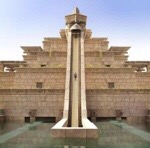 After Solomon ascended to the throne of David, he was gifted by God with everything necessary to become the greatest king the world had ever known. Because of his father’s military campaigns, the nation would experience a time of peace unlike anything they had ever known. The wisdom of Solomon and the wealth of the nation made it seem as though they would have years and years of abiding peace, strength and growth. It seemed as though nothing could stop the nation that had been birthed by God. Tragically, in a few short decades, this nation would go through a heated civil war, dividing the nation, and costing many their lives. Not too much later, this nation would be defeated over and over again by their enemies, until they were finally overthrown and carried captive to Babylon. What happened? What caused the rapid fall of a nation with such promise?
 Josiah was the youngest king to reign over the nation of Israel. At eight years old, his father died and he ascended the throne. We read very little of the early years of his reign, but at eighteen, he began a campaign to reform the nation, and turn the people back to the Lord. Josiah would go on to become one of the greatest kings in the nation’s long history. His success is summed up in three simple statements: he did what was right, he walked in the ways of the Lord, and he did not allow himself to become sidetracked by other things. As his story unfolds, we see the application of each of these points.
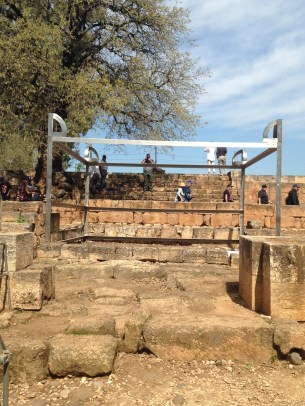 If a traveler from a distant land were to arrive in Israel during the reign of Ahab, there would be little to convince him that these were a people chosen by God. If he entered from the north, the first thing to catch his eye would have been a massive altar built on a high hill in the area of Dan. This altar was erected to give worship to a massive golden cow the people revered as their god. If he came from the south, he would see a similar site erected in Bethel. If he made his way into the heart of the nation, to the newly built city of Samaria, he would find the focal point of the city was an altar built to Baal, the god of fertility. If our traveler were to continue through the towns and villages of Israel, he would see a wide variety of altars and high places built to almost every imaginable god under the son. Essentially, Israel had deteriorated from a nation whose purpose was to glorify YHWH, and be a beacon of light to the world, to a nation just like their neighbors. They had all the same problems, and addressed them with all the same solutions, as those who had never met the Lord.
 Jim Gallagher