Psalm 69:1-2
“Save me, O God! For the waters have come up to my neck. I sink in deep mire, where there is no standing; I have come into deep waters, where the floods overflow me.”
 This Psalm is fulfilled in at least three ways. First, it expresses an actual time in the life of David. His enemies have mounted up against him with such great force that he feels like one who is drowning in a mighty flood. The enemies he faces are those who have sided with Saul, to seek his life; those who were against him because he had chosen to follow God, and finally, and perhaps his greatest enemy, is his own sin. In the midst of the battle for his own life, sin had mounted up like an army, seeking to destroy him. David’s victory over these enemies is found as He seeks the mercy of God. He writes, “Hear me, O Lord, for Your lovingkindness is good; turn to me according to the multitude of Your tender mercies.” Psalm 69:16
Second, this Psalm has fulfillment in the daily life of the child of God. At times, we find ourselves facing enemies far greater than ourselves. Trials can be like a mighty force that we cannot overcome; there are even times when people turn against us. Like Job, when we need someone the most, we often feel like we have been deserted. However, the greatest enemy, the one that wages the most intense battle against us, is personal sin. We all know those times when our easily besetting sins seem to mount an offensive so great that we wonder when we will be taken down. It is in those times, we must follow the example of David, and look up to Heaven’s throne of Grace and cry out, “Hear me, O LORD, for Your loving-kindness is good; turn to me according to the multitude of Your tender mercies.”
Finally, this is another of the Messianic Psalms. It has it’s fulfillment at the Cross of Christ. Verse twenty-one draws our attention to the crucifixion; “They also gave me gall for my food, and for my thirst they gave me vinegar to drink” (Psalm 69:21). Jesus was also surrounded by enemies. The enemies He faced were the religious leaders, Roman soldiers, a multitude of onlookers, and even some who had once followed Him. They were all now crying out for His execution. When Peter explained the events of the crucifixion in Acts 2, he made it clear that it was not the Romans, or even the Jewish leaders, who were responsible for the execution of Christ. He said to a group of people, many who had traveled from a distant land, and were not present at the death of Christ, “ . . .you have taken (Him) by lawless hands, have crucified, and put to death” (Acts 2:23). Jesus went to the cross to satisfy the wrath of God. His death provided a way for the insurmountable forces of sin to be conquered, and eternal life to be provided. Our cry for mercy can be answered because of the atoning death of Christ. Even when our sins wage war against us, and it seems like a force too great to withstand, we can cry out to heaven for mercy, forgiveness and victory.
Take time to look to His mercy today.
Pastor Jim
 By killing his brother, Absalom had committed a capital crime. The law required, upon his return to Jerusalem, he be sentenced to death. In addition, he was living as a captive to a foreign king, without the hope of ever being restored. In an attempt to convince David to forgive and restore his wayward son, Absalom, this wise woman from Tekoa speaks of the ways of God. Her words are some of the most beautiful Old Testament expressions of the heart of God for humanity.
 Like all of us, King Saul struggled with his emotions. When he looked at David, he did not see Israel’s rising star, or a man after God’s heart, but only a man who was a threat to his throne. Saul found himself filled with jealousy, fear, pride, and anger. As the story unfolds, we find these sins ultimately became his downfall. His failure was partly due to the way he dealt with his sin.
 As I read through the book of Judges, I am confronted with mixed emotions. On the one hand, it is a sad and tragic story of repeated failure. Over and over, we are told of the compromise of the people of God, and the suffering they experienced as a result. We are told, much of the reason for their repeated failure, was that they did not know how to fight. Instead of realizing they were facing spiritual battles, and engaging in conflict against compromise, they simply gave in. Judges records the story of failure which is often repeated today.
 Much has happened since Peter first met Jesus. In a few short years, it seems as though a lifetime has transpired. Peter, the fisherman, has become Peter, the apostle. The young man who used to spend his days on the Sea of Galilee pursuing fish, is now a man who has spent over three years fishing for men. I imagine, at one time, his stories were all about his biggest catch, or perhaps times of weathering one of the storms for which the Sea of Galilee was famous.
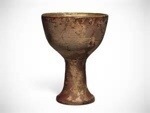 In the garden of Gethsemane, Jesus spent hours in prayer. The portion of the prayer recorded for us had to do with a cup. The event is recorded in Mark 14:35-36,
 God established three retreats in the calendar year for His people. Three times a year they would gather together to celebrate the Lord, and what He had done for them. At the Feast of Unleavened Bread, they were to remember the way they were supernaturally delivered from Egypt. At the Feast of Weeks, they were to remember they were once slaves in Egypt. And at the Feast of Tabernacle, they were to rejoice over the new life they had in the land.
 As the cloud begins to move, the Children of Israel take their first steps toward the Promised Land. It does not take long before they begin to complain about their circumstances. In response to their complaints, God sends a burning fire upon some who dwelt in the outskirts of the camp. Why is God so upset by their complaints? Why does He treat complaining so harshly? Keep in mind, God was in charge of their wilderness expedition. He was in the lead. He controlled the cloud, the fire, and the blowing of the horns. They were following His orders. They were not in the wilderness by accident or happenstance, but by God’s direction. By complaining, they were actually saying, “God, we gave you the lead and You’re simply not doing a good job.” or perhaps, “If I were God, I wouldn’t do it that way, I wouldn‘t treat my people like that.” And as a result of their complaining, the anger of the Lord is aroused and they get burnt.
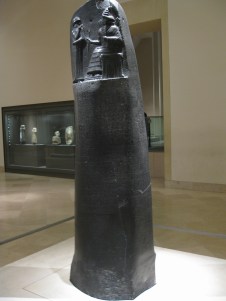 This section addresses the subject of marital problems; specifically that of jealousy. If a husband suspects his wife of cheating on him, but has no evidence, only suspicion; or if she hasn’t cheated, but he becomes jealous of her, this is what they are to do. The man is to bring his wife before the priest, and the priest is to make a concoction for her to drink (holy water, dirt and dried ink). Then, if she cheated on her husband, when she drinks it, her thigh will rot and her belly will swell. What’s this all about?
 Giving is an important part of being a Christian. Our checkbook often reflects our heart. The things that matter most to us are the things on which we spend our hard earned money. When we are struggling about whether we can trust God with our finances, we are sometimes reminded of this verse. While it is true God is trustworthy and we will never be able to out give Him, I think we have missed a key message from this verse. Note with me the context; Jesus has been speaking of the Father’s mercy. He tells us God is kind to the unthankful and the evil, and we should be like our heavenly Father. Rather than being critical of every action, we should forgive one another.
 Jim Gallagher