Exodus 29:20-21
“Then you shall kill the ram, and take some of its blood and put it on the tip of the right ear of Aaron and on the tip of the right ear of his sons, on the thumb of their right hand and on the big toe of their right foot, and sprinkle the blood all around on the altar. And you shall take some of the blood that is on the altar, and some of the anointing oil, and sprinkle it on Aaron and on his garments, on his sons and on the garments of his sons with him; and he and his garments shall be hallowed, and his sons and his sons’ garments with him.”
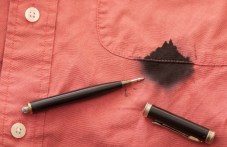 The Lord went to great detail to explain the garments that the High Priest would wear. He referred to them as holy garments, designed for glory and for beauty. In other words, they were designed to both look beautiful and to reveal some aspect of the Lord’s glory. These garments included a breastplate, an ephod, a robe, a skillfully woven tunic, a turban, and a sash. The most highly skilled artisans in all Israel were commissioned to create them. Once the day of consecration arrived, Aaron and his sons were dressed in the most beautiful and highly technical attire the world had ever seen, but as they approached the altar, something quite striking took place. An innocent ram was killed, it’s flesh offered upon the altar, it’s blood mixed with anointing oil, and this mixture placed upon the Priest. Imagine how shocking to see the High Priest all dressed up, then have blood splattered upon his garments. No longer would our attention be drawn to his beautiful turban, breastplate or sash, now all we would notice was the stain.
God wanted the people, then and now, to understand that access to God is never based upon what we try to do to earn it. All the skilled artisans on the planet could not create attire clean enough to grant access to God. Access to God is only granted when sin is covered by the blood of the innocent. This was symbolized by the blood stained garments of the Priests, and pointed to the time when Christ would make a way for all to have access to God.
Hebrews 9:12
“Not with the blood of goats and calves, but with His own blood He entered the Most Holy Place once for all, having obtained eternal redemption.”
The blood was also placed upon the ear, toe and thumb of the Priest. This was symbolic of a cleansing of all that he had done, and preparation for where he would go. How often have we laid our head on our pillows at night only to be consumed with guilt, for the things we have heard, seen or touched. We live in a fallen world, and sin is always around us. It is so comforting to know there is cleansing available to free us from sin and guilt.
Pastor Jim
 When I am deciding on what to wear, one of the key factors is comfort. I have owned clothing that fit and might even have looked nice, but I rarely ever wore, because it simply was not comfortable. I imagine if I had a coat with two large stone shoulder pads, it would not be my first choice for a Sunday service.
 Journeying through the gospels, we have many glimpses into the emotions of Christ. We see His compassion upon the multitudes and the sick, His love toward the rich young ruler, His sadness at the death of Lazarus, His tenderness toward the children, and so much more. As we encounter Him at the Temple, it is His anger that becomes evident to us. We read of Him turning tables over and driving people out of the Temple. Whatever we do not understand about this event, it is clear to all that Jesus is very upset with what is going on in the Temple courts. The key to unlocking the meaning of this event is in the words of Jesus Himself. He said,
 One of the key furnishings for the Tabernacle was the Altar. It was a large wooden structure overlaid with bronze. It was located within the gate of the courtyard, and outside the entrance of the Tabernacle, itself. It was on the Altar, where all of Israel’s sacrifices were offered. After the construction of the Tabernacle was completed, the nation gathered around and dedicated it to the Lord; concentrating on the Altar, with its sin offerings.
 A few years ago I heard a word I had never heard before, or ever dreamed could be real. That word was “glamping.” “Glamping,” according to the urban dictionary, is “a form of glamorous camping done by urban types.” Those who “glamp” turn tents into elaborate structures with all the comforts of home. Once inside the tent, you are sure to forget you are in the wild. Of all the glamorous tents ever constructed by these wanna be campers, none could compare in beauty or cost to the Tabernacle Israel built in the wilderness. At the current value of an ounce of gold, the Tabernacle would have cost more than $50 million just in materials. The question is, where did all that money come from?
 Imagine the thrill that must have filled Bartimaeus when he heard these words. Although his eye did not allow him to see, he had heard the stories of the man from Galilee, who was healing the sick and raising the dead. Now Jesus was right there within the sound of his voice, able to hear his cries. Knowing that he had nothing to offer, Bartimaeus simply cried out for mercy. “Jesus, Son of David, have mercy on me!”
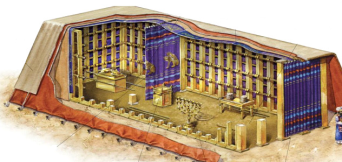 Moses was invited by God to ascend Mount Sinai. Upon reaching its pinnacle, he received the Law of God, and the blueprints for the Tabernacle. The Law was given to reveal the perfection of God, and the sinfulness of men. Had Moses descended the mountain with only the Law, humanity would have been forever condemned. Fortunately, Moses was also given design plans for a large and elaborate tent called the Tabernacle. This tent was designed as the meeting place between God and man. Over and over, we read of it being built “according to the pattern which you were shown in the mountain” Exodus 26:30. This heavenly pattern would serve as a means to reveal God’s plan of salvation. Each and every detail of the Tabernacle, would serve as a picture of the sinfulness of man, the holiness of God, and the way to fellowship with God. Nothing revealed this more than the veil which divided the Tabernacle.
 “If you want something done right, you have to do it yourself.” I am quite certain most of us have heard this little slogan. The lesson in it is, there is no way to get a job done properly, unless you alone are the one to do it. I would guess each of us could supply loads of empirical data that would support such a statement. We have all given a task to another, only to find they proved less than qualified to accomplish it.
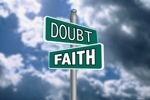 We are introduced to a man facing one of life’s greatest obstacles, the illness of his son. We have little glimpses into the great love he had for his child. We are told the father cried out with tears, and although the boy had been suffering from childhood, his father stood with him, even risking his life to rescue him. When he finally came face to face with Jesus, he was given a great promise; “If you can believe, all things are possible to him who believes.” This man’s response is both practical and poetic. “Lord, I believe; help my unbelief!” It seems to me, this man had many reasons not to believe. His son, whom he loved, was tormented; this had been going on his whole life. He implies that time and time again, his son was at the point of death, only to be rescued by his father. It seems clear, nothing medically could help him. To make matters worse, he had come to the disciples, and they were no help. It is not difficult to understand why he was filled with unbelief. Love, medicine, and religion were of no help in overcoming the great obstacle he was facing. It is easy to see why his faith had waned.
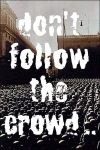 The Law of God was given as a standard to show the people their need for a Savior, and as a pattern to ensure that the people lived righteous lives. Here we find a principle that would protect Israel from becoming like the surrounding pagan nations. God is declaring that popular opinion is not what determines right from wrong. Almost every child has heard his parents say, “Would you jump off a cliff if your friends were doing it?” We attempt to instill within our children the principle that just because the crowd is behaving a certain way, it does not make it right. Sociologist refer to “mob mentality.” They say it is possible for individuals to lose the ability to think for themselves, and begin to follow whatever the crowd is doing. Living in a democratic state can make this even more complicated. God declares to Israel that popular vote is not the standard of righteousness. If all the people vote to erect a golden calf to represent God, that does not make God a gold cow. His righteous standard will never be changed simply by getting a crowd to reject it.
