Exodus 36:30
“So there were eight boards and their sockets—sixteen sockets of silver—two sockets under each of the boards.”
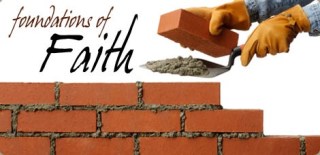 The Tabernacle was designed in Heaven, and serves as a picture of the work of salvation. Each article is pregnant with symbolism and serves to illustrate various aspects of salvation and sanctification. The roof of the Tabernacle was supported by wooden walls overlaid with gold, and the walls were held in place by silver sockets or foundation stones. Two interesting facts about these silver blocks are worth our attention.
First, it interests me how the blocks were obtained. Earlier in Exodus, we read of a tax of half a shekel placed upon every person. No matter what a person’s socio-economic condition, they were all required to bring the same amount. This redemption money, as it is often called, serves as a picture of what is required of us in the process of salvation. No person was required to pay for, or build, the Tabernacle on their own, that would be accomplished by a work of the Spirit of God, but each person was required to invest their half shekel. In the same way, the work of salvation was accomplished by Jesus upon the cross. He paid a price much too high for any man to pay. All that is required of us is simple faith. When we choose to trust in the work of Jesus on the cross, we in turn, receive the fullness of salvation. The silver sockets then are a picture of the importance of faith.
Second, I am intrigued by the fact that, as important as these blocks were, they would go unseen. Once the Tabernacle was erected, the silver blocks were completely hidden. However, the proof that they were there, would be evident to all. In the same way, faith, although invisible, can be clearly seen. James spoke of a faith that works (James 2:20-24), and Paul referred to faith that was heard around the world (Romans 1:8). While we cannot see faith, we can certainly see the evidences that faith has upon the person who exercises it. Since faith puts us into relationship with God, a person who has truly believed, will see their life being transformed. Old habits, actions, thoughts, and speech will begin to be replaced with new ones. It is not so much that a person is trying to conform to a new standard to live by, as they are being transformed by the work of God from within.
Just as the Tabernacle was held up by unseen silver sockets, so our lives will be put on display to the world around us as we trust in Christ, and grow in relationship with him.
Pastor Jim
 We have come to the most solemn and most important of all Biblical events. The entire life and ministry of Jesus, as well as the whole of human history, has been leading up to these events. Jesus declared, no one could take His life, but that He would lay it down (John 10:18). That day has finally arrived. Without a fight, Jesus, the creator and sustainer of heaven and earth, was taken by the mob, condemned by the the courts, beaten by the soldiers, and nailed to the cross. There on a cross of wood, amidst the clamor of the mob, He would bear the penalty for the sins of all humanity. Louder than all the jeering of the mockers, the laughing of the soldiers, the accusations of the pharisees and the weeping of the disciples, rang out the cry “My God, My God why have You forsaken Me?”
 Moses had been instructed to build the Tabernacle. It was to be an elaborate facility with a solid silver foundation, golden walls, intricately woven tapestries and highly detailed furnishing. Every detail was given to Moses, including it’s size, shape, and purpose. However, two things had been left out; materials and labor.
 Mingled into the fabric of the betrayal, arrest, conviction and crucifixion of Christ, is the story of Peter’s denial. What happened to him? He went from confidently stating he would never deny Christ, to hiding his faith, denying his Lord, and bitterly weeping. While we never start out to fall, the path we walk will always determine our final destination. Peter’s path inevitably led to Peter’s fall. Let’s take a few minutes to notice the steps leading to his failure, that we might avoid these same pitfalls.
 While most of Israel seemed satisfied with their present experience of God, Moses had a longing for more. His past experiences of being commissioned directly by God at the burning bush, seeing the miraculous hand of God work through the plagues, watching the Red Sea part, tasting Manna from heaven and water from a rock, hearing the voice of God from the mountain, and seeing the Shikinah glory abide in his own tent, were not enough to satisfy the longing in Moses’s heart for more of God.
 When the time came to make the articles for the Tabernacle, God selected two men, and filled them with the Spirit of God. Under their leadership, this vast and elaborate project was completed. Normally, we associate the need for the Holy Spirit with intrinsically spiritual tasks, like leading worship, teaching the Bible, or witnessing to the lost. However, here, we discover that the empowering of the Spirit is required for designing the facility and making the building. It seems a pattern develops within Scripture, where God chooses common men, fills them with the Spirit of God, and accomplishes uncommon works. Instead of focussing on what makes us common, we should fix our attention on being filled with the Spirit.
 The stones that formed the Temple were massive. Their sheer size represented permanence. For the disciples, it would be difficult to imagine them ever being destroyed. When Jesus declared that a time was coming when the Temple would be leveled, the minds of the disciples jumped to the future. They asked;
 More than a month before this event, Moses had ascended Mount Sinai, disappearing into the thick smoke. As the weeks passed, the people began to believe Moses must have died. In their fear and confusion, they approached Aaron, seeking spiritual counsel. They realized they needed a worship service. However, their time in Egypt had left them very confused about who God really is. Aaron instructed them to bring financial gifts, then he made a god they could worship. The cost of their sinful activity was great.
 The book of Exodus not only tells the story of the building of the Tabernacle and it’s furnishing, it also serves as a wonderfully detailed illustration of the New Testament work of salvation. The altar serves as a portrait of the cross, which provides atonement for sin and access to God. Each of the remaining articles illustrate some aspect of our walk with God.
 The world is fascinated with love. Innumerable songs, books, plays and poetry have been written on the subject. Love is the favorite theme of Hollywood movies, gossip rags and television shows. We even have Valentine’s Day, where we celebrate love with flowers, candy and romantic sentiments. I grew up hearing the words “all we need is love” heralded through the airwaves. Love was an important subject in the times of Christ as well. When Jesus was asked what was the most important of all the commandments He responded, “ ‘You shall love the Lord your God with all your heart, with all your soul, with all your mind, and with all your strength.’ This is the first commandment. And the second, like it, is this: ‘You shall love your neighbor as yourself.’ There is no other commandment greater than these.” Mark 12:30 The scribes understood exactly what Jesus was saying and agreed with Him fully. They said “to love God and to love others is more than all the offerings and sacrifices.” We have taken the greatest commandment and put it through the word processor of modern times and reduced it to one word: love. Even those who do not follow Jesus (and a few who do not even believe in Him) will quote Him as saying the greatest commandment is love. They will go on to espouse, that if we want to live and die right, all we need to do is be loving toward one another. Since Jesus declares that this is the most important of all commandments, it is vital that we understand that the command not only states love is the greatest responsibility of man, but also declares who we are to love. Just to love our family, or be compassionate toward those less fortunate than us, or to be kind to our fellow man, does not satisfy this commandment. We are only fulfilling the great commandment when we are loving God first, and loving others as an expression of our love for God. Ask yourself this morning, do I love God first? If you do, He should have first place in your life, which means He will have first place in your living. If you love Him, you will spend time with Him, in His Word and in prayer. You will seek to please Him with your actions and express your love to Him in worship. Just to love, or to herald the importance of love, does not satisfy the greatest commandment. Instead, “You shall love the Lord your God with all your heart, with all your soul, with all your mind, and with all your strength. ’ This is the first commandment. And the second, like it, is this: ‘You shall love your neighbor as yourself. ’ There is no other commandment greater than these.”
