Psalm 103:11-13
“For as the heavens are high above the earth, so great is His mercy toward those who fear Him; as far as the east is from the west, so far has He removed our transgressions from us. As a father pities his children, so the Lord pities those who fear Him.”
 It is a common advertising strategy to attempt to sell an item by comparing it to something else. We might see a car commercial with a cheetah running, to convince us of the speed of the vehicle; or a flowing river, to reveal the thirst quenching power of a soft drink. David is, in a sense, attempting to sell us on the greatness of God. He knows the Lord and wants everyone to taste and see for themselves that the Lord is good. To do this he makes a series of comparisons, to convince us to trust in God.
First, he compares the mercy of God to the heavens. He says, if we could measure the universe, we could also measure God’s compassion. Astronomers speak of the size of the universe in terms of light years, which is the distance light travels in the course of 365.25 days. They estimate the universe to be over 14 billion light years across. The mercy of God is so vast it could never be exhausted. If you are willing to come to Him, He is willing to forgive you.
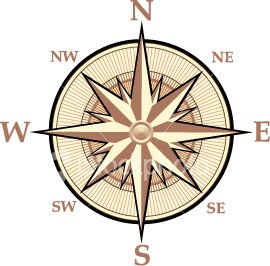
Second, he compares the removal of our sin to the distance between East and West. Since we live on a ball with a most northern and southern point, it is possible to travel north until you run out of north. Once you arrive at the North Pole, you must either stay there or go south. The opposite is true of east and west. If you decide to travel east, you can go east indefinitely, without ever having to go west. David is describing the complete removal of sin for those who receive the mercy, and thus the forgiveness, of God. Sin will never be brought up again, for all who trust in the cross of Christ.
Finally, David compares God to a father who has compassion on a child. This is a somewhat limited illustration, because we have already seen the vastness of His mercy, but David wants us to understand that God’s mercy is like that of a loving father. I recall when my youngest son was two and he broke his leg. I remember wishing I could take his pain and wear his cast. It was not a fleeting feeling, but a deep compassion. I truly pitied his condition and wanted to help. It is wonderful to know that God feels that way about us, and does not lack the ability to come to our aid.
Won’t you buy into David’s God? Take the step to trust Him with all your heart and life.
Pastor Jim
 Tucked away in a sea of names, we find the brief story of a man named Jabez. From the bits of data recorded about him, we learn he was an honorable man who left a mark upon his world. His name reveals much regarding his upbringing. Jabez meant “to cause pain.” He received that name because of the difficulties surrounding his birth. It seems as though his mother never got over that trauma, because Jabez grew up thinking his life would cause continual pain to others. Instead of growing up in a home where he was nurtured and encouraged to become all God had designed him to be, Jabez grew up being reminded that his life would only cause pain in others.
 As we seek to follow Christ, we often fall along the way. Sometimes, we may only slightly stumble, while at other times, we may take quite a hard fall. It is not uncommon after failing, falling, or having a set back, that we may feel as though we can no longer follow or serve Christ. Without even knowing it, we have turned our relationship with the Lord into something reward based. We think we are blessed when we do what is right, and once we fail, we are no longer worthy of His love, favor or calling. Without a doubt, the low point in David’s life was when he fell into sin with Bathsheba. How remarkable to find that the next king of Israel would be her son, Solomon. The grace of God is an ocean so deep we could never fathom its depth or stop its flow. No matter how far we have fallen, He is able to redeem us completely.
 Since the opening chapters of 1 Chronicles are designed to give us an accurate genealogical account of Israel, very little commentary is given. When that pattern is broken, our attention should be grabbed. In the case of Achar, we find a brief reference to his story alongside his name. Achar, or Achan, lived during the conquest of Canaan. He was among those men who followed Joshua across the Jordan, into the promised land. His situation gave him opportunity to be heroic, until greed got a hold of him.
 One of the saddest experiences in life is to see a close friend fall away from the Lord. From the outside, the process often looks the same. A person, who once walked closely with the Lord and was involved in Christian service, begins to drift ever so slightly. First, their conversation changes. Instead of talking about the Lord, sharing from their times of Bible reading or service, they begin to talk only of the waves and the weather. Next, we begin to see them a little less frequently around the church. In some cases, only the responsibility of a service commitment keeps them coming; until finally they step down from their responsibility, and seem to vanish. Sometimes, it will take weeks or even months before we realize what has happened, and by that time, they have cut ties from most of their Christian friends, and are back involved in the things of the world.
 Reading through all these names can be somewhat tedious. We know very little about many of the characters, and some of the names are quite difficult to pronounce. That being said, I am encouraged by many of those whose names are listed. The records include the likes of Adam, Noah, Abraham, Isaac, Jacob, Caleb, David and many others. These names should flood our minds with memories of great, even heroic acts of faith and faithfulness. These men were used by God to turn the world upside down. Their simple lives, lived out in faith and obedience, have forever changed to history of humanity.
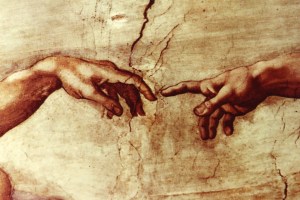 Have you ever heard the phrase, “you should have known better?” We use it when we view evidence so compelling that a particular conclusion is obvious. “I didn’t know that would happen!” This statement, a response to throwing a firecracker into the barbecue pit, or bringing a handgun through airport security, is an unreasonable response, “You should know better.” It seems equally as surprising to me, that the Psalmist would need to remind us that man is a creative work of God and did not spring into being as a result of his own innate ability. As surprising, and even preposterous as it may be, we hear all of the time, how highly intelligent and well-educated people will choose to believe that man is not a byproduct of an intelligent and loving Creator, but the consequence of random chance.
 The final chapters of 2 Kings tell the story of the death of a nation. After having a glorious beginning, and being miraculously sustained for a thousand years, the nation of Judah is defeated, the Temple destroyed, and the people taken as prisoners of war. These chapters record their collapse from heaven’s perspective. It was not caused by economic failure, a weak foreign policy, or because Babylon was a superior foe. Judah’s demise was simply a consequence of national sin, “…because of the sins of Manasseh…”
 Imagine sitting on Mount Scopus, just a little northeast of Jerusalem, as the Babylonian forces surrounded the city. Before long, the walls were penetrated, and the city taken. First the leaders were gathered and executed, then the city was plundered and burned. What had once been a glorious testimony to the goodness of God, now told an entirely different message. All who watched the city fall should have learned the devastating effects of sin. Even after a contingency returned to rebuild the temple, Jerusalem would still bear scars from its fall.
 I find it striking that the Psalmist declares that hate is a necessary expression of true love. He explains that part of being in a healthy love relationship with Jesus is having a hatred for evil. Why is it necessary to hate evil? Why should we hate evil? I can think of at least three pretty strong reasons.

