Isaiah 17:1
“The burden against Damascus.
‘Behold, Damascus will cease from being a city,
And it will be a ruinous heap.’”
 Many prophecies had both near and far fulfillment. In other words, the prophet was speaking of events that would transpire in or around his lifetime, as well as foreshadowing future events. It seems clear, Isaiah is doing that here. Since Jehovah is the one true and living God, and not merely the God of Israel, every nation and people will stand before Him to give account for their actions. In addition to explaining the consequences of Israel’s actions, Isaiah goes on to speak to Damascus, Syria, of the judgment that awaits it.
History records the fall of Damascus to the Assyrian forces. This event took place in the mid 700′s B.C. Not only was the city defeated, but the inhabitants were taken as prisoners of war to Assyria. It is apparent, at least part of Isaiah’s prophecy was fulfilled at that time. However, if we look more closely, we see he predicts Damascus ceasing to be a city. This portion of the prophecy has undoubtedly not been fulfilled yet, and is speaking of a future event.
The events transpiring on the world stage today are quite interesting. Syria is in the midst of a horrible civil conflict and is facing the threat of outside attack. Many experts suggest any outside retaliation will turn the events in Syria into a global conflict.
I am not implying these events are a fulfillment of Isaiah’s words. Nevertheless, we would be foolish to ignore a wake up call to the reality of the soon return of Christ. This might be a good time to consider the words of Paul,
Romans 13:11
“And do this, knowing the time, that now it is high time to awake out of sleep; for now our salvation is nearer than when we first believed.”
Pastor Jim
 The heart of man cries out for God. From the small child, to the individual who has faced a devastating loss, or grueling pain, their hearts cry out to know God. In an attempt to answer the heart’s cry, men create God in their own image. Some have invented a vast, complicated religious system, while others have checked out. They have decided, with all the different religions, no one can know for sure. To this Paul has a simple answer,
 The Moabites were not only Israel’s neighbors, they were also relatives. The Moabites were descendants of Lot, Abraham’s nephew. Their relationship should have created an alliance between the nations. Instead, their history was one of constant conflict. One of the most costly attacks during the wilderness years was masterminded by Balak, King of Moab. It was this constant conflict, against the people of God, which led Moab to the brink of destruction. Isaiah predicted, in three short years, Moab would be defeated and the inhabitants would be fleeing for refuge.
 Isaiah describes the fall of Moab. He explains that it will be devastating and it will take place very soon. While this is clearly a divine prophecy which will include specific details, including the time in which this fall will take place, it did not come without warning. The Assyria troops were marching throughout the region and conquering all who opposed them. Since Moab was no match for Assyria, it was inevitable, they would soon be overthrown. I am struck by their reaction to these warning signs.
 As this letter comes to a close, Paul is careful to thank the Philippian church for their generosity. On numerous occasions they had sent aid to Paul, enabling him to continue in the ministry. Although he was not their pastor, they placed a high value on the activities he was undertaking for the kingdom, and sent financial support, as he took the Gospel around the world. Because of the sensitivity of the subject of giving, Paul is careful to sandwich it between two very important ministry principles.
 Here, in Isaiah, we are given the details behind Satan’s fall. Before his ruin, Scripture describes the devil as the mighty angel Lucifer, who served Jehovah loyally. Isaiah explains it was pride that turned Lucifer away from God in rebellion. This pride manifested itself in exalting his desires above the desires of God. That same sin has been stumbling the servants of God ever since.
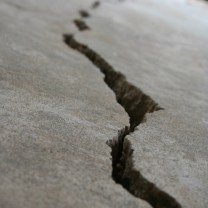 Recently, I was driving with some friends, some of whom were from California, and others from Florida. It did not take long for the subject of hurricanes to come up. As we described our experiences of boarding up windows, stocking up on supplies and even evaluating our homes, one of the Florida folks said, “but at least we know they are coming, unlike those California earthquakes.” As you can imagine the conversation then switched to what it is like to have the ground we believe to be solid, suddenly begin to roll underneath your feet. Fortunately, we reached our destination before the conversation became more grave. Suffice it to say, it is a pretty eerie feeling when, what we believe to be solid, suddenly begins to shake; proving our foundations are not what we thought them to be.
 Warning signs are all around us, cautioning us to beware of potential hazards. These signs warn the floor is slippery, the curve, sharp, the beam is low, or the dog is mean. As I sit here writing, my teacup reads, “Careful, the beverage you are about to enjoy is extremely hot.” Which seems obvious to me, since I did not order an iced drink. On the beaches in our community, there are signs warning of what to do in case of a tsunami; although we have never been hit by a tsunami, and experts tell us that the likelihood of such an event happening is almost zero. Because these warnings are so commonplace, we can become desensitized to them, and miss the ones that really matter.
 Isaiah paints a beautiful picture to illustrate salvation and its benefits. He writes it is like a well from which the waters of life can be drawn, and the child of God can be filled with joy. He goes on to say that we should declare this to all people.
 In beautiful, poetic fashion, Isaiah describes the conditions of the world after Christ returns to set up His kingdom. His purpose is to make all things right by establishing a rule of righteousness and peace. One thing is clear, in thousands of years of human governments, man has never been able to rule in righteousness or peace. Even today, with all of our advances, war continues to stain the face of the earth.
