Colossians 2:3
“. . . in whom are hidden all the treasures of wisdom and knowledge.”
 Knowledge is a word which speaks of information. We increase in our knowledge of God as we read the Word of God and walk with Him daily. However, wisdom is another thing all together. We might define it as “the proper application of knowledge,” or more simply as, “knowing what to do.” How many times have you faced decisions in life where you were not sure what to do, because you have not been that way before? Wisdom is acquired by experience, by careful observation of the experience of others, or by receiving it from heaven.
Notice, Paul writes “All wisdom is hidden in Christ.” We can find great comfort in knowing, while we might not know what we are doing, Christ has been that way before and can provide direction through the fog of life. Notice also, Paul says this wisdom is hidden in Christ. It is not something hidden from us, so we cannot have it, but something hidden so we will seek after it. The primary purpose of salvation is to know God, and wisdom is hidden in Him so we will seek Christ more. The question is, how do we access the wisdom that is hidden in Christ?
James 1:5
“If any of you lacks wisdom, let him ask of God, who gives to all liberally and without reproach, and it will be given to him.”
The first step is to pray. We are exhorted to understand, that through prayer, we can cast all burdens at the feet of Jesus. Sometimes, the greatest burden can be facing situations for which we have no answers. Parenting can certainly be like that. As the children grow, we are constantly walking down roads we have never traveled before. We want desperately to make decisions that will positively impact our children for the kingdom of heaven, and ensure they have a bright and successful future. The problem is, we often do not have a clue as to what we are doing. It is encouraging to know, “in Him are hidden all the treasures of wisdom”. The secret to receiving His wisdom through prayer, is to be willing to do things His way. Sometimes, we do not seek the mind of God, because we have already determined we do not want to do what He says.
Deuteronomy 4:6
“Therefore be careful to observe them; for this is your wisdom and your understanding in the sight of the peoples who will hear all these statutes, and say, ‘Surely this great nation is a wise and understanding people.”
Prayer is where we ask questions, and the Word of God is where we find answers. Sometimes, we will pray for things, then spend our time thinking up a solution, without considering what God has written to us in His Word. Israel was told, if they followed the teaching of the Word of God, it would lead to wisdom, and the people around them would be shocked at how smart they were. You see, doing what God says, even when it might not make sense, will always lead to the wisest roads. Other people, when the fruit of those decisions come to light, will be shocked at how smart you seem, all because you chose to do things God’s way.
If you are in need of wisdom because you are on a road you have never traveled before, or perhaps you went the wrong way in the past, the key is to lay your life out before the Lord in prayer. Then sit before His Word, and allow Him to write your road map for you. Using a concordance can be helpful to look up the subjects you are facing, and is a great way to learn to think and act Biblically.
Pastor Jim
 The heart of man cries out for God. From the small child, to the individual who has faced a devastating loss, or grueling pain, their hearts cry out to know God. In an attempt to answer the heart’s cry, men create God in their own image. Some have invented a vast, complicated religious system, while others have checked out. They have decided, with all the different religions, no one can know for sure. To this Paul has a simple answer,
 As this letter comes to a close, Paul is careful to thank the Philippian church for their generosity. On numerous occasions they had sent aid to Paul, enabling him to continue in the ministry. Although he was not their pastor, they placed a high value on the activities he was undertaking for the kingdom, and sent financial support, as he took the Gospel around the world. Because of the sensitivity of the subject of giving, Paul is careful to sandwich it between two very important ministry principles.
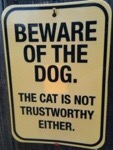 Warning signs are all around us, cautioning us to beware of potential hazards. These signs warn the floor is slippery, the curve, sharp, the beam is low, or the dog is mean. As I sit here writing, my teacup reads, “Careful, the beverage you are about to enjoy is extremely hot.” Which seems obvious to me, since I did not order an iced drink. On the beaches in our community, there are signs warning of what to do in case of a tsunami; although we have never been hit by a tsunami, and experts tell us that the likelihood of such an event happening is almost zero. Because these warnings are so commonplace, we can become desensitized to them, and miss the ones that really matter.
 Prior to the death and resurrection of Christ, the prescribed manner of worship of God included an elaborate system of sacrifices. Every morning, every evening, and on prescribed dates throughout the year, animals were offered as burnt offerings to provide atonement for the sins of the people. Each of the sacrifices pointed in one way or another to Christ. As the Son of God, His death provided more than all the offerings could ever do. Peter wrote,
 In Chapter 5, Paul compared our relationship with Jesus as a walk. Now he compares it to a battleground. We are told we have an enemy, the devil, who plans strategies against us. His goal is to get us to fall into sin, or to live so self-consumed, we have little or no positive effect upon others for the kingdom. As we watch him at work in the pages of God’s Word, we see his method is to use fear and discouragement, as well as to tempt us with the pleasures of the world. Here, Paul explains how we can be prepared for the daily battle we face. His description is of a soldier girded for war. Each element of his armor is designed to deal with a different attack.
 The Christian life is like a journey. It begins when we put our trust in Christ for salvation, and ends as we cross the finish line entering into glory. In an age of high-speed travel, we often endure the journey for the sake of the destination. I have sat next to people on airplanes who were “white knuckling” the arm rests. I could tell they hate the idea of flying, but it was a necessity in order to reach their destination. The Christian life is not like that. The journey is as important as the destination. Walking, because it is such a slow means of travel, allowed for fellowship, life lessons, and teaching times to take place between Jesus and His disciples. He desires the same for us. As we go through life, we should see each day as a walk with the Lord. A walk in which we can commune with Him and learn from Him. Here in Ephesians Paul exhorts us on how to walk and what paths to take as we journey with Jesus toward glory.
 Prayer is the great privilege of the Christian. With it, we are given access to the throne of God. Every care, no matter how small, can be cast at His feet. Every mountain, no matter how large, can be removed through prayer. Prayer was a daily activity in the life of Christ. He rose early for prayer; stayed up late into the night praying. He prayed before making decisions, facing obstacles or simply to give thanks to the Father for what He had provided.
