1 Corinthians 6:12
“All things are lawful for me, but all things are not helpful. All things are lawful for me, but I will not be brought under the power of any.”
 There are certain things that God’s Word clearly encourages, and other things that are clearly condemned. Earlier in the chapter, Paul gave a list of actions that, if a person is practicing, they “will not inherit the kingdom of heaven.” Among the forbidden acts are fornication, adultery, homosexuality, drunkenness, and extortion. Clearly, Paul is not saying that unlawful things are lawful for him. Instead, he is saying, he is free to practice all things that are not forbidden, but is careful to add that he will not be controlled by them. Paul is giving us a principle by which he lived his life, a principle we would all do well to follow. Hebrews 12:1 warns us to,
“Lay aside every weight, and the sin which so easily ensnares us…”
“Easily ensnaring sins” are sins we are more prone to fall into. For some it is lust, others covetousness, jealousy or envy, while others may struggle with pride or discouragement. We all know what our “easily besetting sins” are. While we all have the same freedoms in Christ, we know if we practice these freedoms, we will fall into sin again.
In order to guard against personal failure, Paul set up a system for success. That system included looking at the grey areas, the things Scripture is silent about, and putting them through a filter. He would ask, “although this is lawful, is it helpful?” When I was a young Christian, I began a practice of asking myself a simple question, “Will doing this help me get to heaven?” I understand we do not earn our way to heaven, but I also understand, there are many things that can trip us up along the way. So, I would examine what I was doing in light of where I was going. Before indulging in the activities so common to our culture, ask yourself if it will help your walk with God, or hinder it.
Some things are so dirty, they must be filtered more than once; so Paul added a second question, “Will practicing this put me under its control?” Jesus died to set us free from the power of sin. One of the great experiences, when a person receives Christ, is the realization that their sin is forgiven, and they no longer have to live under its dominion. That being said, there are many things which will lead us right back under sin’s control.
I once knew a man who had a drug problem, prior to coming to Christ. After months of freedom, he fell again into sin. I asked him what happened, to which he explained, he chose to take a shortcut home that led him by an area where he used to purchase drugs. Before he knew it, he was using again. As a Christian, he was free to drive down whatever road he wanted, but because of his ensnaring sins, if he wanted to succeed, he had to forever avoid that part of town. We all have things which will draw us back into sin. We all must honestly evaluate our lives, if we want to ensure we are not brought back under sin’s power.
What things do you need to remove from your life in order to ensure victory in Christ? Is it time to set aside certain music, TV shows, computer time, or even relationships? Keep in mind, although they may be lawful, they might not be helpful.
Pastor Jim
Questions for 1 Corinthians 6
- In this chapter Paul confronts the Corinthians about another problem in their church. What is it? (Note verses 1, 4, 6)
- It seems that some of the Corinthians were taking advantage of one another (verse 8) and that the ones being taken advantage of decided it was time to bring them to court. Why is this a bad thing? What does he say would be a better response to being cheated? Read Matt 5:38-48, for Jesus’ commentary.
- Paul asks the Corinthians why they can’t find a godly man among the church to settle the dispute. How would the judgment of a man of God differ from the judgment of a human court?
- Paul tells the Corinthians that they should be able to exercise good judgment, and that one day they will judge the world and angels. Look up Jude 14-15, and Rev 19:11-16 for a peak into this time.
- Verses 9 and 10 list 10 different sins that unrepentant, habitual practice of will bar entrance to heaven. Which of these sins seem most heinous to you? Which least? Consider that although we view them differently, they are all wicked before God, and demand judgment.
- Some of the Corinthians lived lives that were dominated by these sins. However look at verse 11. What three things did the Spirit of God do that changed them?
- Look at verse 12. Although we have freedom in Christ, we must be careful how we exercise that freedom. According to this verse, what must we consider when we use our freedoms?
- Sexual immorality was a problem in the Corinthian culture, and it is a problem in the American culture. Read verses 13-20 what truths about our sexuality are revealed in this passage?
- Most view our lives as just that: our lives. What light do verses 19 and 20 shed on that viewpoint? How does the truth of these verses affect how you view your life?
Old Testament:
Esther 7- Mind The Gap
Esther 8- New Ways
 God designed sexual intimacy as part of the marriage relationship. It is the most intimate of all acts and plays an important role in the love relationship between man and wife. In the book of Hebrews we are told, “Marriage is honorable among all, and the bed undefiled.”(Hebrews 13:4)
 Paul warns of the danger of pride. He refers to it as being puffed up; a term that has withstood the test of time, and is still used today. When we see someone who is filled with pride, we might say they are filled with self, puffed up, or even that they have a big head. Paul reminds us of the folly of elevating ourselves above one another, by exhorting us that what we have, we received from the Lord.
 Paul mentions four types of people in the opening verses of this chapter. He refers to mere men (some versions read natural man), babes in Christ, carnal men, and finally spiritual men. These terms represent a natural development in the spiritual life of an individual. Natural man refers to a person before they place their faith in Christ. The natural man is living, breathing, walking, talking, perhaps even loving, giving, sharing and caring, but the natural man is separated from God, and living in sin. It is when the natural man hears the message of the cross, recognizes his need for a savior, and places his faith in Christ, that his sin is forgiven and he is born again into the family of God. At that point, he becomes a babe in Christ. Like all babies, the new Christian must be cared for. He needs constant companionship, encouragement, example, and a diet of the simple teachings of the Word of God.
 The things God has planned for each of us are better than anything we could ever imagine. Rather than leaving us to our imagination, Paul declares these things are revealed to us by the Spirit of God. It is the desire of God that we know Him, and we understand the things He has planned for each of us.
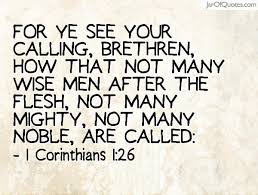 Paul reminded Timothy that Jesus Christ came into the world to save sinners. That was His purpose, His passion, and what He labored diligently towards. After the resurrection, Jesus called His church to be involved in this same purpose. He commissioned men to “Go into all the world and preach the Gospel.” This is the greatest of all vocations and carries with it the highest honor. Charles Spurgeon once wrote, “If God has called you to preach do not stoop along the way to become a king.”
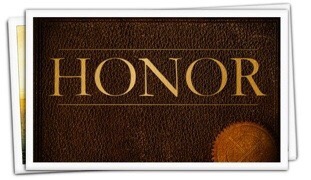 Years ago, I received a letter; I had been selected to be awarded for my accomplishments as a teacher. Upon reading the first paragraph, I was honored and somewhat humbled. My ego was stroked, as I was being told of the great responsibility I was fulfilling by teaching others. However, as I continued to read, I discovered any teacher who was willing to purchase the hundred-dollar, leather-bound book, would have their name listed in it. Even though I knew it was a scam, I was still slightly tempted to have my name in a book honoring me for my accomplishments.
 This chapter contains many prayers of which this is the first. Paul is praying that the church might be like-minded, or rather, have one mind. As we look at the church today we see it is anything but one-minded. Worship styles vary from rock bands to congregational hymns; some churches meet in traditional buildings, while others meet in schools, parks or store fronts. Doctrinally, some churches are Calvinistic, Arminian, or somewhere in between. We have pre-, post- and mid-tribulation teachings, and there are even different views on how to perform a baptism.
 A Christian by the name of John Donne (1572-1631), is credited for the saying, “No man is an island.” He wrote it in a devotional message speaking of how our lives affect one another. Paul is writing about the same idea, because we are part of the body of Christ, our lives effect one another. The decision I make to follow the Lord will have an impact upon those around me, and their decision will impact me. In more recent times, a song was written with the chorus, “I don’t need anyone, I am really having fun being all alone, I am an island.” The song was a parody, where the artist was addressing the modern idea that our lives are our own, and our sins do not effect anyone else. Paul goes on to write,
 I can remember times, as a child, when I had to wake up very early for an event I was looking forward to. I would set my alarm, and a backup, then wake up over and over again through the night to check the time. I did not want to sleep in and miss out. I recall, one morning, hearing the alarm go off, getting out of bed, getting dressed and walking out to the living room, where I put on my shoes. After a few moments, I heard my mom’s voice asking me what I was doing. As I began to answer, I noticed all the lights were on and my parents were watching television. It was eleven p.m., I had only been asleep for about an hour, and had dreamt I heard the sound of my alarm clock.
