1 Corinthians 16:9
“For a great and effective door has opened to me, and there are many adversaries.”
 As Paul comes to the conclusion of this letter, he writes to his friends in Corinth about his future plans. Notice, his plans all centered around serving the Lord and bringing the Gospel to others. He mentions a number of places that he will be traveling, including Ephesus, where he has “an open door.” This is a common phrase, both in our vernacular, and in the New Testament writings. We understand it to mean a way in, and use it with a wide variety of applications. We may refer to an open door for a new job, new house, or even a new relationship. When the term is used in the New Testament, it is restricted to speaking of opportunities for the furtherance of the Gospel. Paul explained this clearly when writing to the Colossians,
“. . . meanwhile praying also for us, that God would open to us a door for the word, to speak the mystery of Christ, for which I am also in chains, that I may make it manifest, as I ought to speak.” Colossians 4:3-4
The term “open” is used throughout the New Testament to refer to things that were closed until the Lord opened them. We read of eyes, ears, and graves being opened. We also read of the heavens being opened, and even the sealed scroll in Revelation was opened by the Lord. When Paul speaks of an open door in Ephesus, he is referring to an opportunity to minister where there was none before. Ministry is like that. There are people in your life who you have attempted to reach out to, and been rejected, but as you continue to walk with Jesus and pray for them, the Lord will open up a future opportunity to reach out to them.
One of the difficulties we face, is how to recognize when we have an open door. In Acts 13, Paul and Barnabas began their missionary campaigns. As we read the accounts, it was clear they had a wide open door to bring the Gospel to their world. Thousands of people were won to Christ, and dozens of churches were planted throughout Asia Minor and Europe.
But, how did they know it was the Lord who was sending them out? Two key elements in determining the will of God are revealed in their story. First, we are told, while they prayed and fasted, the Lord spoke to them. If we want to see doors open to minister to others, we need to seek the Lord. Jesus told us to ask, seek and knock. Perhaps now would be a good time to revisit your prayer list and add praying for an open door to share Christ with family and friends.
Second, Luke records, “So, being sent out by the Holy Spirit, they went” (Acts 13:4). Once they heard from the Lord, once they recognized they might have an open door, they began to walk through it. The only way to be sure we have an open door into someone’s life to bring them to Jesus, is to take steps in that direction. Make a call, text, email, tweet, IM or meet them face-to-face and simply invite them to come with you to church. Or meet for coffee and share the great things that the Lord has done for you.
Keep in mind that with an open door comes adversity, but the difficulties are more than worth the treasure of seeing our friends come to Christ.
Pastor Jim
Questions for 1 Corinthians 16
- Verse 13 states….Watch! After studying 1 Corinthians, what are you watching for?
- Stand fast in the faith! An old wise man once said: “If you stand for nothing, you will probably fall for anything.” Do you know what you are standing for?
- Be brave, be strong! Knowing how much God loves you is the best foundation for your strength and confidence. Read Acts 28:30-31
- Verse 14, review 1 Corinthians 13. Let all that you do………………be done with love!
Romans 12:1-2 I beseech you therefore, brethren, by the mercies of God, that you present your bodies a living sacrifice, holy, acceptable to God, which is your reasonable service. And do not be conformed to this world, but be transformed by the renewing of your mind, that you may prove what is that good and acceptable and perfect will of God.
 When I was sixteen years old, driving to my first part-time job, a wild thought entered my mind. I thought, “I wonder what happens after we die?” I realized later I was grappling with one of the deepest philosophical questions man has ever attempted to answer, but at that time I had never considered anything like it before. As quickly as the question entered my mind, I came up with an answer, “When we die we go to heaven.” This was followed by the question, “What is heaven?” To which I answered, “Heaven is getting to do whatever you want for all of time.” I then asked a third question, “Who goes to heaven?” To which I replied,”Those who are good.” This of course brought me to a final question, “Who is good?” My final answer was a little more difficult to develop, but there on the way to work, I determined that I was good and anyone who lived up to my standard was also good and would be allowed into my heaven. In the few minutes that it took, I had asked and answered the most important questions that a person will ever be asked. I had also completely satisfied myself with my answers. Had anyone asked me what happens after we die, I would have spoken with authority, explaining the way to heaven and the purpose of life. As you can see, there was one obvious problem; it was all a product of my own imagination! My way of living, my heaven, even my god, were the product of my own imagination.
 Confusion broke out in the Corinthian church. Instead of meeting for the worship of God and the study of His word, the church had become a place for people to show off their spiritual gifts. Those with the gift of tongues saw the meetings as a time to speak or even sing in tongues. They thought the church existed to hear them sing. Others had the gift of prophecy, or at least they thought they did. To them the church existed as a place to share the things they thought were most relevant for the people to hear. I can imagine what the scene must have been like as the church gathered, opened in prayer, and then one by one, each louder than the last, the people began to share their thoughts and sing their songs. To the onlooker, it must have appeared to be a Christian version of “America’s Got Talent.”
 Love does not behave rudely
 Natural gifts, while given by God, are quite different from Spiritual gifts. If you have been given athletic, scholastic, or artistic gifts, you should use those for the glory of God and the furtherance of His Kingdom. However, spiritual gifts are an entirely different subject. Paul writes concerning the supernatural enabling God gives to the believer, for the furtherance of the Gospel, and the growth of the church. There is a great variety of these gifts, but they all serve the purpose of equipping the church to more effectively reach the world for the Christ. Before listing these gifts, Paul gives a few principles for how they work.
 Paul is addressing one of the most important practices of the church and the individual. He will instruct them regarding partaking in communion. Rather than seeing this ordinance as a necessary, and even holy part of their church life, the Corinthian Christians had turned it into a way to honor the wealthy, thus neglecting the poor. It was a common practice in the early church to feast together before communion. In Corinth, they invited the wealthy to eat first and only after they had their fill did the poor get in line. In some cases, the food was gone and the rich were drunk. Suffice it to say, this was not an acceptable practice. Paul is writing to correct their behavior and to instill within them a proper understanding of communion.
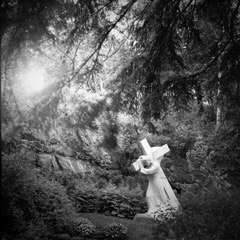 When writing to the Romans, Paul explained, the message of the Gospel has the power to save the sinner. It is when a person humbles himself and accepts that Jesus Christ died to do away with his sin, that he is saved. In order for a person to come to saving faith, he must hear the message and see the reality of it worked out in the life of the believer. Paul, understanding the importance of the Gospel, explains to the Corinthians the things he was willing to forgo, so others would hear about Christ and believe in Him.
 One of the controversies the Church in Corinth faced had to do with diet. Animals were offered to pagan gods, then the meat was sold at the local butcher shops. This created a real problem for many Christians. For some, their conscience bothered them knowing that the animal was offered to false gods, while for others the issue was much more tangible. Since the butcher shops were often located close to the temples, and the temples were places of sinful activity, some knew that visiting that area would lead them right back into sin. For others, the idol issue was something of their past, and they had no problem eating the meat with thanksgiving. To them, it mattered very little what the farmer did with the animal, since they received it with thanksgiving as from the Lord.
 The Corinthian Christians wrote a letter to Paul asking him some basic questions about how to live out their Christianity. One of those questions had to do with relationships between men and women. Since they lived in a pagan culture, they grew up with pagan examples of how to be single and how to be married. After coming to Christ, they realized God had different standards, and they wanted to learn His ideal for Christian relationships. This chapter is Paul’s response to their question. It is worth noting that Paul writes concerning three groups of people: the single, the married and the separated.
