Psalms 25:4-5
“Show me Your ways, O Lord; Teach me Your paths. Lead me in Your truth and teach me, For You are the God of my salvation; On You I wait all the day.”
 As I child, I remember watching a movie where a group of people were trying to escape a town. Whatever direction they took, or road they chose, they always arrived at the same destination. They continued trying until they found the one way out. According to Jesus, life is like that. He stated that life really only consists of two roads. One is wide and crowded, but leads away from God. The other is narrow and difficult, and sadly, often ignored, but results in eternal life (Matthew 7:13-14).
David knew a lot about walking on the right road, but he also knew what it was to wander down the wrong path in life. After fleeing from Saul, living in the wilderness, sleeping in caves, surrounded by criminals and constantly fearing for his life, David grew tired. In the midst of his trials, and the difficulty they created, He began to doubt the promises of God.
“And David said in his heart, ‘Now I shall perish someday by the hand of Saul. There is nothing better for me than that I should speedily escape to the land of the Philistines; and Saul will despair of me, to seek me anymore in any part of Israel. So I shall escape out of his hand.’ Then David arose and went over with the six hundred men who were with him to Achish the son of Maoch, king of Gath.” 1 Samuel 27:1-2
David had the promises of God telling him he would survive the threats of Saul and become king. He also had the difficulties of life casting a shadow of doubt on the promises. This led him to listen to and follow his heart; and his heart led him out of the will of God. After failing so greatly, it is easy to understand why the cry of his heart was, “Show me Your ways, O Lord; teach me Your paths and lead me in Your truth” (Psalm 25:4).
One of the most common causes of failure in the life of the child of God, is following our hearts. After all, Jeremiah taught us the heart is deceptive above all things (Jeremiah 17:9). We must not let out hearts guide us. Instead, we must let the Word of God act as a lamp guiding the way of life and living. Instead of following what our heart says, let’s determine to become familiar with what God says, and live in line with His Promises. His ways are not our ways because they are so much better.
Pastor Jim
Questions for Psalm 25
- According to verses 1-2, what struggle was David facing?
- Notice his solution was to seek the Lord. Take some time right now to take your current situation to the Lord either thanking for the blessings or petitioning for help in the trial.
- In his trial, what does David ask the Lord for, see verses 4-5?
- David bases his petitions on God’s mercy and asks for forgiveness for his own sin. We must always come based on mercy, not merit. What does David hope for in verses 15-20?
Old Testament:
Psalm 26- His Habitat
1 Samuel 24- Conviction
1 Samuel 25- Heritage
 In this Psalm, David uses the illustration of a shepherd to speak of God’s care for those who belong to Him. This Psalm speaks of the benefits true to all who are in a covenant relationship with God. He speaks of God’s provision, comfort, protection and care. Jesus used the same illustration in John 10 when He said,
 he thing that makes following Christ so difficult is the enemies we face. The primary enemy of the Christian is the devil and his minions. Scripture describes the devil as a schemer who seeks to derail us from following and serving Christ. He will use the weakness of our humanity as a tool to get us to stumble into sin. When at times, it may seem as though the temptations and the obstacles are too great to overcome, we can be greatly encouraged by this promise.
 We have all had the silly daydream of winning the lottery, finding a stash of money in a secret compartment in the attic, inheriting millions from an unknown uncle, or inventing the next great product everyone wants to own. Why? I think the answer is simply that we would all love to have an unlimited supply of cash; not for it’s intrinsic value, but because of what we can obtain with it, and for the security that it brings. Imagine never having to worry about the bills again.
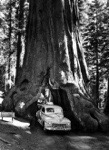 I remember years ago listening to Pastor Chuck Smith teaching from John 15 on the Vine and the branches. To illustrate our need to bear fruit, he asked, “What does a full grown tree look like?” Immediately, my mind was filled with visions of the massive Redwoods of Northern California. I remember, as a child, driving our car through a tunnel cut out of a tree in Humboldt County. After pausing to let the question sink in, he responded, “A full grown tree looks like firewood.” You see, a tree grows as long as it is alive. The moment it stops growing, is the moment it has died.
 We have all heard the phrase, “Actions speak louder than words.” The sentiment behind that is simple; our behaviors speak more to our belief system, than our words ever could. Psalm 15 addresses the subject of true righteousness, and in a poetic fashion addresses our walk, works, and words. All three of these speak volumes regarding what we truly believe. Like balancing a check book to determine where all the money has gone, we can examine where we go, what we do, and what we say to determine the real driving forces in our lives.
 As this psalm begins to unfold, we find David facing some pretty difficult times. He describes himself as feeling forgotten and being overcome by sorrow. Without giving details, he describes his enemy as threatening to prevail against him. Yet, in all this, he wrote of singing to the Lord. It is the song of triumph that will often lead to release from despondency. Instead of waiting for circumstances to change, David determined to worship in the midst of trial. As he took his eyes off his suffering and fixed them on the grace of God, he soon found himself rejoicing rather than complaining.
 Life hurls a vast array of difficulties at the child of God. We are struck with the common problems of every man, as well as those that are peculiar to attempting to follow Jesus, in the midst of ever increasing ungodliness. The question we are faced with is, where will we flee for safety, guidance and solace when struck by the trials of life? David thought it utterly preposterous to think of fleeing to the mountains for aid. To him, it was the Lord, and the Lord alone, who would be his defense.
 A few years back I was teaching in a Bible school in Ghana on the subject of trust. I invited one of the students to come forward and asked him to put his arms at his side, close his eyes, and face the class. He had no difficulty doing what I asked until I added, “now remain stiff as a board and fall backwards.” He immediately opened his eyes, turned around, and looked at me as if to say, “No way!” I assured him that I would catch him, and asked him to face the class again. I counted to three and told him to fall back. To his credit, he tried, but once he began to lean, he stepped back to catch himself. The remaining students erupted in laughter as their friend was afraid to fall back.
