 Being a mom is among the greatest of all callings, but it is easy to forget our calling in the middle of the mundane day-to-day responsibilities that go hand in hand with parenting.
Perhaps a little bit of my story might prove to be helpful. Although, I have 4 sons who are grown and married, I want to take a few minutes to encourage the moms that are still in the thick of it. I remember when Jim and I were driving home from the hospital with our first son Nate and I started crying and said, “They didn’t even give me a manual- I have no idea what I’m doing.” I would say pretty much the same thing 27 years later. I often have said, “God didn’t give us a parenting manual because He wants us seeking Him.” Each child is so different and each life is so complex. One of mine and Jim’s favorite verses is from 2 chronicles 20:12 it says, “I don’t know what to do so my eyes are on you.” We have a God that loves us and our children so much that He wants us to Seek Him and He promises to lead us and instruct us.
Another one of my favorite verses is a promise found in Isaiah 54:13 says, “All your children shall be taught by the Lord and great shall be the peace of your children.”
That verse gave me so much hope, because I knew that even when I fail, the Lord was there teaching and speaking to my children. I can say He has been so faithful to do this.
I know as a mother one of our greatest weaknesses is fear. We could literally worry and be afraid of everything, Afraid that they wont be tall enough, happy enough, smart enough, afraid of what they’re eating or not eating, afraid of them dating, driving or what they will hear at school or see on the computer. It seems that there are so many things to fear in this world.
2 Timothy 1:7 says, “For God has not give us a spirit of fear, but of power and of love and of a sound mind.”
In a recent sermon my oldest son Nate stated, “Fear is going to call but it’s not for you and it’s not from God.” This is because God has not given us the spirit of fear. When we are afraid it should cause us to turn to the Lord and seek Him in prayer.
Keep in mind that the Lord loves your children even more than you do and desires to strengthen you and to speak to them. We want to set a pattern for our children where they learn to find rest in the Lord, strength in Him and to go to Him when in need. We don’t want to walk in fear, but in the goodness, strength and peace of God.
A few years ago, before all my boys got married, I was half praying and half thinking. I prayed that the Lord would help me to be a better mom, a better wife, I prayed I would be more organized and keep my house cleaner, I prayed I would be a better Bible teacher and then I blurted out, “Lord I want to be perfect.” I wonder if you have ever felt that way? I just want to be perfect. Have it all together.
Just then I felt the Lord speak to my heart, “if you were perfect you wouldn’t need me.”
God is not looking for perfection He is looking for us to be needy, to look to Him and lean upon Him. He loves to help those in need. Hebrews 4:16 “Let us therefore come boldly to the throne of grace, that we may obtain mercy and find grace to help in time of need.”
Parenting keeps us in need and should keep us coming to Jesus. We don’t know what we are doing, but our eyes are on Him.
If there is a secret to motherhood that secret is in realizing that we cannot do it alone but that all we need is found in Jesus. It is in God’s word that He speaks to us. Make it a practice to call upon the Lord and look into His word for wisdom, strength, direction, patience and anything else you may need. He is so faithful!
Blessings,
Kristie Gallagher
 Arguments take place when we have differences of opinion. Both parties think they are right and the other is wrong. When these differences of opinion escalate they often lead to serious divisions. Marriages, families and churches have often been the unwary victims of intense argumentation. When arguments take place we have probably learned what to do when we are in the wrong; we humbly apologize and seek to make whatever restitution is necessary. But what about when we are right. Have you ever considered the proper action to take when you are in the midst of a misunderstanding between yourself and someone you care about? Perhaps it would do us good to reconsider what we do when we think we are right. David wrote;
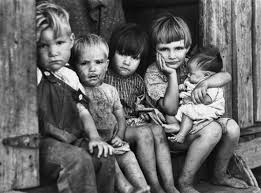 The Bible has much to say about the poor. The word poor is used almost 200 times in the NKJV of the Bible, Israel as a nation was required to set up a system where the poor was able to glean the edges of the fields to provide food for themselves and their families (This is part of the story line of the book of Ruth). Jesus spoke of blessing the poor, and encouraged His disciples to minister to them. In the book of Acts we see the churches sending aid to believers who were undergoing severe trials caused by famine and persecution and James writes warning the church not to neglect the poor or to treat them any less than we would the wealthy. It is clear that those who are neglected by men are highly esteemed by the Lord. That being said the Bible also places certain responsibilities upon the poor. The welfare system in Israel required the poor to work for the food they received and Solomon wrote that “much food is in the fallow ground of the poor.” When Paul wrote to Timothy regarding the widows he explained that the church had a responsibility to assist the widows who were godly but charity would not help those who were living a wasteful life.
 There are times in life when words seem like a raging fire building within us and we are almost forced to speak. This can be positive, like when Jeremiah wrote of being so discouraged he no longer wanted to share the words of God with anyone, until those words became like a fire within him and he could no longer contain them. Or this can be negative, like when gossip burns within us, pleading to be passed on to others; or when in the midst of an argument, we lash out with hurtful words that shatter someone we love.
 I am a sports fan. I enjoy watching a variety of athletics, and am always fascinated when an athlete achieves victory, almost effortlessly. No matter what the opponents do, they are unable to stop him. Over the years, I have come to understand that those who seem to win with the least effort, are really the ones who have put in the most effort. They are the ones who are first in the gym and last out. Their diets, workouts, sleep patterns, even off days, are regimented so as to keep them in the best possible condition for victory.
 We cannot be sure the exact situation that stirred David to write this Psalm, but we do know that he seemed to be under continual attack. From the start, he had to deal with those who continually came against him. His father neglected him, his brothers tormented him, the Giants ridiculed him, the king hunted him, and the neighboring nations sent armies to attack him. As a result, it would be fair to say David was an expert on warfare and he knew how to fight on many different fronts. In this Psalm, he reveals the secret behind his success. When under attack, David looked to God for defense.
 There can be great value in getting away from our manmade world and looking at the creative work of God. Seeing the beauty of His creation seems to give us new perspective on His love, power, and glory. I can recall one particular sunset in Africa that was so magnificent and seemed to last for an hour. The sky was filled with an array of colors, like I had never seen before. I recall how the view of the snow capped Austrian Alps, and the water falls of Kauai captivated me, filling me with awe and amazement at the beauty of God’s handiwork. I am sure you have a list of your own experiences that cause you to celebrate the beauty of creation. That being said, the Psalmist begins to talk about what God views as true beauty. He declares;
 We cannot be certain of the situation that caused this psalm, but it is very clear the Psalmist was going through an extremely difficult season in life. He describes himself as being under severe attack and needing the Lord to be his fortress. He speaks of his troubles and his adversities, and his eyes wasting away in grief, as he cries before the Lord. He also goes into great length to speak of his emotional condition during this time. He describes himself as, “wasting away with grief, in both his soul and body” and being “like a broken vessel.”
  When Moses pleaded to see the Glory of God, the Lord responded by passing before him and revealing His nature. He declared Himself to be merciful and gracious. The word gracious speaks of the giving nature of God. It is His desire to give what is best to man. James, addressing a group of trial-ridden Christians, reminded them, since God is gracious, every good and perfect gift comes from Him (James 1:17). The message of the Bible has a whole lot more to do with what God gives us, than what we are to give to Him. Hosea reminded Israel of what God had done for them,
 Did you ever have that daydream, as a kid, where you found the magic lamp, and the genie promised to grant your wish, no matter how outlandish it may be? Imagine what it would be like if God appeared to you, declaring He would give you whatever you asked for. How would you respond? What would you ask from the King of Kings.
