Reach Out

Numbers 10:29
“Now Moses said to Hobab the son of Reuel the Midianite . . .”

Hobab is the brother-in-law of Moses. Notice, we are told that he is a Midianite, not an Israelite. Listen to what Moses says to him:

“We are setting out for the place of which the LORD said, ‘I will give it to you.’ Come with us, and we will treat you well; for the LORD has promised good things to Israel.”

In the midst of all the hurrying to get ready to go, Moses searches out his brother-in-law and invites him to join Israel in their journey to the Promised Land.

Remember, Hobab is a Midianite, he’s not a believer, he’s not a follower of the Lord. Yet, Moses says to him, “Hobab, we’re going to the place the Lord has been preparing for us for 400 years. God promised it to Abraham, and He has been getting it ready all this time.” Moses asks, “Do you want to come to the land the Lord is preparing for us?”

I think Moses is setting a very good example for us. I think we can learn a little bit regarding how to reach the lost from his example. Israel was heading for Canaan, but where are we going? We’re going to the place that Jesus has been preparing for us, not for 400 years, but for 2000 years. Like Israel, we are waiting to hear the trumpet sound.

In Matthew 25, Jesus tells us how to be ready for that trumpet sound. He told the parable  of the ten virgins, exhorting us to be certain we are, in fact, saved. Then he told the story of the talents, exhorting us to be involved in serving the Lord. Jesus Christ is coming back to take us home, and I don‘t think he wants us to come home alone.

So, in a sense, Moses is evangelizing. He’s trying to reach out to his brother-in-law. He implores Hobab, “Come on, man, come with me.” That is a great way to approach evangelism. I’m going to heaven, do you want to come? A friend of mine was going to be baptized at her church, so she put together very formal invitations and sent them out to friends and family who were not believers. She made it clear in the invitation, this was a very important event for her, and she really wanted them to be a part of it. When the day of her baptism arrived, her pastor explained what baptism represents, then he gave her an opportunity to address the congregation. In short she said, “I have trusted Jesus and I am going to heaven, but I love all of you so much, I do not want to go alone. Will you please accept Jesus so you can come to heaven with me?” I have to tell you, it was one of the most powerful evangelistic messages I have ever heard. If you have received Jesus Christ, then you are saved and going to heaven; seek to bring as many along with you as you can. I recall a song we used to sing when I first got saved, one line went, “. . .with one hand reach out to Jesus with the other bring a friend. . .” Moses is not so consumed with packing for the trip that he neglects to invite Hobab.

Pastor Jim


Man-made Religion

Luke 18:9
 “He spoke this parable to some who trusted in themselves that they were righteous, and despised others . . .”

The chief trait of this Pharisee was the idea that he did not need God. A modern equivalent would be the person who, with his imagination and personal experience, has fabricated both a god and a religious system by which he is acceptable to his god. The Pharisees did just that. They picked out certain verses from Scripture to form what they thought God was like, then based upon that, they established behaviors they believed He would accept. The result was a group of self-righteous men who looked down upon others and rejected Christ. In contrast, we find a man who has lived a compromising life. While externally he seems to be the one whom God would reject, he is accepted because he came to God, not on his own terms, but on God’s.

The lesson is very clear. It will be those who humble themselves, confess their sin, and come to God through Christ, who will be accepted by Him.

Don’t be like the Pharisees who rejected Him because they thought they were good enough.

Pastor Jim


The Right Way

Numbers 7:9
“But to the sons of Kohath he gave none, because theirs was the service of the holy things, which they carried on their shoulders.”

About 600 years after these events somebody got it into his head that it would be a great idea to take the Ark of the Covenant into battle. He had lost sight of who God was and thought the Ark of the Covenant was the presence of God. So, seizing the Ark, the army marched into battle, assuming it would ensure victory. They were defeated. The Philistines captured the Ark and took it into their camp. As a result, God began to plague the Philistines, so they put the Ark on a cart hitched to oxen, and sent the cart back to the nation of Israel where it remained in the house of Abinadab until the time of David.

Later in I Chronicles 13, David is on the throne, looking at the spiritual condition of the nation, and realized something was lacking. God was not the central focus of the people, or the nation. So he decided to bring the Ark to Jerusalem and place it in the Tabernacle; symbolizing the centrality of God to Israel. He sent a letter to all the leaders in Israel, asking, “I’ve got this idea, what do you think?” They replied, “Great idea, let’s return the Ark to its rightful place in the Tabernacle.” Then they talked to the people, and the people agreed, “Wonderful idea! Let’s do it!” So they placed the Ark on a brand new cart, and appointed Uzza as driver. The people joined in with a big celebration of singing and rejoicing in the Lord; until they hit a pothole and the cart tipped. Uzza reached back to keep the Ark from falling out and being damaged. When he grabbed the Ark, God struck him and he died. As you can imagine, at that point, the celebration stopped, the people were in shock and David became angry with Lord. Perhaps he thought, “I’m bringing this Ark to the Tabernacle, I’m trying to glorify You, I’m trying to raise the spiritual level in the nation of Israel, and this is what You do?” And so, he stores the Ark in Obed Edom’s house and goes home.

After 3 months, David realized how he had erred. He asked the people if they thought it was a good idea, he asked the leaders if they thought it was a good idea, but he didn’t ask the Lord. He did not go to the Scriptures and see what God said about moving the holy things. So David opened his Bible and began to read. He, no doubt, went to Numbers Chapter 7. He saw that God never intended for the Ark to be carried on a cart. Gathering together the priests and the sons of Kohath, he instructed them. “You can’t look at the Ark, so we need to have the priests cover it first. After it is covered you need to put the Ark on your shoulders.” So the priests covered the Ark, and the sons of Kohath carried it on their shoulders. As they brought the Ark into Jerusalem, they began to worship the Lord again, and set it up in a tent that David had erected for it.

But why? I understand that David broke the rules; but what was the point of the rule? Why did God not allow the Ark and the utensils to be placed on a cart?

Numbers 7:9
“But to the sons of Kohath he gave none, because theirs was the service of the holy things”

I think this is one of those biblical principles that is so foundational in our service to the Lord. The things of the Lord, (the holy things, our service unto the Lord), move differently than the things of the world. It’s OK to throw curtains on a cart, and it’s OK to throw silver blocks on the cart. However, when it comes to the holy things, the things that represent the nature and character of God, they move in a different way. God does things differently.

So many events that happen in the church, happen out of people’s great desire to raise the level of spirituality in the church, or even in the nation . “We’ve got to impact our community. We want to see people come to the Lord, so here’s what we’ll do: we’ll imitate the world’s methods, take the Ark, throw it on a cart, get a bunch of musicians, and start marching to Jerusalem.” Failing to recognize, God is not only interested in the end, He’s also interested in the means. God has a way of doing things, and that way often flies in the face of the way we think. Some things that work wonderfully in the business world, don’t have any place in the church. And so He says, “Here’s what you’re going to do. You’re going to carry it. It’s going to take you longer. It’s going to be more difficult. You’re going to be more fatigued. But, ultimately, I’m going to be glorified. So don’t get carts or oxen.”

There are many models in todays approach to ministry. It seems, every time I open my mail, I am introduced to another tactic on taking the Gospel to the world, or building up the body of Christ. I know, in many cases, they are devised by people who sincerely want to minister to others. The question is, what is the right model? I am so thankful to have God’s way of ministry modeled for us in the book of Acts. I want to encourage you, if you desire to serve the Lord, look to the book of Acts, and follow the only approach to ministry that is actually divine in nature. We need to be careful, when we seek to serve the Lord, that we are not looking to the world for a model, but instead we are looking to the Word.

Pastor Jim


Marriage Problems

Numbers 5:14
“If the spirit of jealousy comes upon him and he becomes jealous of his wife, who has defiled herself; or if the spirit of jealousy comes upon him and he becomes jealous of his wife, although she has not defiled herself”
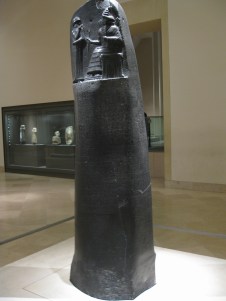
This section addresses the subject of marital problems; specifically that of jealousy. If a husband suspects his wife of cheating on him, but has no evidence, only suspicion; or if she hasn’t cheated, but he becomes jealous of her, this is what they are to do. The man is to bring his wife before the priest, and the priest is to make a concoction for her to drink (holy water, dirt and dried ink). Then, if she cheated on her husband, when she drinks it, her thigh will rot and her belly will swell. What’s this all about?

The Code of Hammurabi law dates back roughly to the time of Abraham. It is believed this code governed the pagan people in the area of Mesopotamia. In this code there is something very similar to what Moses is talking about in these verses. According to Hammurabi, if a woman was suspected of cheating on her husband, she was thrown into the river; if she survived, she was innocent, and if she drowned, she was guilty. Other cultures had similar rites in order to discover the guilt or innocence of a person. They might throw them in a pit of poisonous snakes or alligators, and if guilty, they would die, but if innocent they would survive. Remember when Paul was bitten by the poisonous snake, the pagans believed it was because he was guilty of a crime worthy of death.

At first glance, Numbers 5 sounds similar to those pagan rituals. However, there is a striking difference between what Moses tells the people to do, and what the Code of Hammurabi, and other pagan rituals declare. Here’s the difference. If I filled a glass with water, put in a handful of dirt from the planter, added in a little ink from a pen, stirred it up, then gave it to you to drink, would that cause your stomach to swell and your thigh to rot? It might not taste good, but it’s not going to kill you. There’s nothing deadly about it. It might make you feel sick, but it would not be an effective form of capital punishment. If you have small children, it is a mixture they probably consume on a regular basis. A little dirt, a little ink, unwashed hands and a cheeseburger or handful of grapes. When you see their filthy hands grasping a french fry, you are not concerned their stomach will swell or their thigh will rot. The difference between Numbers 5 and pagan rituals is, in this case, the woman is presumed innocent. She’s not thrown into a pit of poisonous snakes or a raging river, where 99% of the time the person dies. Instead, she’s put into a circumstance where it’s physically impossible for a cup of dirty water to cause your belly to swell and your thigh to rot.

If a woman is out cheating on her husband, there’s something wrong in the home. If the man is so jealous he’s accusing his wife of committing adultery, even when she hasn’t, there’s something wrong in that home. In one case, it’s the sin of the wife, she has committed adultery. In the other case, it’s the sin of the husband, his jealously is unwarranted. In both cases, there are problems going on in the marriage; there are problems going on at home. I think it is important for us to understand that our relationship with the Lord has to be happening in our house. You can be under the banner, in the right camp, marching with the Tabernacle in the center; you can remove the lepers, you can confess the sin, and make the 120% restitution, but if things aren’t right in the home, then the army’s not ready for battle.

What is God’s solution for a marital problem? How were they to go about solving the problem? They were to take their marital problem to the Lord. Notice, it was a problem that only the Lord could decipher. The husband’s saying, “You cheated on me.” And the wife replies, “I didn’t.” And the husband declares, “I know it.” And she’s saying, “Prove it.” And he responds, “I can’t. There’s no evidence, I just know it.” Either he’s wrong or she’s wrong; there seems to be no answer. How are we going to find an answer? God says, “Bring it to Me. Drink some dirty water and I’ll provide the answer.” It’s so ludicrous! Dirty water is not going to make your stomach swell or your thigh rot. Nevertheless, they are putting their marriage into the hands of the Lord. The Lord is going to have to solve this marital conflict.

So often, when things are going wrong in our relationships at home, we want to run to the world for help. But the world‘s answer is, “Get divorced, you were never in love in the first place”, or “Separate for a while, you need some ‘me time’.” And we think that sounds like a good idea. Not recognizing it is as foolish as if we were told, “throw her in a pit with some snakes. If she dies, it was her fault, but if she lives it was your fault.” Christian, the world does not have the answer. We must go to the Lord, and let the Lord be the one to fix the problems. Let the Lord be the One who provides the answers. Then, when she drinks the concoction and she doesn’t gain excessive weight in strange places, and loose it in others, her husband will realize,  “I was wrong. Honey, I’m sorry I was so jealous. I’m sorry I brought you through that.” Or if her stomach does swell, and the wife realizes, “I was wrong. Forgive me, I’m sorry.” The Lord has solved the problem, the relationship is restored, and we are able to continue to impact the world for the kingdom of Heaven. Difficulties in marriage are not reasons to give up on marriage, but rather, are opportunities for the husband and wife to seek the Lord together. To see God accomplish the miraculous in their lives. Whatever problems you may be facing, humble yourself, go to your spouse, and begin with your spouse, to seek the Lord to heal and restore.

Pastor Jim

 

Lot’s Wife

Luke 17:32
“Remember Lot’s wife.”

Lot and his family represent the Christian. Jesus tells us, if we want to save our lives, we must lose them. In other words, life, true life, abundant life, will not be found in holding things back from the Lord, but by giving up all to follow the Lord. Matthew modeled that idea when he left his tax table, Peter and John when they left the fishing business, and you and I when we leave behind our past life, and seek to live for Christ. Unfortunately, even after we determine to follow Christ, we face temptation to return to the things from which we were saved. Satan even has a way of making the sin life which we used to live, look better than it really was. Knowing this, Paul exhorts us,


“Stand fast therefore in the liberty by which Christ has made us free, and do not be entangled again with a yoke of bondage.” Galatians 5:1

Lot’s wife illustrates the one who ignores the warning and allows herself to be entangled, again, in the things of the world. She was so caught up with life in Sodom, that when God brought her out, she ignored the warnings and looked back. Her looking back was not a glance brought on by the loud sound of thunder or a flash of lightning. Her look back was a longing. It was as if her heart cried out for one more night in Sodom, one more experience of the sin which she had been called to forsake. Not many have been turned to salt, but multitudes of professing Christians have been doomed by the desire for one more experience of the sin from which they were set free. One more look, one more taste, one more night, one more… And they are entangled again in the sin of the world.

Remember Lot’s wife! Don’t look back, but press on toward the upward call of God in Christ.

Pastor Jim


Service

Numbers 4:4
“This is the service of the sons of Kohath in the tabernacle of meeting, relating to the most holy things:”

FullSizeRender.jpg
The Levites are divided into 3 groups, with each group having a role in serving around the Tabernacle. Gershon’s role was to carry the exterior coverings of the Tabernacle. Kohath‘s role was to carry the utensils, the Ark, the table of showbread, the lamp stand, etc. Merari’s responsibility was to carry all the heavy stuff; the silver blocks, the gold plated walls…those were all carried by Merari.

If you could be a priest, and you could choose from among the roles of the Levites, I think the highest honor would certainly be carrying the Ark. Yet, we will see later in Numbers, it was Kohath that complained about their role in the ministry. God had a role for them, but they weren’t happy with it. They complained about it, they wanted to serve as priests, and were not satisfied carrying the holy furnishings.

Sadly, this happens so often in the church. A person is called by God to a particular area of ministry and given an opportunity to serve, but instead of seeing it as a way to assist in furthering the kingdom of God, they become envious of someone else’s position. They begin to neglect the area they have been called to. There could be no Tabernacle ministry without someone to carry the blocks, or care for the articles of worship. Let me encourage you not to look for a new area of ministry, but perhaps, look for ways to be more faithful in what you have been called to. If you are a greeter, exercise the gift of hospitality, and love on each person that comes in the door of the church. Did you know the word “hospitality” means “to love strangers?“ Make them feel welcomed and comfortable, then when the word is presented, they might be able to receive what God has for them.

Jesus taught us a very important principle of ministry, “he who is faithful in little will be faithful in much” (Luke 16:10). This is one of the most important principles to learn if you are seeking to be used by God. Calvary Chapel Vero Beach did not grow in numbers for the first 4 1/2 years that I was the pastor. It wasn’t because we were doing the wrong things, but because God had to do a work in me before he would do a work through me. I had to first learn to love, care for, and minister to 20 sheep before the Lord would give me the care of 250. And the same will be true for all of us. Be faithful in what God has called you to do and remember promotion comes from the Lord.

Pastor Jim


The Great Gulf

Luke 16:26
“There is a great gulf fixed . . .”

20140228-065056.jpgBetween man and God there is a great gulf of separation. This gap is caused by sin, and makes it impossible for us to have fellowship with God. This is precisely the reason Jesus came. He bled and died on Calvary’s cross to bridge the gap; to make it possible for us to know God now, and spend eternity with Him. This life will come to an end, and when it does, only what we have done with Christ will really matter. In this story, the rich man reveals what happens to those who refuse Christ. Not only do they live separated from God, but they die that way.

Since every thing we have wears out, it is difficult for us to understand the concept of eternity, yet the Bible teaches us that the life to come has no end. Our response to Jesus determines our eternal destiny. Sadly, some are unwilling to surrender to Christ because of the lifestyle they enjoy. I beg you, learn the lesson from the rich man, and give up the passing pleasure of sin, for the eternal reward.

Pastor Jim


Dry Times

Numbers 1

20140228-064915.jpgThe book of Numbers receives its name from the numbering of the people that occurred in Chapter 1 and again in Chapter 26. In Chapter 1, those who came out of Egypt were numbered. In Chapter 26, 40 years later, at the end of their wilderness journey, they are numbered again. A careful look will reveal, some of the tribes grew, and some of the tribes shrank. I think there is an important application we can glean which pertains to our lives. Just as they were in the wilderness, we often find ourselves in a spiritually dry time. We may even feel like we’re just wandering around aimlessly. I think it is valuable to remember, based upon what we do in the wilderness, we can either come out having shrunk or having grown.I believe God brings us to those places in our relationship with Him, those difficult times, because He wants to grow us in our relationship with Him. He wants us to learn to trust Him and follow Him.

In the Gospels, we read of the disciples getting into a boat with Jesus. Jesus falls asleep in the front of the boat. As they begin to cross the Sea of Galilee, a storm hits, and the disciples freak out. They were so panicked, they woke Jesus and said, “Master, don’t you care that we are perishing.” That translates into, “Jesus, You don’t love us or care about us. If You really loved me, You wouldn’t allow this difficulty in my life, while You were sleeping.” We know, in response, Jesus got up and calmed the sea (Mark 4:35-41). They faced a difficulty (you might say they were in a wilderness), and they failed. But was it a total failure?

The next time we see them on the Sea of Galilee in a storm, these same guys, row from evening time ‘till 4:00 am without stopping. Jesus sent them out onto the sea and said, “Go to the other side.” He went up on the mountain to pray and as He prays, He watches them (Mark 6:45-50). He seems to enjoy watching them row. They row and row, hour after hour… as the night grows dark and morning begins to approach, they are still rowing. They haven’t stopped. What happened? Well, in the first storm, they had a wilderness experience, but during that time of difficulty, they learned something. Even though they’d failed, they learned. When we are on the Sea of Galilee and a storm hits, we don’t need to be afraid; even if it looks as though God is sleeping and not involved.

As a result of that experience, you could throw those guys out on that sea, in any storm, and they knew, “Jesus has it covered. Even if He’s sleeping, He’s got it covered.” They were in a wilderness, but they grew.Every one of us will face a wilderness. We go through times of dryness in our relationship with the Lord. Times of difficulty, times when it seems like Jesus is asleep, not hearing us. We can grow or we can shrink. Depending on how we trust and follow the Lord.

Pastor Jim


Lost And Found

Luke 15:2
“This Man receives sinners . . .”

20140227-074349.jpgMan lives as though God and eternity are a mystery. Even before I became a Christian, I had heard the pseudo–verse, “God works in mysterious ways.” Here, in Luke 15, the mysterious ways of God are revealed. We see clearly how he feels about the lost, as well as what He does about it.

Jesus tells three stories, and in each one, He is played by a different character. In the first, He is the man who has a lost sheep and leaves all He has to find it. In the second, He is played by the woman who searches diligently to find the one lost coin. Finally, in the third, He is played by the father who patiently waits, while his son wastes his life. We see clearly the heart of God toward the lost and wayward. He willingly gave up all, clothed Himself in humanity, to seek and save the lost.

The message is clear. If you are wayward, come back to Him. He loves you and wants to forgive you. If someone you love is wayward, express to them the same loving grace that the father showed his son, as you pray and await their return.

Pastor Jim


This Old House 

Leviticus 27:14
“And when a man dedicates his house to be holy to the Lord, then the priest shall set a value for it, whether it is good or bad; as the priest values it, so it shall stand.”

20140227-074948.jpgAccording to Webster’s dictionary, the word ‘dedicate’ means, “to devote to worship or to set apart for sacred use.” As Leviticus comes to a close, Moses instructs the people to dedicate their homes to the Lord. Since the family is the foundation of society, the key to Israel’s future success was in each and every household dedicated themselves to the Lord.

A few years back some friends of mine purchased a new home. Before the foundation was laid, they went to the site and buried scripture verses in the ground. That is a beautiful picture of what it means to dedicate our homes to the Lord. We want to build upon the foundation of the Word, but we cannot stop with symbolism. If our homes are truly going to be devoted to God, we must ensure that they are a place where, in every way, God is honored. For this to happen, we might need to do some house cleaning and remodeling.

Take a moment to examine the contents of your home. I am not talking about the furnishings or what is in the pantry. Instead, think about the things are being allowed in the home. Imagine if, like Mary and Martha, Jesus was coming to your home with His twelve Apostles. What would you change right now? Are there cupboards that need to be cleaned out of things that have no business being in the home. Are there attitudes toward one another that would cause you to die of embarrassment if they were exposed in His presence? Jesus might not be on His way over for a physical visit, but keep in mind, everything is “open to the eyes of the one to whom we must give an account” (Hebrews 4:13).

Christianity should never be reduced to what we don’t do. When we stand before Christ, we will not be examined for what we did not do, but for what we accomplished. Look at your home, is it time for an addition or two? What are you doing to ensure your kids are being trained up in the ways of the Lord? What are you doing to be a light to your neighbors? In what way are you seeking to make your spouse the most loved and respected spouse on the planet?

I think it is time we dedicate ourselves and our homes completely to the Lord and watch to see what great things God will do through it.

Pastor Jim