2 Kings 4:6
“Now it came to pass, when the vessels were full, that she said to her son, ‘Bring me another vessel.’ And he said to her, ‘There is not another vessel.’ So the oil ceased.”
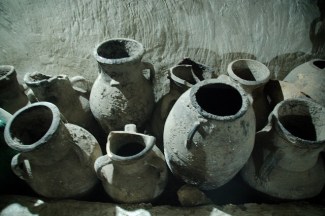 Living conditions in Israel had become very difficult; the nation was constantly at war with its enemies, years of drought had created wide spread famine, and morality was in decline. These things affected the living condition of everyone, regardless of their social status. In the story before us, we are introduced to a poor widow who is facing starvation. Without giving details, we learn that her husband, a godly man, had died and she and her sons were on their last leg. All her resources were gone and the creditors were at the door. In her distress, she sought counsel from Elisha who asked a simple question, “what do you have?” To which she replied, the only thing left in the house was a jar of oil. Elisha went on to instruct her to borrow vessels from her neighbors and fill them with oil from the jar. When she did, they found that the oil poured as long as their was an empty vessel to put it in. I think there are at least two valuable applications from this passage.
The first is obvious. This is a story which illustrates how God provides for His people. Long before this, Abraham referred to God as YHWH-Jirah, the Lord our Provider. This unnamed woman found God to be the one who could meet her needs when all seemed lost. We can take comfort in knowing, no matter what our need, we have a God who cares for us and has the resources to provide. I am always blessed when I hear of a child of God who chooses to trust in the promises of God, for they are the ones who see the miraculous hand of God providing for them.
The second may not seem as obvious, but is equally as striking. We read the oil flowed as long as an empty vessel was provided. Oil is often used symbolically in Scripture to represent the work of the Spirit. In the Old Testament, it was oil that was used to anoint prophets, priest, and kings, and in the New Testament oil is used to anoint the sick. In this story, what was required to have the oil flow was an empty vessel. It did not matter what the vessel had previously been used for, it did not matter what size, shape, or color the vessel was, the only thing that mattered was that it was empty and available. When it comes to Christian service, we are all dependent upon the work of the Holy Spirit. Nothing in the kingdom of God can be accomplished in the energies of the flesh. That being said, if we want to be used by God, we need to be empty and available. Some of the things we must be empty of are private sins, pride, excuses, prejudice, and unwillingness to do the lowest of tasks.
This woman and her sons saw a remarkable work of God, and when it came to an end, I suggest that their only regret was that they did not gather more jars.
Pastor Jim
 Jehoshaphat made the same mistake we all make, he made a decision without first consulting the will of God. His decision seemed, on the surface, to be a wise one. The king of Moab was threatening Israel, and if not stopped, it would not be long before he was a threat to Judah. It seemed, joining forces with Israel to attack Moab was the right thing to do. Soon it became apparent, the Lord was not behind their endeavor. After seven days of travel through the desert, the armies arrived, only to find the waters had dried up. In the heat of the desert, they found themselves seven days away from water. Without a miracle, the armies would perish before ever stepping onto the battlefield.
 If these questions were posed to us on a theology test, we would all answer “No, no, six times no.” We know that He promises:
 Looking back, we see that the ministry of Elijah was remarkable. He came out of obscurity, and was powerfully used as the voice of God for a nation. His ministry impacted kings, and stirred revival in a morally collapsing Israel. As he aged, the world knew it was losing one of the greatest men who ever walked its soil.
 Things in the kingdom of God run very differently than they do in the kingdoms of men. This is particularly true of exaltation. The word exalted means “to raise in rank or power, to be elevated or lifted above.” What exaltation is, and how to achieve it, are different in God’s Kingdom.
 This is certainly not the only record of Ahab’s sin. He was a man who long ago had given up on any desire to live a life that honors the Lord. This passage does however illustrate, quite strongly, the question asked by Jesus, when He said, “What will a man give in exchange for his soul?” (Matthew 16:24)
 This psalm is the personal testimony of a man who almost fell away from the Lord. When he speaks of slipping, he is not talking about a little slip, but rather about throwing in the towel, and giving up on following the Lord.
 Israel was facing almost certain annihilation; the forces of Syria had mounted against them and poised to attack. The troops and resources of Syria far outweighed that of Israel; and in a word, things looked bleak. It was with this backdrop that we are introduced to an unnamed prophet, who brought an almost unbelievable message. The message was that God would deliver Israel from the threat and he would do it through the young and inexperienced leaders.
 Elijah was a man devoted to God. Publicly and privately, he showed commitment and faithfulness to the Lord. His most recent experiences had led him to a face-to-face conflict with the one who most opposed the ways of God. After experiencing great personal victory, Elijah was plagued with a deep depression. He felt as though he could no longer continue serving the Lord, for the opposition was simply too great. Instead of surrounding himself with others who loved and served the Lord, Elijah isolated himself, and his depression grew deeper and darker. The farther he ran, the worse things became, until he found himself miles from home, cowering in a deserted cave, deep in the wilderness.
 We have four boys who are separated by only five years. When they were little, we, like so many others families, spent a lot of our time visiting amusement parks. As the older ones grew, they were attracted to the bigger rides, and their younger brother wanted to do whatever they did. The problem was, many of the rides had a standard. If you were not a certain height, you could not ride. At times, this created quite a controversy. We tried everything to make him just a little taller, we spiked his hair, we bought shoes called “Heelies”, that had a wheel in the back, and provided a couple extra inches to his height. However, time and time again, when we reached the entrance, he was excluded. He simply did not measure up.
 Jim Gallagher