Psalm 107:1
“Oh, give thanks to the Lord, for He is good! For His mercy endures forever.”
 The evolution of love is seen in the relationship between children and parents. An infant child cannot survive on his own and is completely dependent upon the mercy, grace and love of the parents. In a proper relationship the parents give time, energy, even sleep for the benefit of the child. As the relationship develops so does the love, it is not long before the parents begin to see the return in their investment. I can remember being so excited when my children began to smile and laugh, or when they would crawl across the room only to get up on my lap and snuggle. What a joy! Just this week I received messages from each of my boys expressing Father’s Day wishes in their own humorous ways. Our relationship has become one of an exchange of love. This Psalm is an illustration of that kind of love relationship with God. The Psalmist cries out with thankful praise as a response to what God has done for them. Paul used an interesting word for thanks when writing to Timothy, he said “Thanks be to God…” and the word he used was “karis” which is the word used to speak of God’s giving nature. Because of the grace we have received from the Lord, we give grace back to Him.
The Psalmist describes here that exchange of grace and thanksgiving.
He recalls the history of God’s people and reminds them of all that God has done for them. The list includes being redeemed, provided for, delivered, protected, forgiven, and comforted in the storms of life. Sprinkled throughout the Psalm is a continued exhortation;
“Oh, that men would give thanks to the LORD for His goodness, And for His wonderful works to the children of men!”
Perhaps it would be of great value to our love relationship with the Lord if we took time to recall to mind all that God has done for us and respond in thankful praise.
Pastor Jim
Old Testament:
1 Chronicles 12- Heroes In Training
1 Chronicles 13– God’s Way
Psalm 108- Count On The Promises Of God
 This psalm recounts the faithfulness of God during the days of the patriarchs. After mentioning Abraham, Isaac and Jacob, the Psalmist reminds us of the struggles Joseph faced after being sold into slavery by his own brothers. We know he experienced betrayal, beating, false accusations and imprisonment. Each trial he faced was a means by which the Word of God put him to the test.
 It is a common advertising strategy to attempt to sell an item by comparing it to something else. We might see a car commercial with a cheetah running, to convince us of the speed of the vehicle; or a flowing river, to reveal the thirst quenching power of a soft drink. David is, in a sense, attempting to sell us on the greatness of God. He knows the Lord and wants everyone to taste and see for themselves that the Lord is good. To do this he makes a series of comparisons, to convince us to trust in God.
 One of the saddest experiences in life is to see a close friend fall away from the Lord. From the outside, the process often looks the same. A person, who once walked closely with the Lord and was involved in Christian service, begins to drift ever so slightly. First, their conversation changes. Instead of talking about the Lord, sharing from their times of Bible reading or service, they begin to talk only of the waves and the weather. Next, we begin to see them a little less frequently around the church. In some cases, only the responsibility of a service commitment keeps them coming; until finally they step down from their responsibility, and seem to vanish. Sometimes, it will take weeks or even months before we realize what has happened, and by that time, they have cut ties from most of their Christian friends, and are back involved in the things of the world.
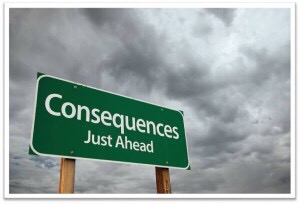 The Psalmist writes regarding the forgiveness of God and the fact that He will mete out vengeance on certain actions. These concepts often seem contrary to one another. We associate forgiveness with the removal of any and all consequences, but God does not see it that way. Abraham was forgiven for his sin with Hagar, but Ishmael was still born. Samson was forgiven for his sin, but the pillars still fell upon him. David was forgiven of adultery, but Bathsheba’s child still died. Peter was forgiven for denying Christ, but still had to live with the image of Christ’s gaze and the memory of the rooster’s cry.
 I find it striking that the Psalmist declares that hate is a necessary expression of true love. He explains that part of being in a healthy love relationship with Jesus is having a hatred for evil. Why is it necessary to hate evil? Why should we hate evil? I can think of at least three pretty strong reasons.
 It seems to me, if one thing is certain in life, it is that things are constantly moving. We live on a moving planet. At the equator, the Earth is spinning at 1000 miles per hour, moving at 67,000 miles per hour around the Sun, and our entire Galaxy is moving at about 185 miles per second. Since this motion is constant, we cannot feel its effects. However, there is other movement that we do notice. The United States Geological Survey website lists dozens of earthquakes that have happened around the world in the past seven days. Earthquakes happen because the earth’s surface is like a thin crust. This crust is made up of many pieces, like a puzzle, and the pieces keep moving around and bumping into each other. This causes the surface of the earth to move like waves rippling in a pond. Also, about 70% of the earth’s surface is water. That means almost three-quarters of the earth is too unstable to stand upon. As far as I know, Jesus and Peter are the only two people to successfully stand on the surface of the water, and that did not last too long for Pete.
 The Psalmist is speaking of the benefits derived from living in an intimate, abiding relationship with God. Jesus also spoke on the same subject when He refered to Himself as the vine and us as the branches. He made it clear, the only way to bear fruit in our life was by remaining in a close and personal relationship with Him. This verse expresses one of the most important benefits of abiding.
 When we are young we think we will live forever; death, even aging, is for other people. As we age, we still cannot imagine a world of which we are not a part. Yet, the Psalmist is making clear, we have been designed by God with a shelf life. In other words, one day we will expire. The bodies that we live in will no longer be able to sustain life, and we will move on to an eternal habitation. James put it like this, “For what is your life? It is even a vapor that appears for a little time and then vanishes away ” (James 4:14). The word ‘vapor’ is defined as, “diffused matter floating in the air impairing its transparency.” In other words, a vapor is only slightly more than nothing. It speaks of the fact that life on earth is transitory, not permanent. This does not mean that life is meaningless.
