Psalm 101:3
“I will set nothing wicked before my eyes; I hate the work of those who fall away; It shall not cling to me.”
 One of the saddest experiences in life is to see a close friend fall away from the Lord. From the outside, the process often looks the same. A person, who once walked closely with the Lord and was involved in Christian service, begins to drift ever so slightly. First, their conversation changes. Instead of talking about the Lord, sharing from their times of Bible reading or service, they begin to talk only of the waves and the weather. Next, we begin to see them a little less frequently around the church. In some cases, only the responsibility of a service commitment keeps them coming; until finally they step down from their responsibility, and seem to vanish. Sometimes, it will take weeks or even months before we realize what has happened, and by that time, they have cut ties from most of their Christian friends, and are back involved in the things of the world.
This experience is not limited to modern times. The Psalmist saw it happen in his day, and as a result declares, “I hate the work of those who fall away.” He also gives a little insight into what those works are when he states, “I will set nothing wicked before my eyes.”
It has been said, the eye is the window into the soul. That phrase has always seemed a bit eerie to me, perhaps because I have misunderstood the truth about the eyes of man. It is not as though a person can look into your eyes and see the inner man, but information enters our mind through the eye gate, which in turn, feeds the soul. Paul spoke about the flesh and the spirit being in a daily battle with one another (Galatians 5:17). We all know there are times when we have lost the battle to the flesh, and times when we have been victorious and remained faithful to the Lord, in the midst of temptation.
The secret to success in the battle against the flesh is training. As in any fight, the one who is stronger and more prepared, is the one who will be victorious. If we want to live well-pleasing to the Lord, we must use our eyes to look away from the things that will lead us to stumble, and onto the things that will help us to grow. Jesus put it like this, “The lamp of the body is the eye. Therefore, when your eye is good, your whole body also is full of light. But when your eye is bad, your body also is full of darkness” (Luke 11:34).
My wife and I were walking the streets of Paris when I saw a chocolate croissant in the window of a bakery. It looked amazing! However, we were on our way to dinner, so stopping was out of the question, but I could not get it out of my head. You know, first thing the next morning, I was in a bakery ordering a croissant. If you are struggling with a particular sin, the solution may be as simple as removing the things that you are looking at, that are feeding that sinful desire. Magazines, movies, internet searches, should all be removed, as you seek the Lord for victory in your life. Let’s take the example of the Psalmist to heart, who decreed, “It shall not cling to me.”
Pastor Jim
Questions for Psalm 101
- This is a Psalm of “wills” and “shalls.” There are 9 “wills” and 5 “shalls.” David is setting down standards that he wants to follow. If you travel back to 1 Kings 2:1-4, you will read David charging his son Solomon to live by God’s standards. Jesus said if you love me, obey my commandments. Are you?
- The word “perfect” in verse 2 translates “blameless.” In verse 2: What does David need to live a blameless life?
- The Bible says that (evil) “bad company corrupts good character (habits)” 1Corinthians 15:13. In verse 6 David is keeping his eye on the faithful. Are you surrounding yourself with Godly people to help you grow?
Old Testament:
Psalm 102- Prayer of the Broken
2 Kings 25- Besieged
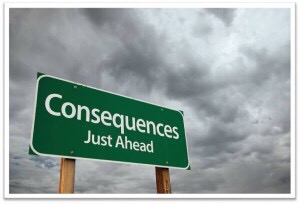 The Psalmist writes regarding the forgiveness of God and the fact that He will mete out vengeance on certain actions. These concepts often seem contrary to one another. We associate forgiveness with the removal of any and all consequences, but God does not see it that way. Abraham was forgiven for his sin with Hagar, but Ishmael was still born. Samson was forgiven for his sin, but the pillars still fell upon him. David was forgiven of adultery, but Bathsheba’s child still died. Peter was forgiven for denying Christ, but still had to live with the image of Christ’s gaze and the memory of the rooster’s cry.
 I find it striking that the Psalmist declares that hate is a necessary expression of true love. He explains that part of being in a healthy love relationship with Jesus is having a hatred for evil. Why is it necessary to hate evil? Why should we hate evil? I can think of at least three pretty strong reasons.
 The Bible is filled with wonderful promises designed to comfort and guide the believer through the pitfalls of life. One such promise is recorded here. The psalmist declares that the day is coming when the world will be judged in righteousness.
 It seems to me, if one thing is certain in life, it is that things are constantly moving. We live on a moving planet. At the equator, the Earth is spinning at 1000 miles per hour, moving at 67,000 miles per hour around the Sun, and our entire Galaxy is moving at about 185 miles per second. Since this motion is constant, we cannot feel its effects. However, there is other movement that we do notice. The United States Geological Survey website lists dozens of earthquakes that have happened around the world in the past seven days. Earthquakes happen because the earth’s surface is like a thin crust. This crust is made up of many pieces, like a puzzle, and the pieces keep moving around and bumping into each other. This causes the surface of the earth to move like waves rippling in a pond. Also, about 70% of the earth’s surface is water. That means almost three-quarters of the earth is too unstable to stand upon. As far as I know, Jesus and Peter are the only two people to successfully stand on the surface of the water, and that did not last too long for Pete.
 The Psalmist is speaking of the benefits derived from living in an intimate, abiding relationship with God. Jesus also spoke on the same subject when He refered to Himself as the vine and us as the branches. He made it clear, the only way to bear fruit in our life was by remaining in a close and personal relationship with Him. This verse expresses one of the most important benefits of abiding.
 As Ahaz ascended the throne of Israel he seemed determined to bring about change to the nation. While on the surface this might sound noble, in reality he was attempting to remove the presence of God from the public sector. He no longer wanted the nation to be built upon the foundation of God and His word. Both personally and politically he had no interest in the ways of God. His private life was marked by turning from God and his public life was marked by signing treaties with the enemies of Judah and bringing their worship practices into the nation. Soon he began tearing apart the Temple and remodeling it to look like the pagan altars of the Assyrians.
 The words of this Psalm became the lyrics to a worship song we used to sing when I first began following Jesus. Whenever I read it my mind becomes flooded with memories. My early days of following Christ were filled with firsts. I can recall one of the first times I raised my hands in worship. I was in a room filled with teenagers who were singing and I simply reached up toward the ceiling as if I were attempting to get as much from God as He would possibly give. I recall another occasion when I knelt before the Lord for the first time. We were at a retreat and I was standing near the back when lifting my hands and it did not seem like enough of an expression of praise. I slipped away into the far corner of the room and knelt before the Lord as if to say “I am all Yours, Jesus.”
 When we are young we think we will live forever; death, even aging, is for other people. As we age, we still cannot imagine a world of which we are not a part. Yet, the Psalmist is making clear, we have been designed by God with a shelf life. In other words, one day we will expire. The bodies that we live in will no longer be able to sustain life, and we will move on to an eternal habitation. James put it like this, “For what is your life? It is even a vapor that appears for a little time and then vanishes away ” (James 4:14). The word ‘vapor’ is defined as, “diffused matter floating in the air impairing its transparency.” In other words, a vapor is only slightly more than nothing. It speaks of the fact that life on earth is transitory, not permanent. This does not mean that life is meaningless.
