2 Kings 12:9
“Then Jehoiada the priest took a chest, bored a hole in its lid, and set it beside the altar, on the right side as one comes into the house of the Lord; and the priests who kept the door put there all the money brought into the house of the Lord.”
 Young king Jehoash began his reign by repairing the Temple of the Lord. In order to fund the work, he had a large box built with a hole in the top, where people could place their offerings. He instructed the people to give as they “purpose in their hearts.” This freedom allowed each person to go home, sit with his spouse and pray, regarding what portion of their income should be given to the work of the Lord. Once decided, they would simply drop the funds into the box, without any fan fair or recognition. When the money was received, it was set apart for the work of the Lord. This is a very clear illustration of New Testament giving. Paul instructs us that we should give “as we purpose in our hearts” (2 Corinthians 9:7), and Jesus said, “we should not let our left hand know what our right doing” (Matthew 6:3). The New Testament model for giving is one that allows for “freedom.” Each one of us is free to give as we see fit. However, we must guard against misusing this freedom, by failing to take the time to sit before the Lord and determine what part of our income should be given to the work of God. There are at least two common mistakes we make that negatively influence our decision to give.
First, we think, what we have to give, is so inconsequential that it will not make a difference. This is the same thinking that keeps some from serving the Lord. Keep in mind, it was the widow’s mites that received Christ’s praise, not the golden coins of the rich (Luke 21:1-4).Giving is more about you expressing love for Christ, and trusting in His provision, than it is about the dollar amount of the gift.
Second, we often fail to give because we don’t think we can make ends meet with less than we have. We look at the bills, the kids, the desire for a family vacation, and we wonder how we could ever give any portion to the Lord on a regular basis. I think it is important to keep two things in mind. First, we are exhorted to store up treasures in heaven. When we put aside an earthly gift for the work of the Lord, we are storing up a heavenly treasure. Second, God is in the business of doing more with less. I have been amazed at the ways God has blessed me and my family, as we have served Him over the years.
He is Faithful to meet all your needs.
Pastor Jim
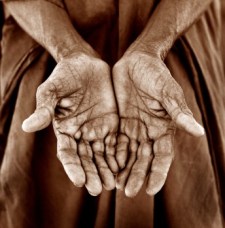 Sometimes, God chooses the most unlikely candidate as His teaching vessel. Here, and again in New Testament, we find poor widows, with almost no resources, being used to illustrate the principle of giving.
 “I love you” is one of the most common phrases in any language. It is the heartbeat behind many popular songs, movies or works of literature. It seems a love story is an underlining theme in every movie whether it is designed as an historical piece, a comedy, or even a horror film. The story of Amnon and Tamar reveal that the love story is as ancient as time itself, and people were as confused then, as they are now as to what love really is.
 In this Psalm, David uses the illustration of a shepherd to speak of God’s care for those who belong to Him. This Psalm speaks of the benefits true to all who are in a covenant relationship with God. He speaks of God’s provision, comfort, protection and care. Jesus used the same illustration in John 10 when He said,
  There is no doubt, while all of the Bible is inspire by God and “profitable for doctrine, for reproof, for correction, for instruction in righteousness” (Titus 3:16), there are certain passages that stand out to us. They seem to strike a chord in our lives, or present a truth that is so profound, it will transform our living. This is one of those passages. The scene is set in the previous chapter. The Philistines had been oppressing Israel for years. The weak, scattered tribes of Israel were no match for the immense army of the Philistines. They had been defeated time and time again by the Philistine raiders. All weapons had been confiscated from Israel, leaving them incapable of mustering a resistance against the Philistine lords. With all his effort, the best Saul could do was muster a six hundred man standing army that was no match for the enemy.
 A few years back I was teaching in a Bible school in Ghana on the subject of trust. I invited one of the students to come forward and asked him to put his arms at his side, close his eyes, and face the class. He had no difficulty doing what I asked until I added, “now remain stiff as a board and fall backwards.” He immediately opened his eyes, turned around, and looked at me as if to say, “No way!” I assured him that I would catch him, and asked him to face the class again. I counted to three and told him to fall back. To his credit, he tried, but once he began to lean, he stepped back to catch himself. The remaining students erupted in laughter as their friend was afraid to fall back.
 Tucked away in the story of the Philistines return of the Ark to Israel, is this powerful exhortation regarding the danger of hardening our hearts to God. We are reminded of the difficulties Pharaoh endured because of his refusal to humble himself and obey the Word of God. The lessons from this exhortation are twofold.
 Webster defines a trial as, “A test of faith through subjection to suffering or temptation.” Paul’s current situation may be the text book case of a trial. He came to Jerusalem with the goal of sharing Christ with his friends and countrymen, spent his time preparing to share with them, but before he ever spoke a word, he found himself under attack. After his unjust arrest, he had two opportunities to share the Gospel; both times he was cut short, as the people become enraged with him. To make matters worse, his Christian friends had warned him not to go to Jerusalem in the first place. They said he would be beaten, arrested and perhaps killed. Paul believed the trip was the Lord and ignored their warnings. Now, incarcerated and facing the threat of death, it would be natural to feel as though he had failed the Lord and his situation was hopeless.
 A lot of my childhood was spent on the ocean. From as far back as I can remember, my dad had a boat and we would spend the summers taking vacations to Catalina Island. It was a great way to grow up. We would spend day after day on the boat, fishing, swimming, diving and exploring. When the vacation finally came to an end and we made the 27 mile journey back to the mainland, I experienced an interesting sensation. After so much time rocking back and forth on the boat, the ground seemed especially solid.
 After the great deliverance from Egypt, forty years in the wilderness, and five years in the Promised Land, there were still tribes who were neglecting to possess their possessions. In other words, the land that had been promised and distributed to them, remained in the hand of their enemies. Joshua, in a form of harsh rebuke, declares that the reason for their failure to take the land was simple neglect. Perhaps some used the age old excuse of “I have just been so busy” or “I don’t have time right now.” We know for sure, some of them made the excuse of the task being too difficult.
 Jim Gallagher