Exodus 25:2
“Speak to the children of Israel, that they bring Me an offering. From everyone who gives it willingly with his heart you shall take My offering.”
A few years ago I heard a word I had never heard before, or ever dreamed could be real. That word was “glamping.” “Glamping,” according to the urban dictionary, is “a form of glamorous camping done by urban types.” Those who “glamp” turn tents into elaborate structures with all the comforts of home. Once inside the tent, you are sure to forget you are in the wild. Of all the glamorous tents ever constructed by these wanna be campers, none could compare in beauty or cost to the Tabernacle Israel built in the wilderness. At the current value of an ounce of gold, the Tabernacle would have cost more than $50 million just in materials. The question is, where did all that money come from?
“Speak to the children of Israel, that they bring Me an offering. From everyone who gives it willingly with his heart you shall take My offering.”
Moses laid out the building plans for the Tabernacle, then instructed the people to go home and consider what part they would play in the construction of the Tabernacle. Each family was to prayerfully consider their financial condition, in light of the work that God wanted to do. In the end, the people were to give willingly to the work.
I am sure many factors were considered as families got together to examine their finances. They needed to look at their net worth, what expenses they had to cover, and to keep in mind that the future was unknown, and they could not be certain what kind of provision was around the corner. I am sure, in addition to looking at their needs, they also considered some wants. If they gave to the work of the Lord, that would mean they had less to spend on pleasure, amusement or vacations. Another factor they needed to consider, was that by giving to the Lord, they were giving to something bigger than themselves; a work that would continue long after they were gone. So much of our expenses are spent on things that don’t last, giving to the Tabernacle was giving to something that would be used for the furtherance of the kingdom for years to come.
When considering your finances, and what to do with them, it is important to carefully examine what you have, but it is also important to consider what kind of lasting impact you are making for the kingdom of God. Perhaps it is time to prayerfully consider what investments you are making in the furtherance of the Gospel.
Pastor Jim

 Wisdom can be defined as the proper application of knowledge in any given situation, or simply knowing what to do. We have all felt, at times, that we do not know what to do. We are faced with a problem, and are crippled with indecision. It is comforting to know, God promises to give wisdom to His children. The question that remains is, how do I get my hands on the wisdom He has? There are at least three simple steps.
 Famous American inventor and statesman, Benjamin Franklin, is credited with saying, “Nothing is certain except for death and taxes.” It seems we spend much of our time, effort, and energy, trying to avoid these things, rather than preparing for them. Some of us will exercise regularly, change our diet, and get regular checkups with our family doctor, in an attempt to postpone the inevitable. Others, will avoid any thought whatsoever of death or dying, and live this life as though it will last forever. Some, might have a risk-it-all attitude, where they live life on the edge, while others will attempt to amass as much stuff in this life as possible. Remember the mantra “He who dies with the most toys wins”?While I am not suggesting that eating healthy or enjoying life are bad ideas, I am saying, attempts to avoid or ignore death, are not nearly as important as attempts to prepare for it.
 This verse contains an exhortation followed by a promise. The exhortation is to search the book of the Lord. Webster defines search this way, “to look into or over carefully or thoroughly, in an effort to find or discover something” My wife and I look at some things quite differently. When an item is misplaced I become frustrated, thinking that if it is not where it belongs, there remains an unlimited number places to look. She on the other hand begins to search. I think she sometimes enjoys the challenge. Inevitably, in a matter of minutes, she has located that which is lost. We should approach the Word of God the way an explorer or a excavator approaches life. We must understand, there are precious treasures tucked away in the Bible, and if we are diligent, we will find the ones that are designed for our present condition. I once heard of a man in search of gold. He spent years working his claim only to come up empty. Finally, in a moment of discouragement he sold the rights to his land and moved on. The new owner, within a few days, struck it rich. The first man had given up only inches away from the mother lode.
 Knowledge is a word which speaks of information. We increase in our knowledge of God as we read the Word of God and walk with Him daily. However, wisdom is another thing all together. We might define it as “the proper application of knowledge,” or more simply as, “knowing what to do.” How many times have you faced decisions in life where you were not sure what to do, because you have not been that way before? Wisdom is acquired by experience, by careful observation of the experience of others, or by receiving it from heaven.
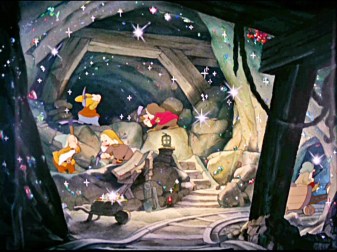 Job is considered to be the oldest book in the Bible. It may have been written as many as four thousand years ago. Job declares, during his day, men were involved in mining the earth in search of precious stones. He refers to successful expeditions in search of silver, gold, copper, iron and sapphire. No doubt, great wealth and power came as a result of their findings. Yet, with all of man’s endeavors, Job declares they had failed to find the source of true wisdom. It cannot be located in the depths of the earth, or be purchased for the price of gold.
 Years ago, I received a letter; I had been selected to be awarded for my accomplishments as a teacher. Upon reading the first paragraph, I was honored and somewhat humbled. My ego was stroked, as I was being told of the great responsibility I was fulfilling by teaching others. However, as I continued to read, I discovered any teacher who was willing to purchase the hundred-dollar, leather-bound book, would have their name listed in it. Even though I knew it was a scam, I was still slightly tempted to have my name in a book honoring me for my accomplishments.
 The physical battles Israel faced illustrates the spiritual battles the Christian faces.
 We have all had the silly daydream of winning the lottery, finding a stash of money in a secret compartment in the attic, inheriting millions from an unknown uncle, or inventing the next great product everyone wants to own. Why? I think the answer is simply that we would all love to have an unlimited supply of cash; not for it’s intrinsic value, but because of what we can obtain with it, and for the security that it brings. Imagine never having to worry about the bills again.
 Jesus tells the story of a rich man who believed true life was found in great possessions. He worked hard and was very successful. His success caused him to evaluate his life. His conclusion, he needed to work harder so he might acquire more, and be able to retire in comfort. He began to increase his efforts, acquire more, build larger storehouses for all his possessions. All the while, hoping for that time when he would be able to live at ease and enjoy it all. Sadly and expectedly, he died and all of his riches were of no use to him as he stepped into eternity.”
 Jim Gallagher