Romans 4:3
“For what does the Scripture say? ‘Abraham believed God, and it was accounted to him for righteousness.'”
 A right standing before God is not received by the good works that we do, but by faith in the finished work of the Cross. This is illustrated in the life of both Abraham and David. These are two of the three greatest heroes of the Jewish people, the third being Moses.
Abraham was justified, not by the good works he accomplished, but by trusting in the promises of God. In fact, when he was first chosen he was an uncircumcised idol worshipper.
Likewise, David was not justified by his works. The Psalm referred to was written after David had sinned with Bathsheba and attempted to hide his rebellion from God. The great release from the burden of sin was found when, in faith he confessed it to the Lord, and forgiveness and righteousness was imputed to him (Psalm 32:1-2).
The same is true for us today. Our standing before God is never based upon our good works. We were loved and chosen before the foundation of the earth. We were separated, called from the womb, pursued and prayed for before we ever responded to Christ. We are made right with God when we trust in the finished work of Christ on the Cross. We have access to Him every day, not because of how good we have been the day before, but because of the efficacy of the Cross. If you are avoiding the Throne of Grace, thinking you are not worthy because of something you looked at, said, thought, or did, you need to understand trusting in Christ results in your sins being placed on Him, and His righteousness imputed to you.
In Romans 3 Paul asked, “Where is the boasting then?” Clearly, the answer is in Christ. I do not stand before men and brag of my great accomplishments, self-righteousness, or unwavering faith. I bow before God, rejoicing in His marvelous grace. I stand before men, declaring that all who come to God through Christ, can have their sins forgiven and His righteousness imputed to them. I am reminded of the words of the Psalmist who declared,
“Let the high praises of God be in their mouth, and a two edged sword in their hand” Psalm 149:6
Instead of justifying our sin, or allowing failure to keep us from God, let’s join David in praising God, and Abraham in continuing to pursue the promises of God.
Pastor Jim
 Beginning with the eighteenth verse of chapter one, Paul is developing his case against humanity. He states, because of the inner witness of the conscience, and the outer witness of creation, men have no excuse for atheism, agnosticism, or idolatry. He makes it clear, unbelief is primarily driven, not by lack of evidence of the divine, but out of a desire to practice things God forbids. He speaks of those who reject the truth in order to practice unrighteousness.
 In this portion of the Psalm, David prays three things: search me, try me and lead me. These are very interesting requests in light of what he has previously declared concerning God.
 A person, standing at a distance and looking in at Solomon’s kingdom, would be struck by the enormous wealth and prosperity. We read of merchants traveling the world and returning with treasures of gold and precious stones, as well as exotic spices and animals. We are told, the landscape was marked with elaborate building projects, fine arts, and gourmet foods. Beyond question, the nation looked to be at its apex, and was envied by the world around them. In fact, we are told that delegations, including kings and queens, would make their way to Israel just to see its highly developed society and vast wealth. All the world wanted to be like Israel. Sadly, things were not really as they appeared. Underneath the surface was a cancer that was eating away at the fabric of the nation, and in a few short years would cause its collapse.
 Solomon’s expansive building projects did not come cheaply, and had a devastating effect upon the nation of Israel. The people sat under a heavy yoke of taxation. After Solomon’s death, the people had enough. They sought relief from the tax burden the government had imposed on the nation. Young King Rehoboam, in his arrogance, believed the government knew better than the people, and rather than relief, he promised an increase in the tax burden, and workload of the people. His words drove the citizens to rebel against his leadership, and resulted in ten of the twelve “states” separating from the union. The northern tribes formed a new nation, and this became their independence day. Having experienced a heavy yoke, they broke away in order to have freedom. Sadly, the northern tribes never experienced true freedom. Soon after the nation was formed, they set up a system of idolatry, leading the people into a bondage that was much worse than the taxation they had experienced. Their example speaks volumes to us about bondage and true freedom.
 Once the Temple was erected and the altar and priesthood put in place, Solomon explained the purpose of the Temple. It was designed as a means for sinful men to have relationship with a holy God. As Solomon prayed, he revealed the great benefits of the Temple. We might say, 2Chronicles 6 gives us the doctrine of the Temple. It became clear, no matter what the cause, turning to the Lord was the cure. If the people were suffering loss, pain, sorrow, sickness, or defeat, they could turn toward the Temple, pray, and find restoration with the Lord. Since the Temple provided access to God, it was the means to receiving mercy from the Lord.
 The Psalmist is rejoicing in the pardon the Lord provides. In doing so, he considers what would happen to us if the Lord treated our wrongdoings the way we do. What would happen to us if, instead of forgiving sin, God kept a detailed record of it. Instead of removing it as far as the East is from the West, or casting it into the depths of the sea, He held it close by, to remind us of it each time we struggled or fell.
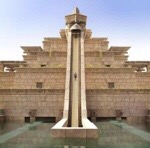 After Solomon ascended to the throne of David, he was gifted by God with everything necessary to become the greatest king the world had ever known. Because of his father’s military campaigns, the nation would experience a time of peace unlike anything they had ever known. The wisdom of Solomon and the wealth of the nation made it seem as though they would have years and years of abiding peace, strength and growth. It seemed as though nothing could stop the nation that had been birthed by God. Tragically, in a few short decades, this nation would go through a heated civil war, dividing the nation, and costing many their lives. Not too much later, this nation would be defeated over and over again by their enemies, until they were finally overthrown and carried captive to Babylon. What happened? What caused the rapid fall of a nation with such promise?
 David lists two very important reasons, even motivators, for keeping the commands of God. First, he states by doing so, they would posses the land. Second, they would have something to leave behind for the next generation. These same principles should motivate each of us to live according to the Word of God.
 It is a common advertising strategy to attempt to sell an item by comparing it to something else. We might see a car commercial with a cheetah running, to convince us of the speed of the vehicle; or a flowing river, to reveal the thirst quenching power of a soft drink. David is, in a sense, attempting to sell us on the greatness of God. He knows the Lord and wants everyone to taste and see for themselves that the Lord is good. To do this he makes a series of comparisons, to convince us to trust in God.
 Jim Gallagher