John 18:11
“Put your sword into the sheath. Shall I not drink the cup which My Father has given Me?”
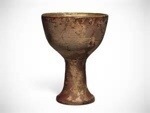 In the garden of Gethsemane, Jesus spent hours in prayer. The portion of the prayer recorded for us had to do with a cup. The event is recorded in Mark 14:35-36,
“He went a little farther, and fell on the ground, and prayed that if it were possible, the hour might pass from Him. And He said, ‘ Abba, Father, all things are possible for You. Take this cup away from Me; nevertheless, not what I will, but what You will.’”
Earlier that evening Jesus had taken a cup and distributed it to His disciples, explaining that it was the Blood of the new covenant.
“Then He took the cup, and gave thanks, and gave it to them, saying, ‘Drink from it, all of you. For this is My blood of the new covenant, which is shed for many for the remission of sins.’” Matthew 26:27-28
It is clear, the cup that Jesus referred to was the cross, and the impending judgment He would face as He bore the sins of humanity. That cup, that judgment, was so great that it caused Him to sweat blood as He faced the reality of it in the garden. The judgment would include all the weight, penalty, and guilt of sin; as well as being forsaken by the Father, as He became sin for us.
Because Jesus tasted that cup bearing our sin, Paul declares,
“For He made Him who knew no sin to be sin for us, that we might become the righteousness of God in Him.” 2 Corinthians 5:21
Righteousness is the standard for entrance into Heaven. The level of righteousness required is God’s perfection. What a wonderful truth, that He bore our sin so that we might be made righteous.
For any who reject the provision made possible because Jesus drank the cup of Calvary, Revelation declares,
“. . . he himself shall also drink of the wine of the wrath of God, which is poured out full strength into the cup of His indignation…” Revelation 14:10
Jesus tasted the cup of wrath so we would never have to. If you have not believed and received Christ, why not do that right now. Pray, “Jesus, thank you for taking my sin and providing me with Your righteousness. I receive You as my Savior and Lord”
If you have questions contact us at http://www.ccvb.net
Pastor Jim
 Deuteronomy is a compound word meaning “Second Law”, and is a recap of the instructions Moses gave to the first generation of believers who had been delivered from Egypt. Forty years have passed and a new generation has arisen in Israel. Consequently, it became necessary to rehearse the Law before the people entered the land of promise. Much of what is found in Deuteronomy is a recap of what was first presented in Exodus, Leviticus or Numbers. This is true of the law regarding cities of refuge. Numbers 35 gives us much greater detail regarding these cities. In it we find:
 The request of Reuben and Gad to remain on the East side of the Jordan, outside the land of promise, was as shocking to Moses as it is to us. When he first heard it, Moses was reminded of the events almost forty years earlier, when the ten spies refused to enter the land, and discouraged the hearts of the people. After thirty-eight years of circling the desert, watching countless numbers of his friends and loved ones die, Moses wanted nothing to do with part time commitments or compromise. The tribal leaders assured Moses their request had nothing to do with compromise; they would accompany Israel into the land to further the work of God. While they ardently declared they were as committed as the rest of the tribes, the evidence tells another story.
 Moses goes into great detail to explain the sacrifices that were to be offered to the Lord. Every morning, and again, every evening, a spotless lamb was offered, with a grain and drink offering. On the Sabbath, new moon, and for each of the seven feast, additional sacrifices were added. As long as the Tabernacle or Temple stood, these offerings were to be continually presented to the Lord. An entire staff of priests was required to officiate at these offerings. Some were responsible to examine the offering for defect, others to perform the sacrifices, and still others to attend to the daily maintenance, and care for the Temple, itself. When the days work was completed, they understood the next day bore the same responsibilities. There was no end to the process. Yet people were still conscious of their sin and alienation from God.
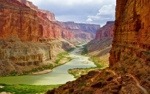 Between man and God there is a great gulf of separation. This gap is caused by sin, and makes it impossible for us to have fellowship with God. This is precisely the reason Jesus came. He bled and died on Calvary’s cross to bridge the gap; to make it possible for us to know God now, and spend eternity with Him. This life will come to an end, and when it does, only what we have done with Christ will really matter. In this story, the rich man reveals what happens to those who refuse Christ. Not only do they live separated from God, but they die that way.
 More than a month before this event, Moses had ascended Mount Sinai, disappearing into the thick smoke. As the weeks passed, the people began to believe Moses must have died. In their fear and confusion, they approached Aaron, seeking spiritual counsel. They realized they needed a worship service. However, their time in Egypt had left them very confused about who God really is. Aaron instructed them to bring financial gifts, then he made a god they could worship. The cost of their sinful activity was great.
 One of the key furnishings for the Tabernacle was the Altar. It was a large wooden structure overlaid with bronze. It was located within the gate of the courtyard, and outside the entrance of the Tabernacle, itself. It was on the Altar, where all of Israel’s sacrifices were offered. After the construction of the Tabernacle was completed, the nation gathered around and dedicated it to the Lord; concentrating on the Altar, with its sin offerings.
 There can be little question that the children of Israel were following the leading of the Lord. They had a miraculous door open; freeing them from slavery. They began to march, carrying gifts from Egypt, and being led by a pillar fire and a cloud. What was hard for them to understand was, the Lord had led them into a very difficult place. With Baal Zephon on one side, Migdol on the other, and the Red Sea before them, Israel was boxed in, with no where to turn. As the Egyptian army approached, the Israelites were the proverbial sitting ducks. With fear gripping their hearts, they cried out to Moses, declaring life was better in slavery than in the wilderness. It was with this backdrop, Moses gave one of the most beautiful promises of God.
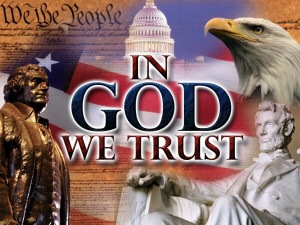 Pharaoh thought the problem with his nation was the believers, and as a result, he attempted to suppress or destroy them at all costs. What he failed to see was, it was his attack upon God, His word, and His people, that actually destroyed his nation. What was once a powerful empire, and the delight of the nations, was being weakened by rebellion against the ways of God. Egypt is not an anomaly. The same is true of any nation that seeks to remove the influence of God.
 Jim Gallagher