Ezekiel 37:11
“Then He said to me, ‘Son of man, these bones are the whole house of Israel. They indeed say, “Our bones are dry, our hope is lost, and we ourselves are cut off!'””
 Ezekiel was taken in the Spirit to a valley full of skeletons. I am sure the sight itself was quite shocking, but what happened next must have been truly overwhelming. The angel asked Ezekiel if these bones could live. The obvious answer is no. When a person has been under water too long and their heartbeat has stopped there remains a slight chance of resuscitation. When a person has been dead so long that all that remains is a pile of bones, they are way past ‘mostly dead’, and no hope remains of them coming back to life. I am sure my answer would have been “No Way!” Ezekiel, however, had seen God do some pretty amazing things, so he did not discount even the possibility of these bones coming back to life. Sure enough, as he stood by, the bones came together; muscle, organs, skin and finally life was added. What had been a graveyard was now a valley filled with life.
This is a graphic picture of the work God alone can do. This passage has often been used to illustrate the work of salvation. When a person comes to Christ a miracle no less amazing than adding life to dead bones takes place. While there are many similarities between conversion and this event, the real meaning behind it is God’s promise to restore the nation of Israel; it had been divided, conquered and scattered. While this event transpired, Israel remained captive in Babylon. However, in a few short decades Cyrus, King of Persian, would issue a decree allowing the Jews to return to their homeland. In a minor way, that event fulfilled this prophecy, but the promises looked way beyond ancient times into the future. God promised the nation would be restored and the Messiah would sit on the throne of Israel and reign. He promised these would be end times events.
After two thousand years without a homeland, Israel returned to occupy the Promised Land. This event was the precursor to Ezekiel’s promise. Soon, Jesus Christ will return to set up His kingdom. The fact that Israel occupies the land today should stir our hearts to live in expectancy of His return.
Pastor Jim
 Scripture teaches, the most important of all graces is love. Jesus said it was the first of the commandments, the proof of our relationship with Him, and our most effective witnessing tool. Paul defined love in first Corinthians 13, and declared that love will outlast time. In our world, love is a very common subject, admittedly difficult to define. I think it is important we keep in mind, while the chief thing is love, the chief love, is love for God. John helps us to understand what love for God actually looks like.
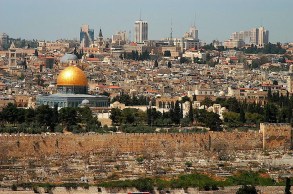 Isaiah promises a time when violence and destruction will be replaced with salvation and praise. Clearly, we have not yet entered that time. Violence is one of the major themes of our day. While this is true everywhere, it is especially true in the Middle East. It seems as though, not a day goes by where we are not faced with reports of violence, war, and terrorism.
 Life is filled with reasons to fear. We fear the unknown and the known, we fear change, and often fear that things will never change, we fear for ourselves, our families, and especially for our children. It would not take any of us very long to be crippled with fear, if we chose to dwell too long on any of those things. Isaiah is reminded, in the midst of frightening times, there are some pretty valid reasons not to fear. The first of the list is God’s promise to be with the believer.
 “Oh yeah, what’s in it for me?”
 I recently watched an episode of a “Reality Show” where two individuals were in search of gold. They invested all they had, left their families, traveled to a foreign land, all in search of gold and in hopes of getting rich. Over the centuries, gold has been a highly sought after commodity. For many years, it was the standard by which a nation’s wealth was determined. Gold is not the only commodity man seeks after. Many have spent their lives in pursuit of resources that will make them rich, successful, powerful or at least happy. Perhaps the most sought after of all, is the pursuit of peace. In fact, it seems many would give up all else, in order to gain peace. In one of the most precious of all promises, Isaiah declares where peace can be found.
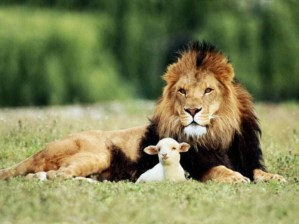 In beautiful, poetic fashion, Isaiah describes the conditions of the world after Christ returns to set up His kingdom. His purpose is to make all things right by establishing a rule of righteousness and peace. One thing is clear, in thousands of years of human governments, man has never been able to rule in righteousness or peace. Even today, with all of our advances, war continues to stain the face of the earth.
 This is one of the most well known verses in Isaiah, and perhaps in the entire Bible. It is a verse which predicts the coming of the Messiah, seven hundred years before His birth. In this verse, we have a detailed description of the Savior of humanity. We are told a Child will be born, who is in fact, the Son of God.
 Tragically, God is blamed for many of the atrocities committed by man. I say tragically, not because God cannot or will not defend Himself, but because as long as we blame God for what men do, we will fail to find a real solution to the problem. The chief wrong in this world is the heart of man. We see this demonstrated daily in the horrific actions reported on our TV screens. We hear of power hungry people oppressing others, in pursuit of their own ambitions. This happens everywhere on the globe. Sometimes, it is in a far away land where a political vacuum has allowed for the strongest force to take over, other times it happens locally where a person uses the tragedy in someone’s life for their own personal gain. Wherever and whenever it happens, it screams to us that the chief problem in our world is the heart of man.
 Jim Gallagher