Jeremiah 12:1-2
“ Righteous are You, O Lord, when I plead with You; Yet let me talk with You about Your judgments. Why does the way of the wicked prosper?”
Jeremiah’s question interests me because it seem to be the opposite of what God is accused of today. How many times have we heard someone ask, “Why do bad things happen to good people?” The inference is that good, innocent even righteous people are being mistreated by a vengeful and unfair God. Jeremiah had a different perspective, he saw God as a righteous judge and realized that men were sinners. This led him to wonder why it was that wicked people were prospering.
In any situation in life, if we are going to effectively problem solve we have to accuratly diagnose the problem. If a doctor misdiagnosis a person he will also fail to prescribe the proper treatment. If a mechanic misdiagnosis the problem with the engine he will replace the wrong part and if we continue to place blame on God for the wicked actions of men we will never really find a cure. When we backslide and get involved in things God specifically tells us to avoid we cannot then turn and ask why God has allowed this to happen to us. We must take responsibility for wandering from the Lord and into harmful things. The way of escape will be found when we turn from our wanderings and begin again to follow closely after Christ.
Sometimes it is difficult to trust the Lord because we see others who have chosen not to follow Christ going through life without many of the difficulties we are struggling through. If you feel that way, you are not alone. The psalmist wrote that it was the carefree lifestyle of the wicked that caused him to question the value of trusting in the Lord. All that changed for him when he looked passed the immediate and considered their end. Jesus explained that there are only two roads in life. One leads to eternal life, the other to judgment. The question is not how difficult the roads might be, but where they are ultimately taking us. Instead of being discouraged by the hardships you are currently facing, look to the end of the road and the glory that awaits all who trust in Christ.
Jim

 In this Psalm, we find David enduring the consequences of sin. Like all of us, he was drawn into something forbidden and chose to trespass, because sin always makes promises it cannot keep. He was, no doubt, hoping to find some level of pleasure by disobeying the law of God. Whatever enjoyment he derived from his sin, was soon eclipsed by the pain and sorrow sin always brings. Here we find David in travail of soul and under severe attack from his enemies. He describes himself as being pierced by arrows of conviction, being under the heavy weight of guilt, and even undergoing attack from others who think that he deserves the sufferings he is facing.
 It seems like salespeople will make the most preposterous claims, just to make a sale. We hear of miracle products that have the ability to get stains out of anything. The problem is, when we use the product, it rarely meets their claims or our expectations. No matter how hard we work, the kool-aid stain remains imbedded in the carpet, and the grease is still on the collar of your favorite shirt.
 Anxiety can be defined as an abnormal and overwhelming concern over the reality of a threat, and our inability to cope with it. Similar words would be care, concern, fear, nervousness or worry. Anxiety is usually accompanied by an inability to focus on other tasks, difficulty sleeping, and either no appetite or one that seems to rage out of control. Solomon observed that unchecked anxiety can lead to a much worse condition, that of all out depression. No doubt, life is filled with challenges greater than we can handle, which bring us to the brink of anxiety. Many of us may feel as though we have already slipped off that cliff. Fortunately, the Bible addresses the subject of anxiety and gives us some clear cures for our common worries.
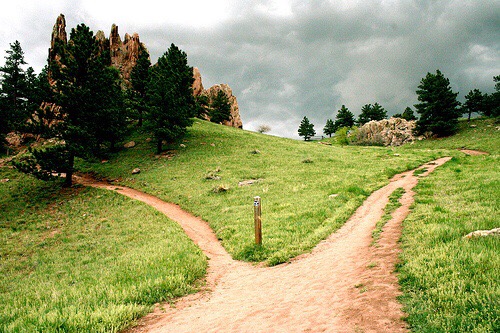
 Have you ever been following someone’s directions to a place you have never been, and encountered an unexpected fork in the road? When that happens, we are forced to stop, study the map again, ask for help, and make a decision as to which way to go. Solomon tells us, that in life, when we encounter the unexpected fork in the road, wisdom is there to meet us, and provide direction for our lives. While wisdom is always available to us, there are times when it may be more difficult to know the right path to take. Solomon gives a description of wisdom so we will be able to recognize it the next time we are in need.
 There are times in Scripture when God will resort to name calling, not as a way to be mean, but as a means of illustrating the behavior of His people. There is that famous passage in Matthew 16 where Jesus calls Peter, Satan. He does this because like the devil, Peter was attempting to stand between Jesus and the cross. Whenever a person obstructs the work of the cross, they are supporting the work of the devil. Here, God uses a different analogy. It may not be quite as striking as referring to a disciple as the devil, but it paints a very clear picture of how God viewed the nation of Israel. He saw them as a silly bird, without any sense. A parallel illustration could have been to compare them to a squirrel, who seems to run around without any real clue of what it is doing.
 Have you ever heard someone ask, “What’s in it for me?” As if they will not consider the cost of doing something, unless they can understand the personal benefits they will derive. In light of that, notice how Solomon goes to great lengths to express the benefits of living a godly life.
 Jerusalem sits atop the mountain range known as mount Moriah. The city is surrounded by valleys, and is supplied with water through various springs, because there are no rivers that flow through the city or surrounding hillsides. Ezekiel is seeing into the future, to the time of the millennial reign of Christ. As Jesus sits upon the throne of David to rule the nations, the topography of Jerusalem is changed. A stream flows from the temple of God into the Kidron Valley, then turning south continues past the Hinnom Valley, heading toward the Dead Sea. What Ezekiel is seeing is both literal and symbolical. His vision is a beautiful picture of God, as the Source of life for a world that thirsts for spiritual truth, including forgiveness and salvation.
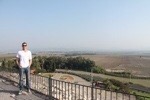 Recently, I had the privilege of standing on Tel Megiddo, the ruins of the ancient city of Megiddo. It overlooks, what is often referred to as, the valley of Armageddon. The experience was almost surreal. As I stood there, contemplating the events described in Revelation 16, I could see smoke rising in the distance, from tires being burned in protest to the fighting in Gaza and southern Israel. The silence of the moment was suddenly interrupted as the entire valley was filled with the roar of an Israeli fighter jet flying past. It was not difficult to imagine what the scene will be like when men gather in one last effort to eradicate God. Hundreds of years before Revelation was written, the Bible prophesied of this event.
 Jim Gallagher