Psalms 87:2
“The Lord loves the gates of Zion, More than all the dwellings of Jacob.”
 Jerusalem is without question a beautiful place. It sits atop mount Moriah and is surrounded by the mountains of Judah. Standing on the Temple Mount you can look out in every direction and see the beautiful hill country of Judea and imagine scenes straight out of the Biblical narrative. That being said, I think there may be another reason why God loves the gates of Zion. It may have a whole lot more to do with what He has and will accomplish there than with the terrain. The history of Jerusalem is the history of the grace of God.
It was a man from ancient Jerusalem who met Abraham after his battle with Chederloamar. This man, known as Melchizedek, is one of the great characters of Scripture and serves as a perfect type of Christ. He was both a priest of the Most High God and the king of Salem. It is from his ministry that we can understand the high priestly ministry of Christ, who sits at the right hand of God, and ever lives to intercede on our behalf.
It was Jerusalem where God instructed Abraham to take his only son and offer him as a sacrifice to God. It is in this scene that we have the most vivid illustration of God’s means of saving man. We see that no human sacrifice, no matter how great, can appease the wrath of God. It is only through substitution that we can be saved. In the narrative, God provides a ram and promises a lamb. Years later, John the Baptist explains that Christ is the lamb once promised by God, to take away the sins of the world.
It was in Jerusalem where Solomon built a permanent house for the Ark of God, and as a place for the people to gather in worship. His father, David, had purchased the hilltop from Ornan, the Jebusite, and stockpiled materials for his son to ultimately build the Temple. It was on this same location that Zerrubuabel would rebuild the Temple. Herod would spend countless funds to refurbish it, making it one of the seven wonders of the ancient world.
It was in Jerusalem, at the temple where Jesus stunned the religious leaders with His wisdom and understanding of the Word of God. It was there where He turned the tables over and drove out the money changers. It was in this city of Jerusalem where he was condemned, beaten and carried off to be crucified. It was just beyond the gates of Zion, where the Son of God bore the weight of human sin, so we could be pardoned, forgiven and set free.
It was in Jerusalem where the apostle’s waited for the promises regarding the coming of the Holy Spirit. It was in an undisclosed upper room somewhere in the city, that they waited and prayed, until God opened the windows of heaven and poured His Spirit upon them. As a result, it was in the city of Jerusalem where the church began; the church that would spread the gospel around the world, and forever change human history.
It is in Jerusalem, where Jesus will one day return to set up his throne, and complete the Bible’s promises regarding the Kingdom of God. One day, all things will be made right and righteousness will cover the earth, as the waters covers the sea. Those who have trusted Christ will not only be saved from the wrath of God, but will have the pleasure of reigning and ruling alongside Him, as He establishes His Kingdom.
Certainly, “The Lord loves the gates of Zion, More than all the dwellings of Jacob.”
Pastor Jim
 he Psalmists describes Israel as a vine that was taken from Egypt and planted in a garden by the Lord. Unfortunately, the walls that protected it had deteriorated and the wild beasts began to devour the vine. This psalm is a prayer for God to restore Israel to its former glory. To do so, Asaph pleads with the Lord to revive the nation. The word revive means to be made alive, and to have that life sustained. It is illustrated over and over again in Scripture when the dead are raised, the sick healed, or the demoniacs delivered. It is applied here to the spiritual condition of the nation of Israel. We need the same work to take place in the church today. We need God to pour His Spirit out once again upon His people, that we might have a greater desire for God and be empowered to share the Gospel with a needy world.
 One of the great benefits of being a Christian is the promise that God will provide for the needs of His people. This same truth is repeated throughout scripture in a variety of ways. Abraham heard God say He would be his shield and his reward, the Levites were promised that God would be their inheritance, the widow was told her oil would be multiplied, and Jesus promised to care for us as He does for the lilies and the sparrows. It is not difficult to find promises declaring that God will meet our needs, but at times, it is very difficult to trust them.
 We cannot be certain of the situation that caused this psalm, but it is very clear the Psalmist was going through an extremely difficult season in life. He describes himself as being under severe attack and needing the Lord to be his fortress. He speaks of his troubles and his adversities, and his eyes wasting away in grief, as he cries before the Lord. He also goes into great length to speak of his emotional condition during this time. He describes himself as, “wasting away with grief, in both his soul and body” and being “like a broken vessel.”
 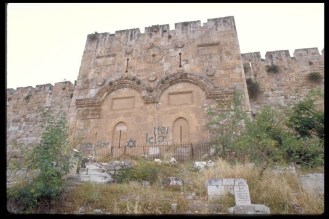 It seems the Psalmist is exhorting the inhabitants of Jerusalem to open wide the gates for the coming Messiah. They should be living with an expectation of His coming. This expectation was based upon the promises of Scripture. The prophets foretold of a specific date in which the Messiah would enter the city riding upon a donkey, and be received with worship by the people. As the narrative of scripture continues to unfold, we find that the Messiah came as predicted, but very few of the people were ready for Him. Some were so deeply set in their ways, that when He arrived, they dismissed Him completely.
 Life hurls a vast array of difficulties at the child of God. We are struck with the common problems of every man, as well as those that are peculiar to attempting to follow Jesus, in the midst of ever increasing ungodliness. The question we are faced with is, where will we flee for safety, guidance and solace when struck by the trials of life? David thought it utterly preposterous to think of fleeing to the mountains for aid. To him, it was the Lord, and the Lord alone, who would be his defense.
 Have you ever heard the phrase, “You can do this,” as a mantra for finding the strength to face the challenge before you? Life often forces us to be stronger than we think we are and to stand up to the opportunity before us. In a passionate plea for the Corinthians to stand against the opposition they were facing, Paul declared,
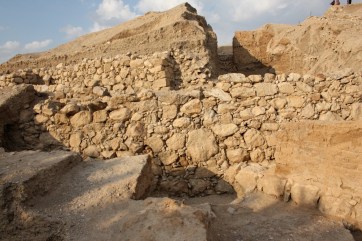 As Joshua stood overlooking Jericho, wondering how to defeat such a mighty foe, I am sure none of his plans included marching his soldiers around the walls while playing music and eventually shouting at the top of their lungs. I imagine he used his extensive battle experience to carefully discern the weaknesses in Jericho’s wall, while studying the lay out of the land to see where the high points were, or how they might build a siege mound against the city. The pragmatic mind of a seasoned soldier would have a lot to say about how to conquer a well-defended city, but in this case, God had an entirely different approach in mind. If victory was to come, Joshua and all Israel, for that matter, had to understand that the ways of God are different than the ways of man.
 Like most of us, much of my childhood was spent in school, and one of the worst words for any student to hear is “test.” For some of us, this word still conjures up feelings of fear, defeat and humiliation. As a student, I was never quite sure why we had to take so many tests. Years later, and much to my own surprise, I actually became a teacher and had a totally different view of the purpose of all those tests. They were not to make the children suffer as much as they were to show, student and teacher alike, what they already knew and what we needed to work on. The tests God put Israel through had a similar purpose. He allowed them to walk through some difficulties to show them what was in them and what work He still needed to do.
 The Moabites were descendants of Lot and ancient ancestors like Israel. They inhabited the land east of the Jordan and south of the Dead Sea. As a result, they were not under the same curse as the Canaanites, and they occupied an area of land that was not given to Israel. In God’s economy they were to be neighbors and allies with Israel. Isn’t it sad that they had established such a distorted view of what would happen to them if they submitted to the will of God and allowed Israel to pass through their land? They believed that submission to the Lord meant their lives would be ruined.
 Jim Gallagher