1 Timothy 2:3-4
“For this is good and acceptable in the sight of God our Savior, who desires all men to be saved and to come to the knowledge of the truth”
 Shakespeare’s character, Juliet, is famous for her statement, “What’s in a name? That which we call a rose by any other name would smell as sweet.” To her, a name meant nothing and love meant everything. Biblically speaking, there is much to a name. Throughout the Bible, God is called by a variety of names, each of which details certain aspects of His character. Here, Paul describes Him as, “God our Savior” and explains His deepest desire; “who desires all men to be saved.” The word desire means to take delight in, to love, and to determine to resolve. Paul is declaring that the determined purpose of God is for every person to be saved. He loves you, your family members, your neighbors, acquaintances and those who you have never met or been concerned. God’s desire is unlike our desire in that it does not stop with a wish or an ambition, but is worked out in action. It is because of the desire of God for all men to be saved that Paul goes on to say,
1 Timothy 2:5-6 “For there is one God and one Mediator between God and men, the Man Christ Jesus, who gave Himself a ransom for all, to be testified in due time”
In other words, when there was no way, God made a way. The Father sent His Son to bridge the gap between sinful men and a holy God. In order to build that bridge, Jesus gave His life as a ransom. The penalty of sin was paid and a way was made for us to come to God. Most of us are familiar with Job. His trials are infamous and his faithfulness serves as an inspiring example to us in the midst of difficulty. In the crux of his trial, as he is being confronted by his friends, Job expressed man’s greatest problem. He said,
Job 9:32-33 “For He is not a man, as I am, that I may answer Him, and that we should go to court together. Nor is there any mediator between us, Who may lay his hand on us both.”
In Job’s day, there was no one who stood between man and God to make a way for us to be saved. To resolve that dilemma, God sent His Son to the cross, where He laid down His life for your sin and mine. All this was done that the desire of God might be fulfilled, and we might be given the free gift of eternal life. Paul goes on to say,
1 Timothy 2:7 “. . . for which I was appointed a preacher and an apostle—I am speaking the truth in Christ and not lying—a teacher of the Gentiles in faith and truth.”
God’s desire led Him to send His Son to the cross, and His servants into the world. Paul lived his life with the determined purpose of bringing the good news of salvation to all people. Writing to the Roman church, he said he considered himself to be in debt to all men and that this debt was paid through declaring the Gospel message. Paul faced hardship, want, persecution, danger, and imprisonment, all because the desire of God is for all men to be saved. Think about how amazing the love of God is. He allowed His only Begotten Son to be ransomed, and He allows His precious children to be mistreated, all so you and I might hear the message of the cross and be saved. As you sit back in a comfortable seat at church, hearing the Word of God proclaimed, don’t forget that the simple message of salvation came at the highest price. While salvation is free for the taking to any who believe, it was certainly not cheap to attain. The desire is met because the price was paid.
Pastor Jim
 Judah was facing their darkest hour. Isaiah records that Sennacherib’ king of Assyria, came up against all the fortified cities of Judah and took them. One by one the cities of Judah fell to the all consuming Assyrian forces. Now that same army had surrounded the city of Jerusalem and threatened to take it by force. Before sending armed men, Sennacherib sent his chief of staff to warn the people of the folly of resisting. His rationale was that since other nations had trusted in their gods, resisted Assyria and fell to the sword, Israel would suffer the same fate if they trusted in the Lord. It is understandable that the unbeliever thinks all gods are the same, the problem arises when the child of God fails to realize that YHWH is above all others.
 Years ago, when our twin sons were infants, my wife woke me in the middle of the night. Having been up with the babies, she saw someone in our yard. Concerned that we might be dealing with a home invasion, my instinct was to grab something to protect myself and head into the yard. As I peered through the front window, I realized that it was actually a group of teenagers who were toilet-papering our house. I immediately thought of grabbing the garden hose, getting on the roof and spaying them down. The problem was, the garden hose was in the front yard where I had left it after its last use. Frustrated that I was unprepared for the surprise visit, all I could do was run outside, make myself known, and watch them run off. Thinking they might return to finish the job, I laid on the roof with the hose in hand for the next few hours, only to be disappointed by the fact that I had missed my opportunity. Paul reminds us that the return of Christ will be like an intruder in the night. The time to prepare for His return is not after His arrival, but in anticipation to His coming.
 We are living in uncertain times. Violence rages in the Middle East, the threat of terrorism continues, even increases, despite all of our efforts to eradicate it, the rising threat of hostile nations developing nuclear capabilities, not to mention the domestic violence and uncertainty we face on our own soil. Just today, the headlines on some popular news sites include: “New York store owner funded ISIS,” “South Korea detains Americans,” at least 220 killed in a day in Syria.”
 At the time of Isaiah’s prophecy, Israel was resisting the Lord. They decided following God restricted them from really moving forward, so they began a quest pursuing the gods of other nations. Sadly, their pursuit not only left them empty, but at odds with God. Part of the Prophet’s ministry was to remind the people of the blessings that would become theirs once they returned to the Lord. One of the greatest of these benefits was experiencing grace.
 I recently watched an episode of a “Reality Show” where two individuals were in search of gold. They invested all they had, left their families, traveled to a foreign land, all in search of gold and in hopes of getting rich. Over the centuries, gold has been a highly sought after commodity. For many years, it was the standard by which a nation’s wealth was determined. Gold is not the only commodity man seeks after. Many have spent their lives in pursuit of resources that will make them rich, successful, powerful or at least happy. Perhaps the most sought after of all, is the pursuit of peace. In fact, it seems many would give up all else, in order to gain peace. In one of the most precious of all promises, Isaiah declares where peace can be found.
 Life is filled with distinctions. Gender, age, experience, education, skill level, and heritage are just a few things that set us apart from one another. Recently while traveling, it came time to board the plane, and distinctions were made. First class boarded first, followed by business class and priority seating. Finally, when sufficient time was given for these others to settle, a call was made for the rest of us. We have become used to a culture where distinction is made. However, when it comes to the kingdom of God there is perfect equality. No one man is more qualified for eternity than another. This equality shows itself both in the need for salvation, as well as the means of it.
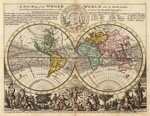 Isaiah takes us beyond his day to the future reign of Christ. In doing so, he promises a time when Egyptians, Israelites and Assyrians will follow the Lord and live in peace with one another. This might be referred to as the ultimate purpose of God, since He desires all men everywhere to be saved. If we look carefully at the church, and the commission we have received from Christ, we realize He wants ALL men EVERYWHERE to come to him for the free gift of eternal life. God designed the church to be assembled from people from every walk of life, and all people groups, who recognize Christ as Savior and follow Him as Lord.
 Knowledge is a word which speaks of information. We increase in our knowledge of God as we read the Word of God and walk with Him daily. However, wisdom is another thing all together. We might define it as “the proper application of knowledge,” or more simply as, “knowing what to do.” How many times have you faced decisions in life where you were not sure what to do, because you have not been that way before? Wisdom is acquired by experience, by careful observation of the experience of others, or by receiving it from heaven.
 During the 8th century B.C., Ethiopia was a powerful nation, stretching across much of North Africa. Ethiopian forces were a stronghold against the rising threat of Assyria. It would be easy for Judah to think their safety could be secured by an allegiance with Ethiopia, in a stand against Assyria. Instead, God stirs Isaiah to speak a proclamation against Ethiopia, as a means of deterring Judah from placing their trust in things which cannot help them.
 Jim Gallagher