2 Kings 1:3
“But the angel of the Lord said to Elijah the Tishbite, ‘Arise, go up to meet the messengers of the king of Samaria, and say to them, ‘Is it because there is no God in Israel that you are going to inquire of Baal-Zebub, the god of Ekron?'”
 Sometimes it is difficult to uncover the meaning behind a biblical text or to make proper application for our lives. Other times, there is no difficulty at all. Three times in this text we read the same phrase,
“Is it because there is no God in Israel that you are going to inquire of Baal-Zebub, the god of Ekron?”
Ahaziah, King of Israel, had an accident and was severely injured. No doubt, after consulting the medical professionals of his day, he began to question whether or not he would recover. Since no earthly source could answer his inquiry, he sought out a prophet of Baal for guidance and advice. Heaven’s reaction to this was to question why a man of Israel would neglect to seek counsel from the God of Israel.
In all my years of following Jesus, I have never met a Christian who consulted Baal for advice or direction. However, I have met several who refuse to look to the Lord to meet their needs, and are quick to run to just about every other source. When difficulty, tragedy, or need arises, instead of increasing prayer time, fasting, or Bible reading, they start looking to others to solve the problem. With the advent of social media, this phenomenon has increases exponentially. Facebook and other mediums, seem to be filled with requests from Christians to assist them in their trying times. It is as though we have forgotten that Jesus promised if we seek Him and His righteousness, He will provide for our needs.
I am not saying believers should not help believers, or that it is wrong to ask others to pray for us. There are even cases in Scripture where men like Nehemiah ask the king for provision, to accomplish what God had called him to do. That being said, it does seem, at least in some cases, we have forgotten the message that Elijah heard, “Is it because there is no God in Israel that you are going to inquire of Baal-Zebub, the god of Ekron?”
In contrast to this, I am reminded of the story of Ezra the scribe. When he left Persia for Jerusalem, he had witnessed to the king regarding the great power of the God of Israel. Later, as he ventured out on the perilous journey, he determined not to ask the king for protection. He thought doing so would embarrass him, because of all the wonderful things he had told the king about Jehovah. So, instead of seeking aid from the king, he spent his time pleading with God for protection.
Ezra 8:22-23 “For I was ashamed to request of the king an escort of soldiers and horsemen to help us against the enemy on the road, because we had spoken to the king, saying, “The hand of our God is upon all those for good who seek Him, but His power and His wrath are against all those who forsake Him.” So we fasted and entreated our God for this, and He answered our prayer.”
Whatever you may be currently facing, and whoever you may enlist to pray for you through the trial,don’t neglect to get alone with God, pour your difficulty out before Him and seek His help. Remember, He often allows the difficulties in order to bring us closer to Himself.
Pastor Jim

 If you are a parent, you understand conditional promises. Almost daily you find yourself saying things like “If you keep your room clean, then…” Or “if you get good grades, then…” Basically you are declaring that if certain conditions are met, certain rewards will be given.
 What a glorious sight this must have been, as Ezekiel watched the glory or radiance of God descend upon and fill the Temple. What had been a building made with men’s hands, now became the temple of the living God. The presence of the Lord within its walls transformed this building and set it apart from all others.
 Ezekiel takes us on a fast and furious ride into the future. He describes a time when a coalition of nations will come against Israel in a final attempt to wipe them off the face of the planet. The players in this coalition will come from the far north, perhaps modern Russia, and will include Iran and North Africa. Ezekiel explains that although Israel is greatly outnumbered and ill prepared for such an onslaught, God will intervene, protect them, and bring about a devastating defeat on their enemies. This prophecy is remarkable for a number of reasons.
 Ezekiel was taken in the Spirit to a valley full of skeletons. I am sure the sight itself was quite shocking, but what happened next must have been truly overwhelming. The angel asked Ezekiel if these bones could live. The obvious answer is no. When a person has been under water too long and their heartbeat has stopped there remains a slight chance of resuscitation. When a person has been dead so long that all that remains is a pile of bones, they are way past ‘mostly dead’, and no hope remains of them coming back to life. I am sure my answer would have been “No Way!” Ezekiel, however, had seen God do some pretty amazing things, so he did not discount even the possibility of these bones coming back to life. Sure enough, as he stood by, the bones came together; muscle, organs, skin and finally life was added. What had been a graveyard was now a valley filled with life.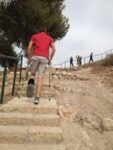
 Without a doubt, the Bible is the most extraordinary book you will ever read. It is filled with fascinating stories designed not only to encourage moral behavior, but to reveal the character of God. Beyond that, the Bible actually paints a picture of what will unfold in the future. This type of writing is called prophecy, and its purpose is to prove the inspiration of the Bible, as well as to make us ready to face the Lord. One of the most intriguing areas of Biblical prophecy has to do with the nation of Israel.
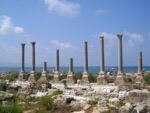 Predictive prophecy is one of the greatest evidences of the inspiration of Scripture. Peter explained, it was like a light shining in a dark place (2 Peter 1:19). Scripture is filled with two types of predictive prophecy. The first have already been fulfilled. They were future in the life of the prophet, but are in our past.
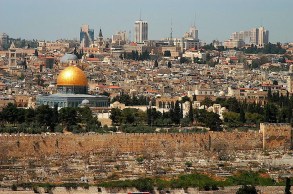 Isaiah promises a time when violence and destruction will be replaced with salvation and praise. Clearly, we have not yet entered that time. Violence is one of the major themes of our day. While this is true everywhere, it is especially true in the Middle East. It seems as though, not a day goes by where we are not faced with reports of violence, war, and terrorism.
 Jim Gallagher