Psalm 52:1
“Why do you boast in evil, O mighty man? The goodness of God endures continually.”
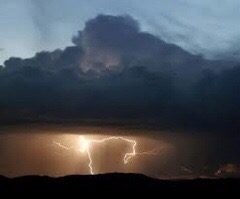 We live in a world of contrast. On the one hand, we see the fingerprint of God all around us, demonstrating His goodness. Earlier in the Psalms, David wrote, “The heavens declare the glory of God; And the firmament shows His handiwork” (Psalm19:1). When we see the beauty of creation, the birth of a child, or the love of betrothal, we are struck by the goodness of God.
On the other hand, there is another force clearly at work in our world. David calls it “evil,” and he witnessed its effects all around him. This Psalm was written after Doeg had murdered dozens of men, out of his selfish ambition and lust for gain.
We, too, see evil all around us with the ability to access information from all of the world. We have all been stunned by thousands killed in floods, earthquakes and hurricanes. As horrible as these things are, they pale in comparison to the evil that men inflict upon other men. Wars, fought for nothing more than a selfish drive for power, have been responsible for the brutal death of millions, upon millions, of lives. We have all heard of the atrocities under Hitler and Stalin. Tragically, these are not just distant memories of the dark days of man. The events, in places like El Salvador, Liberia, and Rwanda, in recent decades, have been nothing short of evil. Nor has evil stopped. We hear today of threats of terrorism, and even global war. Sadly, we do not need to look far to find evil. We have all been dumbfounded by reports of shootings at schools or job sites, where an expressionless gunman shoots innocent victims; leaving the victim’s families to grieve in shock and horror. We all know, and perhaps even are the victims of abuse. I have sat in my office with people who were molested by the very ones who should have loved them, and seen the far reaching and devastating effects of that evil. As a result, we are all left to wonder how these two truths can be reconciled. We ask the age old question, “Why do bad things happen to good people?”
Allow me to have Psychiatrist M. Scott Peck answer this question for us: “It is a strange thing. Dozens of times I have been asked by patients or acquaintances: ‘Dr. Peck, why is there evil in the world?’ Yet no one has ever asked me in all these years: ‘Why is there good in the world?’ It is as if we automatically assume this is a naturally good world that has somehow been contaminated by evil. In terms of what we know of science, however, it is actually easier to explain evil. That things decay is quite explainable in accord with the natural law of physics. That life should evolve into more and more complex forms is not so easily understandable. That children generally lie and steal and cheat is routinely observable. The fact that sometimes they grow up to become truly honest adults is what seems the more remarkable. Laziness is more the rule than diligence. If we seriously think about it, it probably makes more sense to assume this is a naturally evil world that has somehow been mysteriously “contaminated” by goodness, rather than the other way around.”
The mystery of goodness is even greater than the mystery of evil. “An evil world contaminated with goodness.” The Bible explains this clearly. When Adam sinned, sin entered the world, and has affected everything. However, God, through Christ, has infused His goodness into this world. James went on to explain, that every good and perfect gift comes from God. The evil in this world goes against the nature of God, and is caused by sin. The good in this world is left by the fingerprint of God, who loves us, and desires to work in us, even to be a fortress when evil is on the rise. Will you cling to Him today?
“At the tree in the garden we passed from good to evil
At the tree on the hill we passed from evil to good.”
Pastor Jim
Psalm 52
- Read chapter 21 and 22 of 2Samuel, for background on the writing of this Psalm.
- What is the confidence and strength of the wicked man? Where does he place his trust and what does he love?
- Yet what is the end of the wicked man?
- In contrast what is the strength, confidence, and trust of the righteous before God?
 Even a casual reading of Scripture should reveal a pattern; when things get dark, God will raise up a deliverer. We see this when Israel was enslaved in Egypt and God raised up Moses, when they were oppressed by the Midianites and God called Gideon, and here, when Israel was harassed by Syria. A few things are worth noting. First, God responded to the cry of the king. Jehoahaz was not the godliest of men, but he knew enough to cry out to the Lord when things got difficult. We find that God responded to his pleading and sent a deliverer.
 Elijah was a man devoted to God. Publicly and privately, he showed commitment and faithfulness to the Lord. His most recent experiences had led him to a face-to-face conflict with the one who most opposed the ways of God. After experiencing great personal victory, Elijah was plagued with a deep depression. He felt as though he could no longer continue serving the Lord, for the opposition was simply too great. Instead of surrounding himself with others who loved and served the Lord, Elijah isolated himself, and his depression grew deeper and darker. The farther he ran, the worse things became, until he found himself miles from home, cowering in a deserted cave, deep in the wilderness.
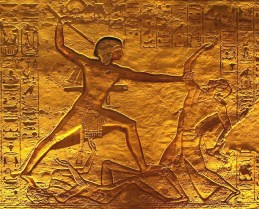 This Psalm is fulfilled in at least three ways. First, it expresses an actual time in the life of David. His enemies have mounted up against him with such great force that he feels like one who is drowning in a mighty flood. The enemies he faces are those who have sided with Saul, to seek his life; those who were against him because he had chosen to follow God, and finally, and perhaps his greatest enemy, is his own sin. In the midst of the battle for his own life, sin had mounted up like an army, seeking to destroy him. David’s victory over these enemies is found as He seeks the mercy of God. He writes, “Hear me, O Lord, for Your lovingkindness is good; turn to me according to the multitude of Your tender mercies.” Psalm 69:16
 We recently had a friend visiting who we had not seen in a number of years. One of his first comments was how much our children had grown. When he last saw them, they were pre-teens, now they are young men. He was shocked at how they had changed, in what seemed to be such a brief period of time. For us, the changes do not seem quite as drastic, because we are watching what happens from day to day. It is only when we bring up a photo or video that we see how much things have really changed.
 Rehoboam is known for being the king that split the nation of Israel. His greed drove him to make decisions that ultimately divided the kingdom. Sadly however, this was not the worst policy he implemented. During his seventeen year reign, he continued to ignore the Word of God and to introduce idolatry to the nation. As a result, this once powerful nation fell prey to their enemies. Like a shark smelling blood in the water, Egypt saw the weakness of Israel and sent troops to Jerusalem. Their armies easily overcame any and all resistance and began to loot the city. Just a few short decades after the Temple was completed, it was ransacked by foreigners and its prize articles were stolen. Among the items Shishak took, were the golden shields that hung as a symbol of Israel’s strength. Rather than turning to God, Rehoboam decided to hang bronze shields in their place. After all, from a distance, who would really be able to tell the difference. What a different story this would have been if Rehoboam would have fallen on his knees and turned back to the Lord.
 Have you ever noticed, when movie stars are walking the red carpet, for one of their many awards presentations, they are not asked what they are wearing, but who they are wearing? One of the marks of success is getting a particular designer to make you a one-of-a-kind outfit.
 One of the strangest phenomenon that I have experienced, over the years, is to hear the unbeliever quote the Bible. It fascinates me how those who have read so little of it seem, at times, to consider themselves the authority on what it says. Those who are living a lifestyle which the Bible does not condone, and quite frankly, they know to be wrong, are so quick to pull words from the Bible to justify their behavior.
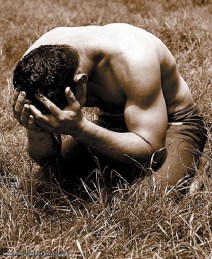 David and Bathsheba found themselves face to face with a parent’s worse nightmare. Their child was diagnosed with a terminal illness for which modern medicine had no answer. Like any of us, David was devastated, he would not eat or sleep, and those closest to him began to worry about what he might do to himself. When the sickness reached the end, and the child passed, David’s behaviors changed dramatically; he showered, ate, and worshipped. When questioned about the sudden change, he declared,
  Things seem to be going from bad to worse for David. Saul’s rage forced him to flee the palace, and live the life of a fugitive. For safety sake, he dwelt in caves to hide from the king and his spies. He and his men came out of hiding at the command of the Lord, and risked their lives to rescue the city of Keilah from Philistine invaders, only to find the citizens of Keilah had sold them out to Saul. It is easy to see why both David and his men could become discouraged by their circumstances.
  Jim Gallagher