Mark 8:35
“For whoever desires to save his life will lose it, but whoever loses his life for My sake and the gospel’s will save it.”
A paradox is a statement that seems contradictory or opposed to common sense, but is true. The statement Jesus reveals is one of life’s greatest paradoxes. Man was created to know God. Jesus said that He came to “give us life and that more abundantly” (John 10:10). When our lives are lived in complete obedience to the Lord, we experience the height of living. When we hold back, unwilling to give ourselves, our time, or some sinful activity, we think we are gaining, we think we are better off. However, that very thing we are holding onto, is the very thing keeping us from the abundant life Jesus created for us.
Knowing this, Jesus asks two questions; first, “For what will it profit a man if he gains the whole world, and loses his own soul?” (Mark 8:36)
If true life is found in surrender to Christ, then what would be the benefit of holding onto all the world offers? Imagine if your phone was to ring this morning, and on the other end of the call were all the world leaders. They had decided the best thing for mankind was to make you king of the world. You get the title, the robe, the crown, the chair, and all the world’s goods are now yours. You possess all the wealth and all the power of the whole world. There is nothing you cannot have. The catch… you must deny Jesus. You can have this life but not eternal life. That my friends is a losing proposition. The right response is to hang up the phone.
Knowing that will not happen; knowing that no man has ever gained the whole world, Jesus asks a second question,
“What will a man give in exchange for his soul?” (Mark 8:36)
You cannot have everything, so is there anything you are holding onto that is robbing you from the life Jesus has for you?Perhaps a relationship you thought would satisfy you, so you began to compromise your walk with the Lord; only to find that it is robbing you of the life found in Christ. Whatever it may be, anything you are holding onto, lay it all down and follow Christ.
Pastor Jim

 When the car breaks we look for a mechanic, when the body breaks we want a doctor, and when pipes leak it is a plumber we are interested in. We realize, to get the job done right we need a well- trained expert. God on the other hand, works by a different set of rules. Since He has no limitations, He is able to choose the foolish things of the world to accomplish his purposes. When he needed to get a message to the nations, he chose a shepherd from the hills of Tekoa. It is not as though Amos had no qualifications, it is just that the qualifications to be used by the Lord are totally different than those necessary to be chosen by men.
 Years before these events, Zerubbabel led a host of people from captivity, to begin rebuilding the temple. His ministry was followed up by Ezra, who led the people to recommit themselves to the Lord. Then Nehemiah came with the intent of rebuilding the walls around Jerusalem, for the security and safety of the people, and the work of God. Now that the temple stood and the walls were erected, people were needed to maintain the work of the Lord. This chapter gives us a list of those who gave themselves to the work, at great personal cost. For many choosing to be involved in the service of God meant giving up other ambitions, and even relocating into the city.
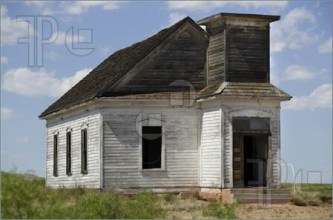 Much of our life is experience oriented. We save, plan, and prepare for a trip; making sure we get lots of photos, so we can remember our experience, and share it with others. We might even put together a photo album and place it on the coffee table, making it easier to look back and remember the times we enjoyed. Sometimes, we treat our relationship with the Lord the same way. We have an encounter with the LORD, we come forward at church to receive Christ, or recommit our lives to Him. Rather than treating this as a day-to-day ongoing relationship, we simply memorialize the moment. I think it is important to remember, while salvation transpires in that moment in time when we trust in Christ, relationship with the Lord is an ongoing event, and should be a part of our daily living. This relationship includes, not only what He has done for us, but committing ourselves to be a part of the further work He desires to do.
 Ezra tells the story of the children of Israel returning to Jerusalem, at the end of seventy years of captivity in Babylon. We find that while hundreds of thousands were taken captive, less than fifty thousand returned. I am relatively certain that many should have returned that didn’t, but we are also given insight into the ones that were willing to leave all and take up the challenge of engaging in the work of God.
 David, and others, invested in the temple at great personal cost. They devoted their time, talents, and treasures to ensure that the house of the Lord was built. Their devotion to this project stemmed from realizing that the work of God would outlast them. David would not live to see the temple, but knew that his investment would impact the nation long after his departure. For years to come, this building would be a place where the Word of God was proclaimed, and commitments to the Lord were made, as each of Israel’s revivals centered around the events that took place at this building.
 When it comes to worship, we can learn much from King David. The longest book in the Bible is a book of praise songs, and David was its largest contributor. In addition to being a king and a prophet, he was also called the Sweet Psalmist of Israel. In our text, we find David bringing an offering to the Lord. Because of his position as king, Ornan offered him the field and the animals free of charge. Instead of accepting the gift, David made a statement that should become a foundational principle in our worship, “I will not offer that which cost me nothing.”
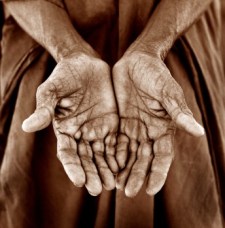 Sometimes, God chooses the most unlikely candidate as His teaching vessel. Here, and again in New Testament, we find poor widows, with almost no resources, being used to illustrate the principle of giving.
 Building the Temple was a massive undertaking. It was to be a structure like no other. Unlike the pagan temples that were built in an attempt to reach up to the gods, this temple was built so God could reach down to man. The entirety of this structure pointed to the fact that God made a way for sinful man to have relationship with a holy God. As soon as a person approached the temple, they would smell the sacrifices, and be reminded of their need for a substitute to die in their place; removing the guilt and penalty of sin. These sacrifices provided a temporary covering, and pointed forward to Christ, who would die once, for the sins of all. Without question, this was the most important building of the ancient world.
 Peter makes reference to a simple rule of life. We can only give away what we personally possess. By his own admission, Peter had no money to give this man. It is interesting to note that from an economic standpoint, Peter’s condition was no different than the beggar’s. In the world’s estimation, a man in his thirties who is too broke to share his change with a beggar, is of very little value. Peter would not make a who’s who list in the 1st Century. However, if we look more closely, we see that Peter possessed something far greater than riches that tarnish and fade. Peter said,
  Jim Gallagher