Leviticus 5:16
“And he shall make restitution for the harm that he has done in regard to the holy thing, and shall add one-fifth to it and give it to the priest. So the priest shall make atonement for him with the ram of the trespass offering, and it shall be forgiven him.”
 The first five chapters of Leviticus introduce us to five offerings; a part of Israel’s worship. The first three were free will offerings, meaning the individual gave of his own volition. The final two were compulsory. There was no relationship with God without the sin and trespass offerings.
The sin offering points to the work of Christ on the cross. As a Lamb without spot or blemish, Jesus went to the cross to once and for all, pay for the sins of humanity. His blood was spilled, and the offering was accepted. We know this because of His resurrection from the dead, ascension to Heaven’s throne, and the outpouring of the Holy Spirit upon His church. The trespass offering also points to the work of Christ. John taught that because Christ was sacrificed for us, we can confess our sins, and receive forgiveness. Confession is a necessary part of walking with the Lord. When we fail, we need to go to the Throne of Grace, confess our failure, and receive His cleansing. The trespass offering reminds us, when certain sins are committed, the offering must include “restitution.” The priest determined the amount of the restitution, depending upon the sin that was committed.
It was not as though the person was buying their way out of sin, but pointed to the fact that sometimes sin, while forgiven, is still very costly. Jesus may have been referring to the trespass offering when He said, “Therefore if you bring your gift to the altar, and there remember that your brother has something against you, leave your gift there before the altar, and go your way. First be reconciled to your brother, and then come and offer your gift” (Matthew 5:23-24). At times, the cost of our sinful action is a breach in relationship with others.
While relationship with God is restored when we confess, relationship with others may need additional attention. If my actions have hurt, offended or stumbled another brother, it is important that I go out of my way to do whatever is within my power to see that relationship restored.
Pastor Jim
 We have come to the most solemn and most important of all Biblical events. The entire life and ministry of Jesus, as well as the whole of human history, has been leading up to these events. Jesus declared, no one could take His life, but that He would lay it down (John 10:18). That day has finally arrived. Without a fight, Jesus, the creator and sustainer of heaven and earth, was taken by the mob, condemned by the the courts, beaten by the soldiers, and nailed to the cross. There on a cross of wood, amidst the clamor of the mob, He would bear the penalty for the sins of all humanity. Louder than all the jeering of the mockers, the laughing of the soldiers, the accusations of the pharisees and the weeping of the disciples, rang out the cry “My God, My God why have You forsaken Me?”
 More than a month before this event, Moses had ascended Mount Sinai, disappearing into the thick smoke. As the weeks passed, the people began to believe Moses must have died. In their fear and confusion, they approached Aaron, seeking spiritual counsel. They realized they needed a worship service. However, their time in Egypt had left them very confused about who God really is. Aaron instructed them to bring financial gifts, then he made a god they could worship. The cost of their sinful activity was great.
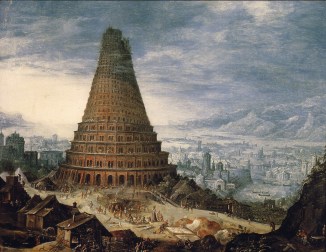 Genesis is the book of beginnings. In it, we are introduced to many things which play a prominent role as the rest of Scripture unfolds. Here, in Chapter 10, we are introduced to the city of Babylon, which becomes a major player in the Biblical narrative. It is mentioned 257 times in the Bible. We learn Babylon was built by a man named Nimrod (whose name means rebellion); he built Babylon in defiance of God. His purpose in building the city is recorded in Genesis 11:4
 Sin is a plague that has infected every man. As Paul explained to the Romans, it was by one man (Adam) that sin entered the world, but that sin spread to all men because all have sinned (Romans 5:12). David, looking out at the world, and looking in at his own heart, declared, there were none righteous, not even one (Psalm 53:3). Most of us are familiar with the story of the woman who was caught in an adulterous relationship and brought before Jesus. After hearing the charges brought against her by her accusers, Jesus responded by inviting those in the crowd who were without sin, to throw the first stone. One by one her accusers dropped the rocks and departed, for they were all sinners (John 8:3-4). The truth that we have all sinned, makes Solomon’s question all the more striking. Is it possible for anyone to proclaim that their heart is clean, and they are pure of all sin? Scripture boldly declares that it is.
 Jim Gallagher