1 Chronicles 20:1
“It happened in the spring of the year, at the time kings go out to battle… But David stayed at Jerusalem…”
 Although the writer of Chronicles does not include it here, this is the time when David compromised, broke his own standards, violated the ways of God and sinned with Bathsheba. This is the lowest point in the life of the sweet psalmist of Israel. While there are many factors that led to his failure the text makes it clear that one of the contributing factors was being idle when he should have been busy in the battle.
The word idle simply means not to be working, busy or active. There are times in life when being idle is the exact thing we need; it was God who established the sabbath for Israel and desired them to take times of rest. Taking a break from activity to rest the body, wait on the Lord or simply enjoy the blessings of following Christ is an important part of life and our walk with the Lord. That being said, we must also realize that there are times when being idle can be dangerous. David’s problem was not that he was resting, but that he was resting when he should have been battling. He was in a season in life when the situation called for clinging to the Lord and stepping out in service, instead he chose to stay home, let his guard down and compromise his standards.
The seasons of life often determine our focus for us. If bombs are falling on the city it is not time for a family picnic. If you are in the midst of difficulty at home or work, or if you are struggling with something in your private and personal life it is not the time to sit back, but to clothe yourself in the armor of God and to battle the fiery darts of the wicked one that so often evidence themselves in thoughts that oppose the word of God.
Jim
 We cannot be sure the exact situation that stirred David to write this Psalm, but we do know that he seemed to be under continual attack. From the start, he had to deal with those who continually came against him. His father neglected him, his brothers tormented him, the Giants ridiculed him, the king hunted him, and the neighboring nations sent armies to attack him. As a result, it would be fair to say David was an expert on warfare and he knew how to fight on many different fronts. In this Psalm, he reveals the secret behind his success. When under attack, David looked to God for defense.
 The final prophecy from Balaam, regarding Israel, declares God will defeat all their enemies. The nations that surrounded Israel, as well as those who lived within its borders, would be brought under the mighty hand of the Lord.
 Nahum wrote to warn Assyria of the destruction that was coming upon them, because of their violent and immoral rebellion against God, His word, and His ways. He foretold of a time when the ancient city of Nineveh would be razed to the ground. Like Jonah before him, his message reveals the mercy of God, as the people are warned in advance and told how to be prepared. They are told to man the fort, watch the road and fortify the city. This is good advice no matter what enemy we are facing. In ancient times, cities were defended by being surrounded by high walls. The less defensive the terrain, the higher the walls had to be. If a city sat on a hilltop surrounded by steep cliffs, it’s walls did not have to be nearly as high as a city situated in the plains.
 Paul referred to the believer as a soldier, and compared the Christian life to a battle ground. One of the reasons the Christian life is often difficult, is because we are fighting on two fronts. A large part of our battle is seeking to see others impacted for the Kingdom of God. We enter the arena to fight whenever we pray for the unsaved or the backslider. Scripture tells us our weapons are not carnal but they are mighty and able to pull down strongholds (2 Corinthians 10:4). The weapons we have been given are prayer, the Word of God and our personal testimony. When those are used together, we will find that we become effective in impacting others for the kingdom of God.
 While Jesus hung on the cross paying for the sins of humanity, paving the way for man to have fellowship with God, and giving entrance to heaven, we are told a group of soldiers were gambling for His clothing. The most important event in the history of humanity is unfolding, and these men are playing games at the foot of the cross. Sadly, their behavior is all too common among people today. Many, instead of taking seriously their need for Christ, are playing around with sin and treating it like sport. Even among believers this behavior is all too familiar. There are many Christians who seem to live for the adrenaline rush they receive, by getting as close to sin as possible, while not falling completely into it. That, my friend, is a dangerous game. Solomon wrote,
 Ezekiel takes us on a fast and furious ride into the future. He describes a time when a coalition of nations will come against Israel in a final attempt to wipe them off the face of the planet. The players in this coalition will come from the far north, perhaps modern Russia, and will include Iran and North Africa. Ezekiel explains that although Israel is greatly outnumbered and ill prepared for such an onslaught, God will intervene, protect them, and bring about a devastating defeat on their enemies. This prophecy is remarkable for a number of reasons.
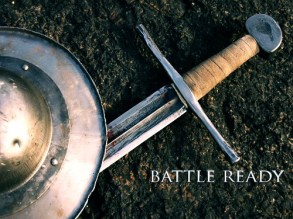 As the forces of Egypt prepared to go to battle with Babylon, Jeremiah describes the battle scene. He paints a picture of soldiers with weapons in hand and clad with armor. His battle scene has been repeated countless times over in human history, as one force prepares to defend itself against another. I cannot help but notice a few similarities to the battle we face as believers.
 Paul boldly declares, because of the manifold grace of God, it is unreasonable for a Christian to continue living in sin. He explains why we should put our old lives behind us, and also gives practical steps on how that is to be accomplished. Notice, he explains what happened to us when we received Jesus Christ. Declaring, we were buried with Him through baptism into death.
 I find it interesting, and somewhat disturbing, that after reading of the faithfulness of Hezekiah, we find him facing what will prove to be the fight of his life. The Assyrian army, with its seemingly innumerable forces, marched against Jerusalem, surrounded the city, and began to threaten the people. These were not idle threats. The Assyrian army had not only defeated all of Judah’s neighbors, but had also conquered other cities within Judah itself. No force had been strong enough to withstand Assyria, and it would seem ludicrous to think the tiny city of Jerusalem and its inhabitants would have even the remotest of chances. Nonetheless, we read of Assyria’s defeat and Hezekiah’s exaltation. Two things grab my attention.
 Jim Gallagher