Nahum 3:8
“Are you better than No Amon that was situated by the River, that had the waters around her, whose rampart was the sea, whose wall was the sea?”
I t is remarkable how we all think we are the exception to the rule. We believe wrong should be made right, injustice should be corrected, and sin should be punished, but we also believe that our wrongs are not that bad and should be overlooked. This is not a modern problem this is a human problem. Almost three thousand years ago, the inhabitants of Nineveh thought they could go on behaving however they wanted and would not face the judgment of God. They believed, others deserved it, but they themselves, were not as bad as their neighbors.
I few years ago, a man came into the church office bearing the marks of the abuse of alcohol and other substances. He was upset at how others were mistreating him. He went on a tirade against our town, at how unfair others were, and demanded that we give him some money. Without any regard for his own wrongs, he was quick to bring charges against us. When I began to address the issues in his life, he stormed out of the office, freely sharing how he now felt about me.
While this is perhaps an extreme example, it reminds us how easy it is to focus on the faults of others, while neglecting what is wrong with us. This is the type of behavior that keeps us from becoming the people God desires us to be, and destroys relationships. Jesus told us, that instead of focusing on the wrong in others, we should take the plank out of our own eye (Matthew 7:1-5). In other words, we need to deal with what is wrong with us first and foremost. It is right to be upset by the immorality that is rampantly displayed on TV and the big screen, but we cannot do so while neglecting to address the issues in our own lives.
Pastor Jim
 The Moabites were not only Israel’s neighbors, they were also relatives. The Moabites were descendants of Lot, Abraham’s nephew. Their relationship should have created an alliance between the nations. Instead, their history was one of constant conflict. One of the most costly attacks during the wilderness years was masterminded by Balak, King of Moab. It was this constant conflict, against the people of God, which led Moab to the brink of destruction. Isaiah predicted, in three short years, Moab would be defeated and the inhabitants would be fleeing for refuge.
 Job has been plagued by a series of severe hardships that have caused others to believe he must be experiencing judgment from God for hidden sins. The body of the book is like a debate between Job and three men who are convinced he is hiding something. It is important to keep in mind, while their premise is wrong, much of what they say is in fact true. Here we find Eliphaz asking a very probing question that we would all benefit from taking a few minutes to consider. He asks, what it is in our hearts that is carrying us away from the Lord? Jesus asked a similar question, He inquired “what will a man give in exchange for his soul?” Both of these questions reveal that it is possible to have something in our lives which keeps us from true surrender to Christ, and may even be keeping us from salvation.
 In this portion of the Psalm, David prays three things: search me, try me and lead me. These are very interesting requests in light of what he has previously declared concerning God.
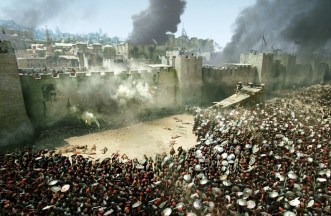 Imagine sitting on Mount Scopus, just a little northeast of Jerusalem, as the Babylonian forces surrounded the city. Before long, the walls were penetrated, and the city taken. First the leaders were gathered and executed, then the city was plundered and burned. What had once been a glorious testimony to the goodness of God, now told an entirely different message. All who watched the city fall should have learned the devastating effects of sin. Even after a contingency returned to rebuild the temple, Jerusalem would still bear scars from its fall.
 Many men have been called and anointed by God for service. Unfortunately, too many follow the example of Jehu. He spent the beginning of his calling ridding Israel of those who had turned the nation against the Lord. One by one, his sword was a vehicle of judgment against the wicked leaders who went before him. Joram the king of Israel, Jezebel the queen mother, and Ahaziah king of Judah, were all slain for their wickedness, and crimes against the nation. After showing great zeal for righteousness in others, Jehu failed to show the same zeal for his own commitment to the Lord. After successfully using the sword against others, he allowed sin to run rampant in his own life. We read of him,
 Jim Gallagher