Psalm 35:1
“Plead my cause, O Lord, with those who strive with me; Fight against those who fight against me.
 We cannot be sure the exact situation that stirred David to write this Psalm, but we do know that he seemed to be under continual attack. From the start, he had to deal with those who continually came against him. His father neglected him, his brothers tormented him, the Giants ridiculed him, the king hunted him, and the neighboring nations sent armies to attack him. As a result, it would be fair to say David was an expert on warfare and he knew how to fight on many different fronts. In this Psalm, he reveals the secret behind his success. When under attack, David looked to God for defense.
Most of us are not reading this from a foxhole or from behind enemy lines. We probably are not distracted by the sound of mortar blasts or gunfire, but that does not mean that we are not under severe attack. Paul told the Corinthian church that the warfare we are engaged in is not natural but spiritual (2 Corinthians 10:2-3 and Ephesians 6:12). We are under constant attack from the world, the flesh, and the devil. We are under constant pressure to give in to a little sin and to conform to the world. When we fail, we face a new battle, dealing with the guilt of sin and trying to free ourselves from its grip. Like David, it is time we learn to look to God to be our defense. The greater the intensity of the temptation, the more it is necessary to cling to the Lord and stand behind Him as our shield. If you are in the midst of a particularly trying season of life, it is essential that you learn to make the Lord your hiding place. His Word works as a shield and a sword. Find a promise that relates to your struggle, hide behind it, and use it against the enemy whenever he hurls temptation, fear, depression, guilt or any other weapon your way. God is our defense, He will fight our battles for us. We can find victory when we learn to trust in Him.
Pastor Jim
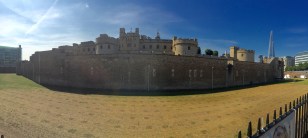 Nahum wrote to warn Assyria of the destruction that was coming upon them, because of their violent and immoral rebellion against God, His word, and His ways. He foretold of a time when the ancient city of Nineveh would be razed to the ground. Like Jonah before him, his message reveals the mercy of God, as the people are warned in advance and told how to be prepared. They are told to man the fort, watch the road and fortify the city. This is good advice no matter what enemy we are facing. In ancient times, cities were defended by being surrounded by high walls. The less defensive the terrain, the higher the walls had to be. If a city sat on a hilltop surrounded by steep cliffs, it’s walls did not have to be nearly as high as a city situated in the plains.
 Amaziah was king of Judah during very tumultuous times. The surrounding nations were a continuous threat, war was a way of life, and the people lived with the constant fear of being attacked. In order to help guard against the enemies, Amaziah hired a group of mercenaries from Israel. Although it was a great expense for the nation, it brought them comfort knowing they had a vast army reserved to assist in the event of battle. At this point in the story, we are introduced to an unnamed man of God who came to the king and warned him not to trust in the mercenaries, but to pay them, and send them back to Israel. He wanted the king to learn two important lessons.
 Jim Gallagher