Deuteronomy 21:23
“…For he who is hanged is accursed of God.”
 Galatians 3:13
“Christ has redeemed us from the curse of the law, having become a curse for us (for it is written, ‘Cursed is everyone who hangs on a tree’).”
No man can stand under the Law of God. Each of the divine precepts reveals the sinfulness of man, and our sins separate us eternally from God. Paul refers to this separation as the curse. Left to ourselves this condition is hopeless, since no amount of good deeds can deliver us from the curse of the Law. Praise the Lord we have not been left to ourselves. Jesus went to the cross on our behalf, taking the penalty of sin on Himself and becoming accursed of God. Rather than allowing us to remain in a perpetual state of separation from God, Jesus took our sins upon Himself in order to make a way for us to be saved. It is no wonder that Paul wrote,
Galatians 6:14
“But God forbid that I should boast except in the cross of our Lord Jesus Christ, by whom the world has been crucified to me, and I to the world.”
The word boast means glory, rejoice, or brag about. Paul is declaring that because of the effects of the cross he brags about it to others. While boasting about ourselves or our accomplishments can be a wearisome exercise, we ought to boast to others of the benefits of Christ. The more we understand about what Jesus has done for us, the more we will find ourselves celebrating it to others.
Let’s tell the world that the curse of sin can be removed through faith in Christ, who loved us, and gave himself for us.
Pastor Jim
 The sins of the people put them under the curse. One by one, they watched as their loved ones fell ill and died. At some point, they realized there is no cure for the plague and they beseech Moses to seek God for the solution. As Moses cries out to the Lord, he is instructed to forge a brass serpent on a pole. Any who look upon the serpent will be healed. One only need use a little imagination to understand the joy which filled the hearts of all who would look upon the pole. Instantly, the effects of the curse were removed and they were safe. At the same time, imagine the folly of one who is plagued and yet refuses to look. Imagine his friends and loved ones, who had been on the verge of death themselves, but they looked upon the pole and were redeemed. They plead with him to simply look. They might declare, “I was once as your are, sickly and dying, but I looked upon the pole and I have been healed and my life restored.” Imagine the heartache of mothers, brothers, sisters, fathers and friends, as some, with obstinate hearts refuse to look, and as a result, suffer death under the curse.
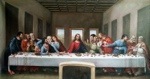 Everything in the life of Christ was working toward His final hour. A moment in time when He, through His death, would provide life for all who believe. Prior to the events of the cross unfolding, Jesus took time to have a last meal with His closest followers. It was at this meal that He established the sacrament of communion. He told his disciples the bread was to represent His body which would be broken to provide healing, and the fruit of the vine would represent His blood, that would be shed for the removal of sin.
 The Tabernacle was designed in Heaven, and serves as a picture of the work of salvation. Each article is pregnant with symbolism and serves to illustrate various aspects of salvation and sanctification. The roof of the Tabernacle was supported by wooden walls overlaid with gold, and the walls were held in place by silver sockets or foundation stones. Two interesting facts about these silver blocks are worth our attention.
 One of the key furnishings for the Tabernacle was the Altar. It was a large wooden structure overlaid with bronze. It was located within the gate of the courtyard, and outside the entrance of the Tabernacle, itself. It was on the Altar, where all of Israel’s sacrifices were offered. After the construction of the Tabernacle was completed, the nation gathered around and dedicated it to the Lord; concentrating on the Altar, with its sin offerings.
 While I do not want to tackle the subject of the eternal destiny of Judas, I do see in him an illustration of how the Christian often deals with personal failure or sin. After the initial pleasure received from sin, we are filled with remorse or guilt. That guilt can become overwhelming and lead to discouragement, depression, and even despair. Too often, we follow the example of Judas, attempting to remove our guilt.
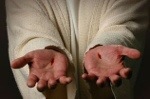 Zechariah wrote over 400 years before Christ, and yet, he refers to the cross.
 Sin is a plague that has infected every man. As Paul explained to the Romans, it was by one man (Adam) that sin entered the world, but that sin spread to all men because all have sinned (Romans 5:12). David, looking out at the world, and looking in at his own heart, declared, there were none righteous, not even one (Psalm 53:3). Most of us are familiar with the story of the woman who was caught in an adulterous relationship and brought before Jesus. After hearing the charges brought against her by her accusers, Jesus responded by inviting those in the crowd who were without sin, to throw the first stone. One by one her accusers dropped the rocks and departed, for they were all sinners (John 8:3-4). The truth that we have all sinned, makes Solomon’s question all the more striking. Is it possible for anyone to proclaim that their heart is clean, and they are pure of all sin? Scripture boldly declares that it is.
 Jim Gallagher