1 Chronicles 20:1
“It happened in the spring of the year, at the time kings go out to battle… But David stayed at Jerusalem…”
 Although the writer of Chronicles does not include it here, this is the time when David compromised, broke his own standards, violated the ways of God and sinned with Bathsheba. This is the lowest point in the life of the sweet psalmist of Israel. While there are many factors that led to his failure the text makes it clear that one of the contributing factors was being idle when he should have been busy in the battle.
The word idle simply means not to be working, busy or active. There are times in life when being idle is the exact thing we need; it was God who established the sabbath for Israel and desired them to take times of rest. Taking a break from activity to rest the body, wait on the Lord or simply enjoy the blessings of following Christ is an important part of life and our walk with the Lord. That being said, we must also realize that there are times when being idle can be dangerous. David’s problem was not that he was resting, but that he was resting when he should have been battling. He was in a season in life when the situation called for clinging to the Lord and stepping out in service, instead he chose to stay home, let his guard down and compromise his standards.
The seasons of life often determine our focus for us. If bombs are falling on the city it is not time for a family picnic. If you are in the midst of difficulty at home or work, or if you are struggling with something in your private and personal life it is not the time to sit back, but to clothe yourself in the armor of God and to battle the fiery darts of the wicked one that so often evidence themselves in thoughts that oppose the word of God.
Jim
 Israel’s journey through the wilderness serves as a vivid illustration of the believers walk with God. Here we find that God led them away from some battles and into others. This reminds me of the words of Jesus in the Lord’s Prayer (Matthew 6:13),
 Paul referred to the believer as a soldier, and compared the Christian life to a battle ground. One of the reasons the Christian life is often difficult, is because we are fighting on two fronts. A large part of our battle is seeking to see others impacted for the Kingdom of God. We enter the arena to fight whenever we pray for the unsaved or the backslider. Scripture tells us our weapons are not carnal but they are mighty and able to pull down strongholds (2 Corinthians 10:4). The weapons we have been given are prayer, the Word of God and our personal testimony. When those are used together, we will find that we become effective in impacting others for the kingdom of God.
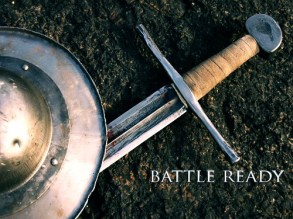 As the forces of Egypt prepared to go to battle with Babylon, Jeremiah describes the battle scene. He paints a picture of soldiers with weapons in hand and clad with armor. His battle scene has been repeated countless times over in human history, as one force prepares to defend itself against another. I cannot help but notice a few similarities to the battle we face as believers.
 Greek mythology tells the story of the great warrior, Achilles, who survived many battles. As a baby, the legend foretold he would die young. To prevent his death, his mother took him to the River Styx, and dipped his body into the water. She held Achilles by the heel, so his heel was not washed over by the magical waters. Later in battle a poisonous arrow struck him in his heel killing him.
 This passage reminds us that, in ministry, it is not our natural ability, but the enabling of God that is required for service in the kingdom. In the verses leading up to this, we find the tribes of Reuben, Gad and Mannasseh combined to form an army of nearly forty-five thousand men, but it was not their size that gave them success. These men are described as valiant and capable, but it was not their bravery, ingenuity, creativity or vision that led to their victory. Instead, we find they were victorious because they cried out to God in battle,and they trusted in Him.
 Assyria was on a campaign to conquer the world. Their armies were sent out to defeat any nation that showed the least resistance. Judah had watched as their neighbors Israel and Syria were defeated, and the people taken away as slaves. Now, with the Assyrian army at their doorstep, it seemed as though Judah would be the next to fall. Delegates, representing the king of Assyria, came to Jerusalem and openly threatened the people, in order to destroy what little confidence they might have had in the Lord. These delegates reminded the people that no other nation had been able to resist the Assyrian conquest, and Judah would be no different. It was here, they made their biggest mistake. They thought Israel’s God was no different than the manmade gods of other nations.
 The Northern tribes of Israel reached the zenith of their strength under king Jeroboam II. Here we are given insight into the secret behind their success:
 Israel was facing almost certain annihilation; the forces of Syria had mounted against them and poised to attack. The troops and resources of Syria far outweighed that of Israel; and in a word, things looked bleak. It was with this backdrop that we are introduced to an unnamed prophet, who brought an almost unbelievable message. The message was that God would deliver Israel from the threat and he would do it through the young and inexperienced leaders.
 The physical battles Israel faced illustrates the spiritual battles the Christian faces.
 Jim Gallagher