Genesis 1:1
“In the beginning God created the heavens and the earth.”
 The first verse of the Bible introduces us to its main character: God. This verse is not a philosophical statement, but an axiom upon which all other statements will be based. As we venture through the Bible together, we will read of the great exploits of God. We will hear of Him speaking to men, parting seas, knocking down walls, vanquishing enemies, stopping time, raising the dead, and providing salvation for mankind. If this first statement is true, if God spoke, and the worlds were formed, then we should have no problem believing there is nothing He cannot do. If we accept this first sentence of Scripture, we will have no problem accepting all the miracles that follow. We will have no problem accepting that there is nothing too hard for God, and we will live with an expectation of Him accomplishing great things in the lives of all who live surrendered to Him.
J.S. Baxter, in his commentary on Genesis, points out that this one statement is also a “basal pronouncement that undoes all false religious philosophies.”
“In the beginning God…” – denies atheism with its doctrine of NO god.
“In the beginning God…” – denies polytheism with its doctrine of MANY gods.
“In the beginning God created…” – denies fatalism with its doctrine of CHANCE.
“In the beginning God created the heavens and the earth…” – denies pantheism with its doctrine of making the earth god.
“In the beginning God created the heavens and the earth…” – denies materialism, which asserts the eternity of matter.
This first testimony of Scripture is not only a declaration of divine truth, but is also a repudiation of human error. As we read though the Bible together, we will be further introduced to the God of creation. We will see that He is also the God of salvation, who desires an intimate and personal relationship with all of us. It is my prayer that you will take Him up on His offer of eternal life, and walk closely with Him today.
Pastor Jim
 Proverbs 31 is a section of Scripture most often taught at women’s conferences or retreats, because it goes to great length describing a virtuous woman. A more careful look will reveal this passage was actually instructions to the King, by his mother. It was her attempt to teach him how to find a godly wife. We find not only the characteristics that a virtuous woman ought to pursue, but also the traits a godly man should be looking for in a wife.
 Since ancient times, precious metals have been purified using intense heat. The process involved a craftsman stirring a crucible filled with molten gold. Flames, reaching an excess of one thousand degrees, would liquify the gold and send the impurities to the top. The craftsman would then skim off the impurities, thus purifying the gold. The tradition remains largely untouched today, with the exception of a few advancements for safety and precision. For smaller amounts of gold, a second method of refining is often used today, involing the use of strong chemicals to dissolve the impurities. The purified gold becomes a powder when dried, then it is heated into useable gold. Whatever the process, it is clear, for purity to take place, intense heat is involved.
 This Proverb takes us to the natural world, in order to illustrate spiritual truths. The behaviors of four creatures are used to help us understand how to walk with the Lord.
 Years ago, I heard a story of a farmer whose cow, after a long and arduous labor, gave birth to twins. He ran into the farmhouse to give the news to his wife, who reminded him of the goodness of God and encouraged him to give one of the calves to the Lord. He agreed immediately, but took some time to make the decision as to which calf would be his and which one would belong to the Lord. After a few weeks, one of the young cows fell ill and the faithful farmer spent the night caring for it. Early the next morning the farmer entered the house and was met by his wife who asked what happened. With a voice filled with sorrow he responded, “The Lord’s calf died.”
 Before becoming the Pastor of Calvary Chapel Vero Beach, I spent eight years teaching in the classroom. The first five years I taught in middle school and the final three in high school. Those years proved to be both a wonderful experience and an excellent training ground for raising my own children. My first year was interesting to say the least. I was 23 years old and newly married. I had little experience dealing with preteens, except for the fact that I had been one. My approach in the classroom could have been called the “whose your buddy” method. I attempted to be the cool teacher, who never gave out detentions, office referrals, or parent contacts. The result was chaos. After a few months, I spoke with an aunt who had been in education for years. When I asked for her secret to order in the classroom, she explained that she did not have disciplinary problems, because she had a standard the students understood and she stuck to. Soon after, I observed another teacher who clearly stated the classroom standards and kept to them. When a student misbehaved, she did not become emotional, losing her cool and raising her voice, she simply pointed out that he was breaking the rules, and disciplined accordingly. Those experiences transformed my ability to instruct the children. Instead of spending all my time, energy, and prayer life, dealing with discipline, I was able to teach.
 When faced with decisions, it is not uncommon to be counseled to follow your heart. Solomon suggests that doing so is a very bad idea. He calls it folly. I can think of three reasons why it is foolish to follow your heart.
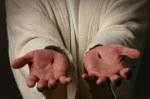 Zechariah wrote over 400 years before Christ, and yet, he refers to the cross.
 A few years ago, the Frito-Lay Corporation ran an ad for their potato chips with the slogan, “Bet you can’t eat just one.” The concept was simple, their chips were so good, so addicting, that once you tasted one, you would keep eating until the bag was empty. In this verse, Solomon points out, sin is like that. The word he uses for hell is Sheol, and can mean the grave. He is declaring, just as death is never satisfied, so desire for sin will never be satisfied by sinning. Often, when we are facing greater than normal temptation toward sin, we think one more look, touch or taste will satisfy the craving. What we find is, the desire comes back with greater force after it has been fed.
 Zechariah referred to the coming Messiah as the cornerstone. A cornerstone is the stone which forms the base of a building. It supports the weight of the adjoining walls and is the set stone necessary to plum the rest of the building. If that stone is unstable, or too weak to support the weight of the structure, the building itself will collapse. If that stone is out of square, the entire building will be crooked. Every builder understood the importance of the cornerstone. Zechariah was not the only writer to refer to the Messiah as the cornerstone. Isaiah put it this way,

