Psalm 138:1|
“I will praise You with my whole heart; Before the gods I will sing praises to You.”
 David paints a picture that is familiar to all of us. He is surrounded by those who are not following Jehovah, and are feverishly pursuing other things. The false gods of the heathen nations represented the pursuits of the flesh. They had gods of sexual passion, pride, possessions, power, intellect and more. David found himself surrounded by those who rejected God, pursued the flesh, and looked down upon him as he looked up to the Lord.
Sadly, it was not just the surrounding nations who thought David a fool for committing himself to Jehovah. Idolatry was rampant within the nation of Israel. Many of the people had developed their theology based upon experience and personal desire, instead of on the revelation of God.
David goes on in this psalm to declare, “You have magnified Your word above all Your name.” Psalm 138:2
The word of God is magnified because of its value. It is His word which creates, sustains, quickens, enlightens, and comforts. However, the greatest value of the Word is what it reveals. It is through the Word of God that we see the true and living God. What we know about Him is revealed in the pages of His Word. His Word declares His love and care of His children.
When our hearts condemn us, His merciful, loving-kindness provides forgiveness and restoration. When fear grips us from within, His Word screams of His power, protection, and provision. Our fear can be replaced with an all consuming peace, because of the promises of God. When confusion clouds our thoughts and makes the way of the wicked seem appealing, it is His Word that reveals the end of the road, and the reward that awaits the faithful child of God.
You may be surrounded by those who seem to have no interest in the things of God. They may even treat you as a fool for putting your trust in Him, and mock you for living His way. Note what David goes on to say, “All the kings of the earth shall praise You, O LORD, When they hear the words of Your mouth.” Psalm 138:4
Certainly, there is a day coming when, “every knee will bow . . . and every tongue confess that Jesus Christ is Lord to the glory of the Father” Philippians 2:10-11.
But there is another day coming, even sooner. It is the day when you will see many of those around you turn, and surrender their hearts to Jesus. Some of your family members, coworkers, and friends will one day, turn to Christ because of the work He has done in you. In the midst of all the confusion, do not lose heart.
Paul declared, “And let us not grow weary while doing good, for in due season we shall reap if we do not lose heart.” Galatians 6:9
Pastor Jim
 A person, standing at a distance and looking in at Solomon’s kingdom, would be struck by the enormous wealth and prosperity. We read of merchants traveling the world and returning with treasures of gold and precious stones, as well as exotic spices and animals. We are told, the landscape was marked with elaborate building projects, fine arts, and gourmet foods. Beyond question, the nation looked to be at its apex, and was envied by the world around them. In fact, we are told that delegations, including kings and queens, would make their way to Israel just to see its highly developed society and vast wealth. All the world wanted to be like Israel. Sadly, things were not really as they appeared. Underneath the surface was a cancer that was eating away at the fabric of the nation, and in a few short years would cause its collapse.
 Solomon’s expansive building projects did not come cheaply, and had a devastating effect upon the nation of Israel. The people sat under a heavy yoke of taxation. After Solomon’s death, the people had enough. They sought relief from the tax burden the government had imposed on the nation. Young King Rehoboam, in his arrogance, believed the government knew better than the people, and rather than relief, he promised an increase in the tax burden, and workload of the people. His words drove the citizens to rebel against his leadership, and resulted in ten of the twelve “states” separating from the union. The northern tribes formed a new nation, and this became their independence day. Having experienced a heavy yoke, they broke away in order to have freedom. Sadly, the northern tribes never experienced true freedom. Soon after the nation was formed, they set up a system of idolatry, leading the people into a bondage that was much worse than the taxation they had experienced. Their example speaks volumes to us about bondage and true freedom.
 It has been suggested by many, this psalm was sung by the worship leaders of Israel, with the congregation serving as the choir. The Levites would sing a verse and the people would respond, “For His mercy endures forever.” Imagine thousands of travelers finally arriving in Jerusalem, for one of the great feasts, and the skilled musicians begin to play this psalm. The vocalists join in singing, “Oh give thanks to the Lord, for He is good”, and suddenly an explosion of voices, like the sound of rushing waters, burst forth, “For His mercy endures forever.”
 The bible clearly teaches God is just, and will one day judge each nation for its wickedness. The farther a nation strays from the ways of God, the weaker it becomes, and the closer it gets to its final hour. This was true of Israel, Judah, and the surrounding nations; and remains true today. One cannot read the pages of God’s Word and not conclude, there will come a time for judgment for those who turn their back on God. That being said, it is also true, God does not take pleasure in judgment, but delights in extending mercy. It is His desire to pardon and restore. To that end, a promise is given to Solomon which remains true today. This promise is directed at the child of God, for the purpose of forgiveness and restoration.
 The psalmist is calling us to action. He desperately wants our attention, and calls us to look at the brethren dwelling together in unity. The unity he was speaking of was a united desire to seek after and worship Jehovah. This Psalm was one of the many songs the travelers to Jerusalem would sing as they made their way up the mountain to celebrate the feasts of the Lord. People from all over Israel congregated together with the unified purpose of devoting themselves more wholeheartedly to the Lord. The Psalmist declares, it is a good and pleasant thing, something worthy of our attention. This uniting of the brethren is good and pleasant for many reasons; not the least of which is the result it brings. David declares, it is like the anointing oil that was poured out upon the priests.
 Once the Temple was erected and the altar and priesthood put in place, Solomon explained the purpose of the Temple. It was designed as a means for sinful men to have relationship with a holy God. As Solomon prayed, he revealed the great benefits of the Temple. We might say, 2Chronicles 6 gives us the doctrine of the Temple. It became clear, no matter what the cause, turning to the Lord was the cure. If the people were suffering loss, pain, sorrow, sickness, or defeat, they could turn toward the Temple, pray, and find restoration with the Lord. Since the Temple provided access to God, it was the means to receiving mercy from the Lord.
 This psalm is referring to a time when King David took a spiritual inventory of his life. His days of fleeing from Saul and living in caves were no more than a memory; he now dwelt within the palace. The Philistines, who had plagued the nation for so long, had been conquered, and Israel was at peace with the surrounding nations. As David began to muse over his life, he saw an area of inconsistency; while he dwelt in a palace, the ark of God still resided in a tent.
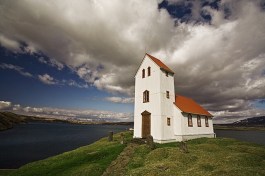 The primary purpose of the Temple was to serve as a place where God and man could meet, however, it also serves as an illustration of the our salvation. Each of the furnishing depicts an aspect of our relationship with God. We can walk through the courts of the Temple and be reminded of the main elements of our salvation.
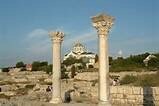 In addition to building the Temple, Solomon had two large pillars erected, which he named Jachin and Boaz. Jachin means to establish and Boaz means strength. Whenever a person approached the Temple, they would see these two massive pillars. A reminder that the nation, the kingdom, the Temple, and each of our individual lives, are established and strengthened by God.
