Acts 4:2
“…..they taught the people and preached in Jesus the resurrection from the dead.”
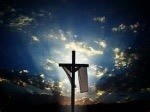 The greatest tragedy in human history was the day Christ died. The true sinfulness of mankind was expressed as the world turned on Christ, as if to say, “We won’t have this man ruling over us.” In an attempt to rid the world of Him, they nailed Him to the cross and watched Him die. In contrast to the darkness of that hour, heaven’s great light shone forth as Jesus rose from the dead, gaining victory over death, hell, and sin. The Resurrection is heaven’s great triumph. The resurrection, proves the claims of Christ. When asked for a sign Jesus declared,
“ An evil and adulterous generation seeks after a sign, and no sign will be given to it except the sign of the prophet Jonah. For as Jonah was three days and three nights in the belly of the great fish, so will the Son of Man be three days and three nights in the heart of the earth.” Matthew 12:39-40
Essentially, He was saying, “In addition to fulfilled prophecy, the miracles I performed, and the lives I have changed, the only sign I will give you, is that I will rise again.” Death could not hold Him down, the grave could not keep Him in. The Son of God rose from the dead triumphantly, assuring us all, His promises are true.
But the Resurrection proves something else. Not only are we guaranteed Jesus is who He said He was, but we are guaranteed there is more to life than this temporal existence. Paul declared,
“But now Christ is risen from the dead, and has become the first-fruits of those who have fallen asleep. For since by man came death, by Man also came the resurrection of the dead. For as in Adam all die, even so in Christ all shall be made alive.” 1 Corinthians 15:20-22
The term “first-fruits” refers to the fruit on the tree that ripened first. When Israel gathered these fruits, they would celebrate, partly because they had a taste of the harvest, and partly because they knew a much greater harvest awaited them. The resurrection of Christ is like that. We celebrate that He conquered death and was raised in a glorified body, never to die again. We also rejoice in knowing, when this life comes to an end, as it will for each of us, we can be assured there is eternity.
One day, we will all breathe our last in these earthly tents. Those who have trusted Christ for salvation, will awaken in glory. The tent will be cast off, and replaced with a glorious body, designed never to wear out, but to last for all eternity. Rejoice today, as we look with anticipation to the great hope of the Resurrection.
Pastor Jim
Questions for Acts 4
- The Sadducees were “disturbed” that Peter and John were teaching the resurrection of Jesus and had them taken into custody until the next day. Yet how many believed in spite of the Sadducees actions?
- Again as with Jesus, the religious group of the day, the Sanhedrin, brought Peter in for questioning. Have you ever had to take a stand for Christ?
- Trials and struggles come our way always. We see 3 important disciplines that Peter and John practiced in verse 24-30, worship, prayer and scripture. Are you including these in your daily routine?
- Verse 32 through the end of the chapter show an interesting concept for the early church. In what ways is the Lord nudging you? Be obedient and see what blessing the Lord brings into your life!
Old Testament:
Deuteronomy 31- Life Lessons
Deuteronomy 32- What’s In It For Me?
 Peter makes reference to a simple rule of life. We can only give away what we personally possess. By his own admission, Peter had no money to give this man. It is interesting to note that from an economic standpoint, Peter’s condition was no different than the beggar’s. In the world’s estimation, a man in his thirties who is too broke to share his change with a beggar, is of very little value. Peter would not make a who’s who list in the 1st Century. However, if we look more closely, we see that Peter possessed something far greater than riches that tarnish and fade. Peter said,
 The Holy Spirit is the driving force behind all the ministry that will take place in the book of Acts. Jesus had commanded His disciples to go into all the world and proclaim the Gospel message, but before they went, they were to wait for the outpouring of the Holy Spirit. Their personal lives, their ministries, and their world, would forever be changed because the Holy Spirit came upon them.
 The book of Acts is a sequel to the Gospel account, written by Luke. He declares, in this opening verse, the purpose for writing the Gospel account and the book of Acts. He states that the Gospel records what Jesus began to do; and the book of Acts, what He continues to do. Since Jesus is alive from the dead, the story of the Bible is a continuing one. John closed his Gospel account declaring that all the books in the world could not hold all that Jesus did for humanity. As amazing as it may seem, Jesus is not finished. The resurrection is not the end of the story. It is the transition point where the work of Jesus transfers from being accomplished outwardly through His life on earth, to the inward working of His Spirit in the life of all who believe.
 Much has happened since Peter first met Jesus. In a few short years, it seems as though a lifetime has transpired. Peter, the fisherman, has become Peter, the apostle. The young man who used to spend his days on the Sea of Galilee pursuing fish, is now a man who has spent over three years fishing for men. I imagine, at one time, his stories were all about his biggest catch, or perhaps times of weathering one of the storms for which the Sea of Galilee was famous. Now his stories would include tales of praying for the sick, casting out demons, and raising the dead. Certainly, life had changed for the young fisherman from Galilee. Along with change, came true spiritual development. The Peter who first met Jesus, was not the same Peter we see standing here. Sure, he still had his setbacks, but life with Jesus had changed him. Later, we read that even unbelievers recognized that spending time with Jesus changes men.
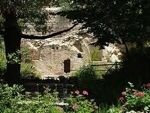 Mary saw Jesus, but the circumstance she was in, and the experiences she was facing, caused her to conclude that He was a gardener. It was not until she heard His Word, that she clearly understood who He really was.
 Jesus is facing the battle of His life. We could even say it was the battle for His life. All the political power of Israel was manipulating the power of Rome, to execute the Son of God. Yet Jesus remained silent. We know He wields the power to overcome these attacks. We read that He calmed the storms, healed the sick, cast out demons, and even raised the dead. Yet now, when it seemed to matter the most, He refused to lift a finger or say a word.
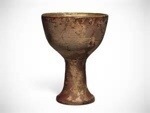 In the garden of Gethsemane, Jesus spent hours in prayer. The portion of the prayer recorded for us had to do with a cup. The event is recorded in Mark 14:35-36,
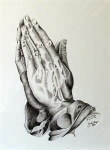 Perhaps the best title for John 17 is, “The Lord’s Prayer.” As the hour of His betrayal, arrest, and crucifixion approaches, Jesus takes time to pray for His disciples. His prayer, while encompassing many things, seems to focus upon three thoughts.
 Much of what Jesus said was shocking to the ears of the disciples. He spoke with a wisdom that was otherworldly. They may have become used to the fact that Jesus was going to say things that surprised them, but I do not think anything could prepare them for the statement Jesus made here. Earlier, He had been speaking about His betrayal and death, He now declares they will be better off without Him. For over three years, these men have been with Jesus. They have watched as He transformed lives, and listened as He declared truths about the Kingdom of God. Now He is speaking about leaving, and declaring they will be more effective with Him out of the way. I know Peter is the one who is known for objecting to Jesus, but I find myself objecting on His behalf. I cannot think of a single scenario where it would not be better to have Jesus around. If I were fishing, boating, preaching, visiting the sick, feeding the hungry or facing the Pharisees, I think it would always be better to have Jesus there, than to be by myself. How could Jesus say such things? What conditions could make it better to have Jesus absent, rather than present?
