Psalm 45:11b
“Because He is your Lord, worship Him.”

This is a Messianic Psalm, meaning that it is speaking prophetically of Israel’s coming Messiah. In it, the Psalmist is describing the glory of Jesus, our King, and the beauty of His Bride, the church. After describing Jesus as the King of Glory, girded with a sword, overthrowing wickedness, ruling in righteousness and reigning in glory, he speaks of the proper response from His people.
“Because He is your Lord, worship Him.”
The word “worship” is a translation of the Hebrew word “shachah”, which means to “bow down before and to give homage to.” It is a word that would be used of a person who was entering the presence of royalty and giving the proper honor. The Psalmist is declaring that the child of God is expected to enter the presence of King Jesus bowing and expressing worship.
Sometimes, it is surprising to me how some people misuse a time of corporate worship. Some treat it like the previews at the movie theater. For them, the real show does not start until the Bible study. So they regularly wander in missing most of the worship time. Others, look at worship as a concert. If the rendition of the song was done in a style they like (the volume was not too loud or too quiet, the performance did not drag on too long) then it was good worship. Still others treat worship like watching their favorite sport. If their team is doing well, their emotions rise up, and they express it with cheers. If their team is losing they are slumped over, sad and quiet. In other words, worship for some is based completely upon emotion. If they view their current circumstances as positive, then they are filled with expressive praise, but if things are not going the way they want, worship stops. The psalmist has an entirely different view of worship.
“Because He is your Lord, worship Him.”
To him, worship has a lot more to do who God is, than with us. He calls us to worship because of the glory of our Lord. I think we need to place less importance on musical style, and personal experience, and more upon the nature and character of our God. Regardless of what struggles you are facing today, the proper response is,
“Because He is your Lord, worship Him.”
Pastor Jim
Old Testament:
Psalm 46- Help In Trouble
2 Samuel 15- Memory Lane
2 Samuel 16- Love, Mercy and Grace
 Arguments take place when we have differences of opinion. Both parties think they are right and the other is wrong. When these differences of opinion escalate they often lead to serious divisions. Marriages, families and churches have often been the unwary victims of intense argumentation. When arguments take place we have probably learned what to do when we are in the wrong; we humbly apologize and seek to make whatever restitution is necessary. But what about when we are right. Have you ever considered the proper action to take when you are in the midst of a misunderstanding between yourself and someone you care about? Perhaps it would do us good to reconsider what we do when we think we are right. David wrote;
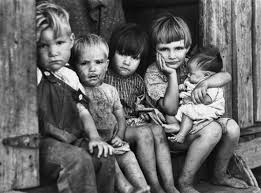 The Bible has much to say about the poor. The word poor is used almost 200 times in the NKJV of the Bible, Israel as a nation was required to set up a system where the poor was able to glean the edges of the fields to provide food for themselves and their families (This is part of the story line of the book of Ruth). Jesus spoke of blessing the poor, and encouraged His disciples to minister to them. In the book of Acts we see the churches sending aid to believers who were undergoing severe trials caused by famine and persecution and James writes warning the church not to neglect the poor or to treat them any less than we would the wealthy. It is clear that those who are neglected by men are highly esteemed by the Lord. That being said the Bible also places certain responsibilities upon the poor. The welfare system in Israel required the poor to work for the food they received and Solomon wrote that “much food is in the fallow ground of the poor.” When Paul wrote to Timothy regarding the widows he explained that the church had a responsibility to assist the widows who were godly but charity would not help those who were living a wasteful life.
 There are times in life when words seem like a raging fire building within us and we are almost forced to speak. This can be positive, like when Jeremiah wrote of being so discouraged he no longer wanted to share the words of God with anyone, until those words became like a fire within him and he could no longer contain them. Or this can be negative, like when gossip burns within us, pleading to be passed on to others; or when in the midst of an argument, we lash out with hurtful words that shatter someone we love.
 I am a sports fan. I enjoy watching a variety of athletics, and am always fascinated when an athlete achieves victory, almost effortlessly. No matter what the opponents do, they are unable to stop him. Over the years, I have come to understand that those who seem to win with the least effort, are really the ones who have put in the most effort. They are the ones who are first in the gym and last out. Their diets, workouts, sleep patterns, even off days, are regimented so as to keep them in the best possible condition for victory.
 We cannot be sure the exact situation that stirred David to write this Psalm, but we do know that he seemed to be under continual attack. From the start, he had to deal with those who continually came against him. His father neglected him, his brothers tormented him, the Giants ridiculed him, the king hunted him, and the neighboring nations sent armies to attack him. As a result, it would be fair to say David was an expert on warfare and he knew how to fight on many different fronts. In this Psalm, he reveals the secret behind his success. When under attack, David looked to God for defense.
 There can be great value in getting away from our manmade world and looking at the creative work of God. Seeing the beauty of His creation seems to give us new perspective on His love, power, and glory. I can recall one particular sunset in Africa that was so magnificent and seemed to last for an hour. The sky was filled with an array of colors, like I had never seen before. I recall how the view of the snow capped Austrian Alps, and the water falls of Kauai captivated me, filling me with awe and amazement at the beauty of God’s handiwork. I am sure you have a list of your own experiences that cause you to celebrate the beauty of creation. That being said, the Psalmist begins to talk about what God views as true beauty. He declares;
 We cannot be certain of the situation that caused this psalm, but it is very clear the Psalmist was going through an extremely difficult season in life. He describes himself as being under severe attack and needing the Lord to be his fortress. He speaks of his troubles and his adversities, and his eyes wasting away in grief, as he cries before the Lord. He also goes into great length to speak of his emotional condition during this time. He describes himself as, “wasting away with grief, in both his soul and body” and being “like a broken vessel.”
  When Moses pleaded to see the Glory of God, the Lord responded by passing before him and revealing His nature. He declared Himself to be merciful and gracious. The word gracious speaks of the giving nature of God. It is His desire to give what is best to man. James, addressing a group of trial-ridden Christians, reminded them, since God is gracious, every good and perfect gift comes from Him (James 1:17). The message of the Bible has a whole lot more to do with what God gives us, than what we are to give to Him. Hosea reminded Israel of what God had done for them,
 Did you ever have that daydream, as a kid, where you found the magic lamp, and the genie promised to grant your wish, no matter how outlandish it may be? Imagine what it would be like if God appeared to you, declaring He would give you whatever you asked for. How would you respond? What would you ask from the King of Kings.
