Titus 2:1
“But as for you, speak the things which are proper for sound doctrine”
 The purpose of the teachings of God’s Word is not simply information. We should not expect a test when we arrive in heaven or a pop quiz along the way. Instead, we learn the Word so we might behave right. Sound doctrine must lead us to sound living. Elsewhere, we read of the doctrine that accords with godliness. When our understanding of God is correct, we will worship, live, act, react and speak in ways that are pleasing to God. Here, Paul exhorts Titus to speak properly. While proper speaking would include praise, evangelism, and encouraging others, it also avoids gossip, slander, backbiting and complaining. Paul is referring specifically to the things Titus would be teaching within the church. He divides the body into groups based upon age, gender and vocation; encouraging proper behavior from each of them.
It is clear from this chapter that Paul expected believers to minister to believers. Titus would be responsible for teaching the people, the people would be responsible to minister to one another, and to share Christ with others. A couple of key principles of ministry are woven through the text.
First, Paul exhorted the older believers to minister to younger ones. That is, those who have walked with the Lord and gone through the experiences of life, should be seeking to assist those who are new to the faith, or not as far along on the journey. What a blessing it is when those who have raised their families, now serve in Children’s Ministry, assisting the children of the young families. It is such a benefit when a more mature believer takes the time to disciple a younger Christian; investing time by taking them into the Word and prayer.
Second, Paul reminds us that the way we live will either impede or empower the things we share. He warns of the Word of God being blasphemed by wrong behavior. The gospel message cannot be communicated without words. Paul asked the Romans “how will they hear without a preacher?” We must courageously share Christ with our friends, family and co-workers, but words alone are not enough, we must live it. The world wants to see Christianity, not just hear about it. They should see it in the way we treat them, each other, and especially our families. Paul speaks of the relationship between the young husband and wife. When that relationship is godly, others will be attracted to the Lord.
Finally, Paul wrote, women should minister to women, and men to men. That is a pretty good rule of thumb for ministry. I think it is a good idea for men to get plugged into men’s groups, and women into the women’s study. While we can grow without personal relationships, it is my experience that our growth is enhanced when we take the time to establish relationships with others of the same gender, and dig into the Word together.
Pastor Jim
 The church in Crete was like most churches. It had a pastor, who was seeking to minister to the spiritual needs of the people, while facing many struggles from within and without. It had members who were growing in the Lord and seeking to serve Him, and members whose growth was stunted, due to a variety of lingering and tolerated personal sins. Then there were others, who only pretended to be Christians. Paul describes this group as ones who claim to be followers of Christ, yet they fail to really follow Him.
 Paul has come to the end of his road. While prison was an all too common experience for the apostle, he had been delivered from it, and other perils, time and time again. Somehow, he knew this time would be different, and his deliverance would be through death. Not long after this letter was written, Paul was martyred for his faith in Christ. As his journey concludes, Paul examines his life, looking at his past, present and future.
 Sometimes we neglect reading our Bibles because we do not see the value in it. There are times when we don’t understand what we are reading, or how it applies to the daily struggles we are facing. It is not uncommon when talking with a struggling Christian, to share a promise from the Word, only to see them stiffen up and comment on how they don’t think that will help. In this passage, Paul addresses the true value of the Word of God. He uses a word that all business men will appreciate; profitable. He is saying the Words of God are of great value for our lives and for our daily living; they provide doctrine, reproof, correction and instruction.
 It seems as though men have always been fascinated with strength. We have all seen images of Greek or Roman statutes, they look like they have come off the pages of a body building magazine, making us wonder if every Roman official looked like the Incredible Hulk. We have also seen images of rockets blasting off, volcanos erupting, or a nuclear explosion. The sheer force involved in these phenomena is mesmerizing. Psychologists and business gurus encourage us to recognize our strengths in order to find happiness in life or success in business. It is not difficult to find lists of character strengths by which to measure ourselves. However, it has been my observation, the things Paul tells us to be strong in are strangely absent. While it is important to be strong in things like decision-making, seeing a task through to the end, or being creative, Paul exhorts us to be strong in other areas which have far more eternal value.
 Timothy is one of the stars of the New Testament. His story has all the makings of a blockbuster hit. When we are first introduced to him, he is a teenager described as “being well spoken of in all the churches.” We know that his commitment to Christ struck a chord with the apostle Paul, who invited him to join the ministry team and take the Gospel to the unreached people of the ancient world. While traveling with some of the greatest saints of all time, Timothy rose to the top and became Paul’s most trusted ally and closest friend. By the time his story comes to a close, he is pastoring one of the most influential churches the world has ever known, in the bustling city of Ephesus. We know his success in following and serving Christ had much to do with a teenage decision to surrender to Jesus and the influence of Paul, but we also find that he was greatly impacted at home.
 Famous American inventor and statesman, Benjamin Franklin, is credited with saying, “Nothing is certain except for death and taxes.” It seems we spend much of our time, effort, and energy, trying to avoid these things, rather than preparing for them. Some of us will exercise regularly, change our diet, and get regular checkups with our family doctor, in an attempt to postpone the inevitable. Others, will avoid any thought whatsoever of death or dying, and live this life as though it will last forever. Some, might have a risk-it-all attitude, where they live life on the edge, while others will attempt to amass as much stuff in this life as possible. Remember the mantra “He who dies with the most toys wins”?While I am not suggesting that eating healthy or enjoying life are bad ideas, I am saying, attempts to avoid or ignore death, are not nearly as important as attempts to prepare for it.
 Back in the mid 1970′s, disaster movies were the big craze. Towering Inferno, Earthquake, The Poseidon Adventure, and Tidal Wave, were just a few of the titles that topped the charts. Nowadays, it seems people are fascinated with the concept of the undead. Not only have multiple movies and TV shows been released on the subject, but books, magazines and websites, are devoted to zombies and other undead creatures. There is even a popular TV show called “The Walking Dead.” While these all show mindless creatures, who cannot be killed by normal means, walking about with an insatiable appetite for blood, the Bible paints a different picture of the walking dead. Paul speaks of those who have not surrendered to Christ, as being dead while they live.
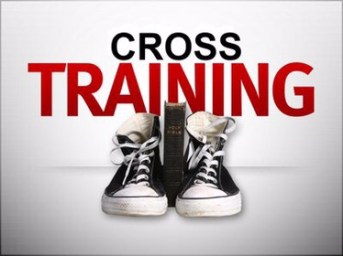 If you are like me, you have probably seen a great number of motivational quotes posted on your Facebook wall. Things like “Pain is only weakness leaving the body” – “The secret of getting ahead is getting started.” – “It’s never too late to become what you might have been” – or “just do it”. While many of us might benefit from a little more exercise, ALL of us will benefit from a little more godliness. Paul is not suggesting that getting in better physical shape is a bad thing, but is contrasting it with the benefits of being in better spiritual shape. He speaks of the profitability of godliness.
 The church, designed by God, serves many purposes in the life of the believer. It is a place for corporate worship, where the gifts and talents of others enhance our expression of praise. The Bible alludes to the fact that our praises are like a sweet aroma, filling the courts of heaven. The church provides a place for corporate prayer. As Jesus instructed us, there is additional power behind prayer when we gather with others to offer our requests to God. The church is also a place for fellowship. God designed us as social beings. We achieve our best when surrounded by those whose lives propel us forward with godly examples. Scripture informs us, that fellowship with other believers is like a steel file sharpening a knife to make it more useful in the masters hand. When we surround ourselves with other believers, we are in a place where we can share each others burdens, encourage each other through struggles, and lift each other up when we fall. While there may be many more benefits we can derive from the church, Paul writes in this passage, about what we might call the primary purpose of the church.
